

When a drug combines two or more active ingredients in one pill, patch, inhaler, or cream, it’s called a combination product. These aren’t just convenient-they’re often essential for treating chronic conditions like asthma, hypertension, or psoriasis. But getting a generic version approved? That’s where things get messy. Unlike simple pills, combination products don’t play by the same bioequivalence rules. And for generic manufacturers, this isn’t just a technical hurdle-it’s a financial minefield.
Why Bioequivalence for Combination Products Is Different
Bioequivalence means proving a generic version delivers the same amount of active drug into the bloodstream at the same speed as the brand-name version. For a single-ingredient tablet, this is straightforward: give 24-36 healthy volunteers the brand and the generic, measure blood levels over 24 hours, and check if the results fall within 80-125% of each other. Simple. But when you combine two drugs-say, a blood pressure pill with a diuretic-things change. The two ingredients might interact in the gut, alter each other’s absorption, or even change how the body breaks them down. That means you can’t just test one drug and assume the other behaves the same. The FDA now requires generic makers to prove bioequivalence for both drugs in the combination, and also against the brand’s product taken together. That’s a three-way crossover study. More people. More blood draws. More cost. And still no guarantee it’ll work.Topical Products: The Stratum Corneum Problem
Creams, ointments, and foams used for skin conditions like eczema or psoriasis are another nightmare. The active drug doesn’t enter the bloodstream-it needs to penetrate the outer layer of skin, the stratum corneum. But how do you measure that? The FDA says use tape-stripping: peel off 15-20 layers of skin with adhesive tape and analyze how much drug is trapped in each. Sounds precise, right? It’s not. There’s no standard on how thick each strip should be, how much drug to extract, or even how to handle variations between people’s skin. One lab’s results might differ from another’s by 30%. That’s why generic developers have failed three or more times trying to get a simple calcipotriene/betamethasone foam approved. Each failure costs $1-2 million and adds 6-8 months to the timeline. And if the brand changes its formula slightly? You’re back to square one.Drug-Device Combos: It’s Not Just the Drug
Inhalers and auto-injectors are more than containers. They’re machines. A generic inhaler might have the same drug, but if the nozzle is 0.1mm wider, the aerosol particle size changes. And that changes where the drug lands in the lungs. The FDA requires aerosol particle size to be within 80-120% of the brand’s. But measuring that? It needs specialized equipment that costs over $100,000 and requires trained technicians. Even worse, the user experience matters. If the inhaler feels different-harder to press, different click sound, different grip-patients might not use it correctly. That’s not just a design issue. It’s a safety issue. And according to the FDA, 65% of complete response letters for generic inhalers and injectors cite problems with user interface testing. No one’s measuring how patients actually use these devices. But they should be.
Modified-Release Formulations: The Narrow Window
Drugs with narrow therapeutic indexes-like warfarin, lithium, or some epilepsy meds-can’t afford any variation. Even a 5% difference in how fast the drug releases can cause toxicity or treatment failure. For these, the bioequivalence window tightens from 80-125% to 90-111%. That’s a much smaller margin for error. And modified-release tablets? They’re designed to release drug slowly over hours. But if the coating isn’t identical, or the matrix structure differs slightly, the release profile can shift. The FDA’s 2023 report shows 35-40% of initial applications for these drugs fail bioequivalence testing. One company spent $18 million and four years trying to get a generic version of a modified-release FDC approved. They failed three times. The fourth attempt succeeded only after they rebuilt the entire tablet from scratch using advanced modeling.The Cost of Failure
Developing a generic combination product isn’t cheaper than the brand-it’s often more expensive. A typical single-entity generic costs $5-10 million to develop. A complex combination? $15-25 million. And bioequivalence testing makes up 30-40% of that. Labs need LC-MS/MS machines-each one costs $300,000 to $500,000-and staff with years of specialized training. For small generic companies, this is impossible. Teva and Viatris report that over 40% of their complex product failures are due to bioequivalence issues. The American Association of Pharmaceutical Scientists found that 89% of generic manufacturers consider current requirements “unreasonably challenging.” And it’s not just money. It’s time. While a standard generic gets approved in 14.5 months, a combination product takes 38.2 months. That’s over three years of delays.How the Industry Is Fighting Back
Some companies are turning to computer modeling to cut costs. Physiologically-based pharmacokinetic (PBPK) models simulate how a drug behaves in the body based on its chemical properties, not just human trials. The FDA has accepted PBPK modeling in 17 approved generic applications as of mid-2024. One case showed it cut clinical testing by 40%-saving millions. The FDA’s Complex Product Consortium, launched in 2021, has created 12 product-specific bioequivalence guidelines. These aren’t generic rules-they’re tailored to each drug combo. For example, a new guideline for HIV FDCs (dolutegravir/lamivudine) now clearly defines acceptable bioequivalence limits for both drugs simultaneously. Companies that followed these guidelines saw development timelines drop by 8-12 months. Another breakthrough? In vitro-in vivo correlation (IVIVC) for topical products. Instead of tape-stripping patients, labs now test the cream in a lab dish using artificial skin. Early results show 85% accuracy in predicting real-world performance. If this scales, it could cut topical development costs by half.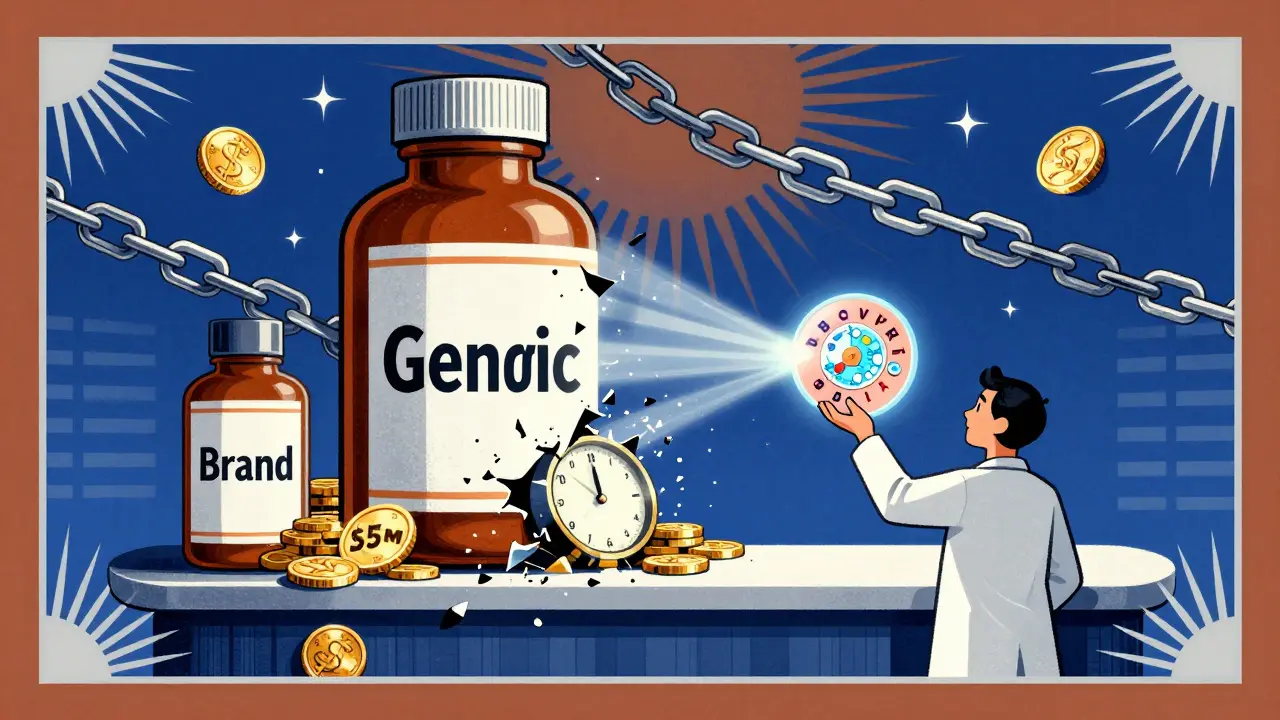
Global Patchwork and Patent Barriers
The U.S. isn’t alone in struggling. The European Medicines Agency (EMA) often demands extra clinical trials for the same products the FDA approves. That forces companies to run duplicate studies-adding 15-20% to development costs. And while the FDA has started publishing product-specific guidance, the EMA hasn’t. This lack of harmonization means companies can’t just build one product for two markets. Then there are patents. Combination products are often protected by thick webs of patents-on the formula, the delivery device, the manufacturing process. Between 2019 and 2023, legal battles over drug-device combos rose 300%. The average delay to generic entry? 2.3 years. Even if you solve the science, you might still be blocked by lawyers.What’s Next?
The FDA’s 2024 draft guidance includes 15 new product-specific bioequivalence pathways-mostly for respiratory and HIV drugs. They’re also working with NIST to create reference standards for inhalers and injectors, so labs can calibrate their equipment the same way. By 2027, they plan to have 50 such guidelines ready. The goal? Reduce failure rates. Speed up approvals. Make it possible for more companies-not just the giants-to enter the market. Because right now, 45% of complex brand products have no generic alternative. That means patients pay more. Health systems pay more. And innovation slows down.Why This Matters
Generic drugs saved the U.S. healthcare system $373 billion in 2020. But that savings is shrinking for combination products. If we can’t fix bioequivalence testing, we’ll lose access to affordable treatments for millions. Asthma patients won’t get cheaper inhalers. Diabetics won’t get affordable insulin pens. Psoriasis patients will keep paying $1,000 a month for creams that could cost $50. This isn’t just science. It’s access. It’s equity. It’s whether a person in rural Ohio can afford the same treatment as someone in Manhattan.What is a combination product?
A combination product is a medical product that combines two or more different types of components-such as a drug and a device, or two drugs in one formulation-into a single unit. Examples include inhalers with built-in dose counters, insulin pens, and pills that contain two active ingredients like blood pressure and diuretic drugs.
Why is bioequivalence harder for combination products than single-drug products?
Because combination products contain multiple active ingredients, each may behave differently in the body. One drug might affect how the other is absorbed or metabolized. You can’t test them separately-you must prove the entire combination works the same as the brand. This requires more complex studies, larger sample sizes, and often new testing methods that don’t yet have clear standards.
What’s the biggest challenge for generic inhalers?
The biggest challenge is proving the user experience is equivalent-not just the drug dose. If the inhaler feels different in the hand, requires more force to activate, or makes a different sound, patients may use it incorrectly. The FDA requires testing of aerosol particle size and user interface, and 65% of rejection letters cite deficiencies in this area.
How much does it cost to develop a generic combination product?
Developing a generic combination product typically costs $15-25 million, compared to $5-10 million for a single-drug generic. Bioequivalence testing alone can account for 30-40% of that cost, and failures are common-up to 40% of complex product applications fail their first attempt.
Are there any new technologies helping with bioequivalence testing?
Yes. Physiologically-based pharmacokinetic (PBPK) modeling is being used to predict how drugs behave in the body without running full human trials. For topical products, in vitro-in vivo correlation (IVIVC) is showing promise-lab tests on artificial skin can now predict real-world performance with 85% accuracy. The FDA has accepted PBPK in 17 approved generics, and new reference standards from NIST are coming in late 2024.
Why do some combination products never get generic versions?
Because the cost and complexity of proving bioequivalence are too high for most companies to justify. If the market is small, or if patent litigation delays entry, companies walk away. As of 2024, 45% of complex brand products have no generic alternative, meaning patients pay full price for years-even after the patent expires.
Isabel Rábago
December 21, 2025 AT 06:02So let me get this straight-we’re spending millions to prove that a pill does what it’s supposed to do, but we won’t fix the fact that the FDA’s methods are 30 years out of date? This isn’t science. It’s bureaucratic theater.
Moses Odumbe
December 21, 2025 AT 11:14PBPK modeling is the future. 🚀 Why test 36 people when a computer can simulate 10,000 virtual patients in 2 hours? The FDA’s slow, but they’re finally catching up. #PharmaTech
Monte Pareek
December 22, 2025 AT 05:03Let’s be real-this isn’t about science. It’s about who gets to make money. Big Pharma rigs the system so generics can’t compete. They patent the damn inhaler nozzle. They tweak the cream’s pH just enough to reset the clock. And then they laugh while patients pay $1,200 for a tube of cream that should cost $45. This is healthcare capitalism at its worst. We need price caps. We need patent reform. We need to stop treating medicine like a luxury item.
Small companies aren’t failing because they’re incompetent. They’re failing because the rules were written by people who don’t care if someone dies because they can’t afford their meds. And until we treat access like a human right-not a market opportunity-we’re just rearranging deck chairs on the Titanic.
Andrew Kelly
December 22, 2025 AT 17:39You know what’s really happening? The FDA is being pressured by lobbyists to keep generics out. The ‘bioequivalence’ standards are made up on the fly. There’s no real scientific consensus-just political theater dressed up as regulation. And don’t even get me started on NIST. That agency’s been hijacked by corporate consultants. Everything’s rigged.
Dev Sawner
December 24, 2025 AT 11:44It is imperative to note that the current regulatory framework for combination products is fundamentally inconsistent with international standards. The European Medicines Agency, for instance, maintains a more rigorous approach to in vivo bioequivalence, whereas the U.S. Food and Drug Administration exhibits a concerning degree of regulatory leniency. This divergence not only impedes global harmonization but also imposes unnecessary financial burdens on manufacturers attempting to achieve multi-jurisdictional approval. The absence of standardized reference materials for topical delivery systems further exacerbates the issue. It is therefore recommended that regulatory authorities adopt a unified, evidence-based paradigm grounded in metrological precision.
Vicki Belcher
December 25, 2025 AT 01:36I’m so glad someone finally broke this down! 💙 It’s insane that we’re still using tape-stripping in 2024. Artificial skin? YES PLEASE. Let’s get real-this isn’t just about money, it’s about people who can’t breathe or manage their skin because they can’t afford treatment. Change is coming. I believe in it. 🌱
holly Sinclair
December 26, 2025 AT 03:15What does ‘bioequivalence’ even mean when the human body isn’t a lab dish? We reduce complex biological systems to percentages-80-125%, 90-111%-as if life can be measured in Gaussian distributions. But the body isn’t linear. It adapts. It responds to stress, sleep, diet, trauma. A pill that works for a 32-year-old athlete in Minnesota might fail for a 68-year-old with diabetes in Alabama. And yet we demand uniformity. We demand sameness. But medicine isn’t about sameness-it’s about context. We’re trying to fit a living, breathing, evolving organism into a spreadsheet. And when it doesn’t fit, we call it ‘failure.’ Maybe the failure isn’t the generic drug. Maybe it’s our obsession with control.
What if we stopped trying to prove equivalence and started trying to understand variability? What if we built systems that adapt to people instead of forcing people to adapt to pills? The science is advanced enough. The will isn’t.
Edington Renwick
December 26, 2025 AT 09:20This is why America’s healthcare system is a joke. You spend $20 million to make a generic inhaler, and then some corporate lawyer files a patent lawsuit because the click sound is ‘too different.’ And the FDA? They’re fine with it. Patients die waiting. Doctors rage. Pharma CEOs buy yachts. This isn’t innovation. It’s extortion.
Lynsey Tyson
December 28, 2025 AT 00:57Maybe we’re thinking about this wrong. Instead of fighting over tape-stripping and nozzle widths, what if we just let patients test the products themselves? Real people. Real use. Real feedback. Maybe the answer isn’t in more labs-it’s in more listening.
Just a thought.