
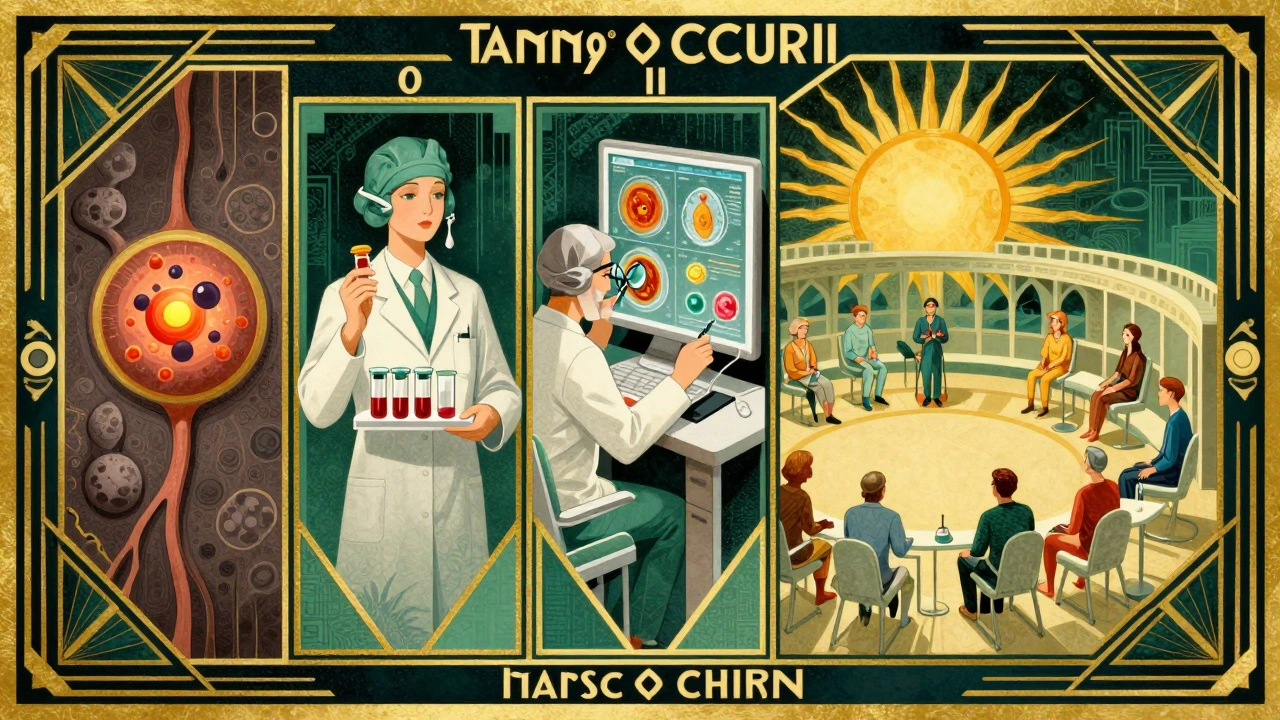
When you or someone you love gets a cancer diagnosis, the question isn’t just cancer clinical trials-it’s whether they’re right for you. Many people hear the word "trial" and think of being a guinea pig. But that’s not how it works. Cancer clinical trials are the backbone of modern treatment. They’re how we get new drugs, better radiation techniques, and smarter ways to catch cancer early. And if you’re considering one, you’re not just looking for hope-you’re looking at a structured, safe, and often life-changing path forward.
What Are the Phases of a Cancer Clinical Trial?
Cancer clinical trials don’t jump straight to giving new treatments to hundreds of people. They move step by step, like building a house-one floor at a time. There are four main phases, and sometimes a fifth, called Phase 0. Each one answers a different question, and each one protects you by testing slowly.Phase 0 is the smallest and shortest. It’s not about curing cancer yet. It’s about seeing if a drug even reaches the tumor. Researchers give a tiny, harmless dose-so small it won’t treat anything-to 10 to 15 people. They track how the body absorbs it, how fast it breaks down, and whether it sticks to cancer cells. This phase helps scientists decide if it’s worth moving forward. It’s rare, but growing. If a drug fails here, it never goes further. That’s a good thing. It saves people from unnecessary risk.
Phase I is where safety becomes the focus. About 20 to 80 people join, usually those who’ve tried all other treatments. The goal? Find the highest dose you can give without causing serious harm. Researchers start with a tiny amount and slowly increase it, watching closely for side effects. This phase takes months. It’s the riskiest because it’s often the first time humans are exposed to the drug. But that’s also why it’s so carefully controlled. If you’re in this phase, you’re not getting a placebo. You’re getting the actual drug, just at a low dose. The team watches you like a hawk-blood tests every week, scans, check-ins. You’re not a number. You’re part of a team trying to make something safe.
Phase II shifts from safety to effectiveness. Now, 25 to 100 people with the same type of cancer join. The question isn’t just "Does it work?" but "Does it work for this cancer?" For example, a drug might shrink tumors in lung cancer but do nothing in breast cancer. This phase helps scientists figure out which patients benefit most. It lasts about 6 to 12 months. About half of all drugs that enter Phase II don’t make it to Phase III-not because they’re dangerous, but because they just don’t work well enough. That’s not failure. That’s science working the way it should.
Phase III is the big one. Thousands of people across multiple hospitals, sometimes countries, are enrolled. Half get the new treatment. Half get the current standard care. Neither the patient nor the doctor knows who got what-that’s called a double-blind trial. This is how we know if the new treatment is truly better. Does it extend life? Reduce side effects? Lower the chance of return? These trials take 1 to 4 years. If the results are strong, the drug goes to the FDA for approval. This is where most new cancer drugs are proven. It’s slow. It’s expensive. But it’s the only way to be sure.
Phase IV happens after the drug is approved and on the market. Now, thousands more patients take it in real life-not in a controlled trial setting. Researchers track long-term side effects, how it interacts with other meds, and whether it works just as well in older adults, people with other health problems, or different ethnic groups. This phase can last for years. It’s how we catch rare problems that only show up after 1,000 people have used the drug for 3 years.
Why Would Someone Join a Cancer Clinical Trial?
People join for different reasons. Some have run out of options. Others want to give back. Some just want the best possible care.One of the biggest benefits? Better monitoring. In a trial, you’re seen more often than in regular treatment. You get more scans, more blood tests, more time with your care team. A 2022 survey of over 1,200 trial participants found that 78% felt their doctors paid closer attention to side effects. That’s not just comfort-it’s safety. When you’re on a trial, someone is watching for problems before they become emergencies.
Access to new treatments is another reason. For someone with stage 4 cancer who’s tried everything, a trial might be the only shot left. One woman with stage 4 melanoma joined a Phase II immunotherapy trial when chemotherapy stopped working. Her tumors shrank. Three years later, she’s cancer-free. She didn’t just get a new drug-she got a new life.
And then there’s the purpose. Eighty-five percent of participants in a 2021 study said helping future patients gave them meaning during their hardest days. It’s not about being brave. It’s about knowing your pain, your side effects, your sleepless nights, might help someone else down the road.
What Are the Real Challenges?
It’s not all hope and progress. There are real barriers.Travel is a huge one. Many trials require you to go to a major cancer center-sometimes hours away. One man in Ohio drove 3 hours each way for every appointment while recovering from chemo. He missed work. He got exhausted. He almost quit. That’s why patient navigators are so important. These are trained staff who help with transportation, insurance, scheduling. Right now, 78% of top cancer centers have them. But not all do.
Eligibility rules can be strict. The average trial has 28 criteria-things like blood counts, organ function, previous treatments, even BMI. Eighty percent of cancer patients don’t qualify. Some rules are necessary for safety. Others? They’re outdated. For example, excluding people over 75 or with diabetes might seem logical-but it means we don’t know if the drug works for the majority of cancer patients who are older or have other health issues.
Then there’s randomization. You might get the new treatment. Or you might get the standard one. That’s how science works. But 63% of people worry about getting the "worse" option. What if the new drug is amazing-and you don’t get it? That fear is real. But here’s the truth: in most Phase III trials, the standard treatment is already the best we have. You’re not being given something worse-you’re being given the current gold standard, and the trial is trying to prove something better exists.
And yes, there’s risk. Phase I drugs can cause serious side effects. Some people don’t make it through. But that’s why these trials are so tightly monitored. You can leave at any time. No one will pressure you. Your safety comes first.

Who Runs These Trials?
Not all trials are created equal. Some are run by drug companies. Others by universities. Some by the government.Forty percent of new cancer drugs approved between 2010 and 2022 came from industry-funded trials. That’s big pharma. They have money, resources, and a goal: get the drug to market. Thirty-five percent came from academic groups-universities, research hospitals. These often focus on rare cancers or new approaches. Twenty-five percent were government-funded, mostly by the National Cancer Institute (NCI). These trials are often the most inclusive and the most focused on patient needs, not profits.
There’s also a big shift happening: precision medicine. Instead of grouping people by where the cancer started (lung, breast, colon), new trials like NCI’s MATCH trial match patients by the genetic mutations in their tumor. Two people with different cancers might get the same drug if their tumors share the same mutation. This is the future. And it’s already here.
How Do You Find a Trial?
You don’t have to wait for your doctor to mention one. Ask. And ask again.Start with your oncologist. But don’t stop there. Go to clinicaltrials.gov. It’s free, public, and updated daily. You can search by cancer type, location, phase, and even drug name. You can also call the National Cancer Institute’s Cancer Information Service at 1-800-4-CANCER. They’ll help you find trials near you.
If you’re in the UK, the National Health Service (NHS) has its own clinical trial finder. Many hospitals have research nurses who specialize in matching patients to trials. Don’t assume you’re not eligible. Many people think they’re too sick, too old, or too far along. But trials have options for almost every stage.
When you find one, ask questions. What phase is it? What’s the goal? What are the risks? What’s the schedule? Who pays for what? Most trials cover the cost of the experimental treatment. But you might still pay for travel, standard care tests, or side effect management. Ask for a written summary. Take notes. Bring someone with you. You’re not signing up for a mystery-you’re signing up for a partnership.
What’s Changing in Cancer Trials Today?
The system isn’t perfect. But it’s getting better.More trials now use "master protocols"-one study that tests multiple drugs for multiple cancers at once. This saves time and money. In 2018, only 15% of trials used this design. Now it’s 32%. That’s a big jump.
Remote monitoring is growing. In 68% of Phase III trials, patients wear devices that track heart rate, activity, sleep, even symptoms like nausea. This means fewer trips to the hospital. You can report how you feel from home. It’s less stressful. More accurate.
There’s also a push for diversity. Right now, only 8% of trial participants are Black, even though Black people make up 13% of cancer deaths. Why? Lack of access, mistrust, language barriers, transportation. New initiatives are trying to fix that. Some trials now offer transportation vouchers. Others hire community health workers who speak the same language and understand the culture. It’s not enough-but it’s a start.
And artificial intelligence? It’s being used to predict who’s most likely to benefit from a trial, to spot side effects early, and even to design better trials before they start. This isn’t science fiction. It’s happening now.
Should You Join a Clinical Trial?
There’s no one-size-fits-all answer. But here’s what you need to know:- You won’t be treated like a lab rat. You’ll be treated like a person.
- You can leave at any time-no questions asked.
- You’ll get more attention than in standard care.
- You might get access to a treatment that isn’t available anywhere else.
- You might help save someone else’s life.
- You might face extra travel, more tests, or side effects.
- You might not get the new drug.
Joining a trial isn’t about giving up. It’s about choosing a different kind of fight-one that’s backed by science, support, and a team that’s rooting for you.
Ask your doctor. Look up trials. Talk to others who’ve done it. There’s no rush. But if you’re ready, the next step might be closer than you think.
Are cancer clinical trials only for people who have no other options?
No. While many people join trials after standard treatments fail, many others join earlier-sometimes even at diagnosis. Phase III trials, for example, often compare a new treatment to the current standard, meaning you could get the new drug right away. Trials exist for early-stage cancer, prevention, and even reducing side effects during treatment. You don’t have to be out of options to benefit.
Will I get a placebo in a cancer clinical trial?
In cancer trials, placebos are rarely used alone. If a placebo is involved, it’s usually added to standard treatment-not instead of it. For example, you might get chemo plus a placebo, or chemo plus the new drug. You’re never left without care. Ethical guidelines require that all participants receive the best known treatment.
Who pays for cancer clinical trials?
The trial sponsor usually covers the cost of the experimental treatment, extra tests, and monitoring required for the study. Standard care costs-like routine blood work, doctor visits, or hospital stays-are typically covered by your insurance. Always ask for a written cost breakdown before joining. Many trials also offer help with travel or lodging.
How long does it take to join a cancer clinical trial?
It usually takes 1 to 4 weeks. The process includes screening tests, medical record reviews, and sometimes genetic testing. Some trials have faster pathways, especially for urgent cases. Patient navigators can help speed things up. Don’t be discouraged if it takes time-it’s there to make sure you’re safe and matched correctly.
Can I join more than one clinical trial at the same time?
Generally, no. Most trials require you to be on only one experimental treatment at a time. This is for safety and to make sure researchers can tell which treatment caused what effect. But after one trial ends, you can often join another. Many people participate in multiple trials over the course of their cancer journey.
iswarya bala
December 7, 2025 AT 13:16Jennifer Blandford
December 7, 2025 AT 16:27Ruth Witte
December 8, 2025 AT 07:43Sabrina Thurn
December 9, 2025 AT 17:32Anna Roh
December 11, 2025 AT 15:50Katie Harrison
December 12, 2025 AT 11:48Asset Finance Komrade
December 12, 2025 AT 23:11Guylaine Lapointe
December 13, 2025 AT 10:13Christian Landry
December 15, 2025 AT 10:10Noah Raines
December 15, 2025 AT 11:25Mona Schmidt
December 16, 2025 AT 13:51Shubham Mathur
December 17, 2025 AT 15:52Simran Chettiar
December 18, 2025 AT 01:08Courtney Black
December 18, 2025 AT 13:04