
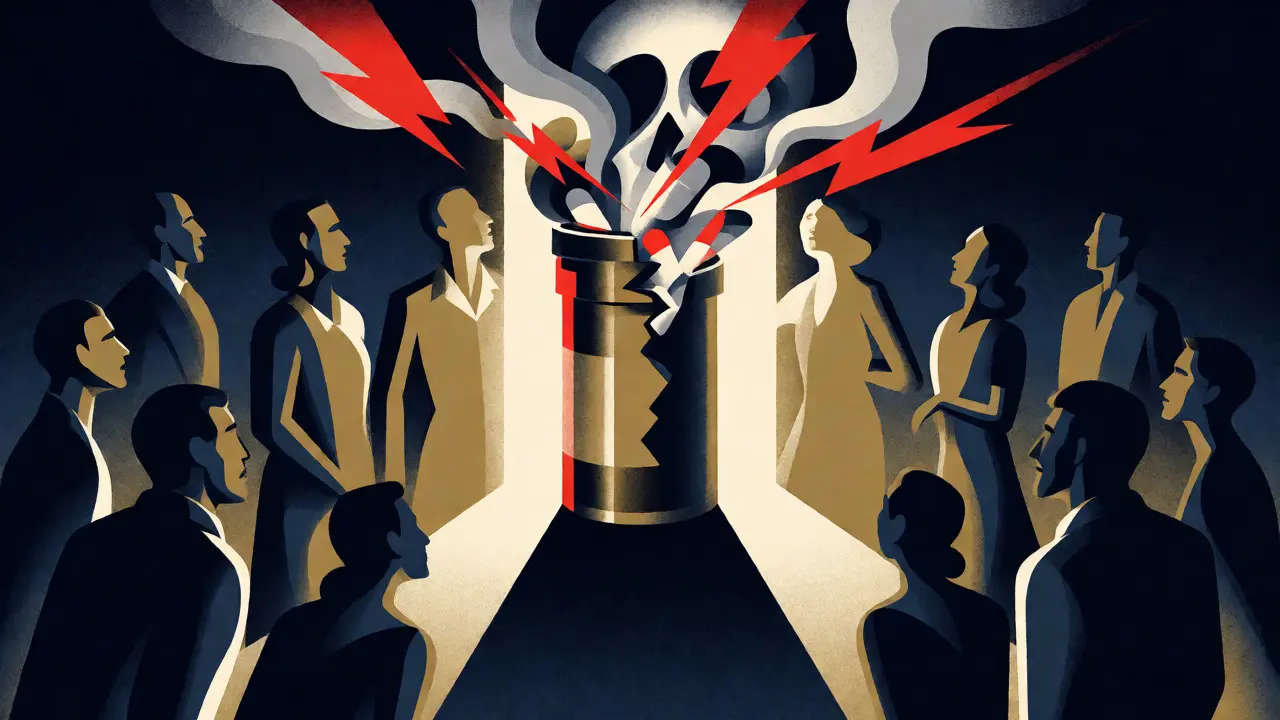
You might think you’re safe because your pill looks exactly like the one you’ve taken for years. But here’s a scary truth: counterfeit medications are designed to look identical to the real thing, yet they can contain anything from chalk dust to lethal doses of fentanyl. The World Health Organization estimates that falsified medicines cause roughly 1 million deaths globally every year. That’s not a rare anomaly; it’s a daily reality for patients who buy meds outside regulated channels or even those caught in supply chain breaches.
If you live in Bristol or anywhere else, you likely trust your local pharmacist. But with the rise of online pharmacies and social media sellers, that trust is being tested. This guide cuts through the noise to show you exactly what to look for, why the risks are higher than ever in 2026, and how to verify your meds before swallowing them.
The Real Scale of the Counterfeit Crisis
We aren’t just talking about cheap knock-offs of designer handbags. We are talking about life-or-death products. In August 2023, the Drug Enforcement Administration (DEA) reported that criminal networks were flooding the United States with deadly fake pills that mimic OxyContin, Percocet, Xanax, and Adderall. These aren’t just ineffective; they are dangerous.
The problem has evolved. It’s no longer limited to painkillers. In June 2024, the WHO issued alerts about falsified injectable incretin products-specifically Mounjaro®, Zepbound®, and tirzepatide-circulating across North America, South America, and Europe. Why? Because these weight-loss and diabetes drugs are expensive and high-demand. If a legitimate pen costs hundreds of pounds, a "bargain" at half price should raise immediate red flags.
The U.S. Food and Drug Administration (FDA) defines counterfeit drugs as products deliberately mislabeled regarding their identity or source. Unlike substandard medicines, which fail quality tests due to poor manufacturing or storage errors, falsified medicines are fraudulently labeled on purpose. This distinction matters. Substandard drugs might have degraded ingredients. Falsified drugs might have the wrong active ingredient entirely.
Visual Warning Signs You Can Spot at Home
You don’t need a lab coat to spot most counterfeits, but you do need to pay attention. Amy Callanan, Pfizer’s Global Security Intelligence Lead, notes that legitimate pills always have a factory-made appearance. They are uniform, crisp, and consistent. Counterfeits often lack this precision.
Here is what to check immediately when you open a new bottle:
- Packaging anomalies: Look for spelling errors on the label. Is the font different? Is the print blurry or raised incorrectly? Does the box feel flimsy compared to previous batches?
- Missing data: A genuine pack must have a lot number and an expiration date. If these are missing, smudged, or appear altered (like a sticker over the original date), do not take the medication.
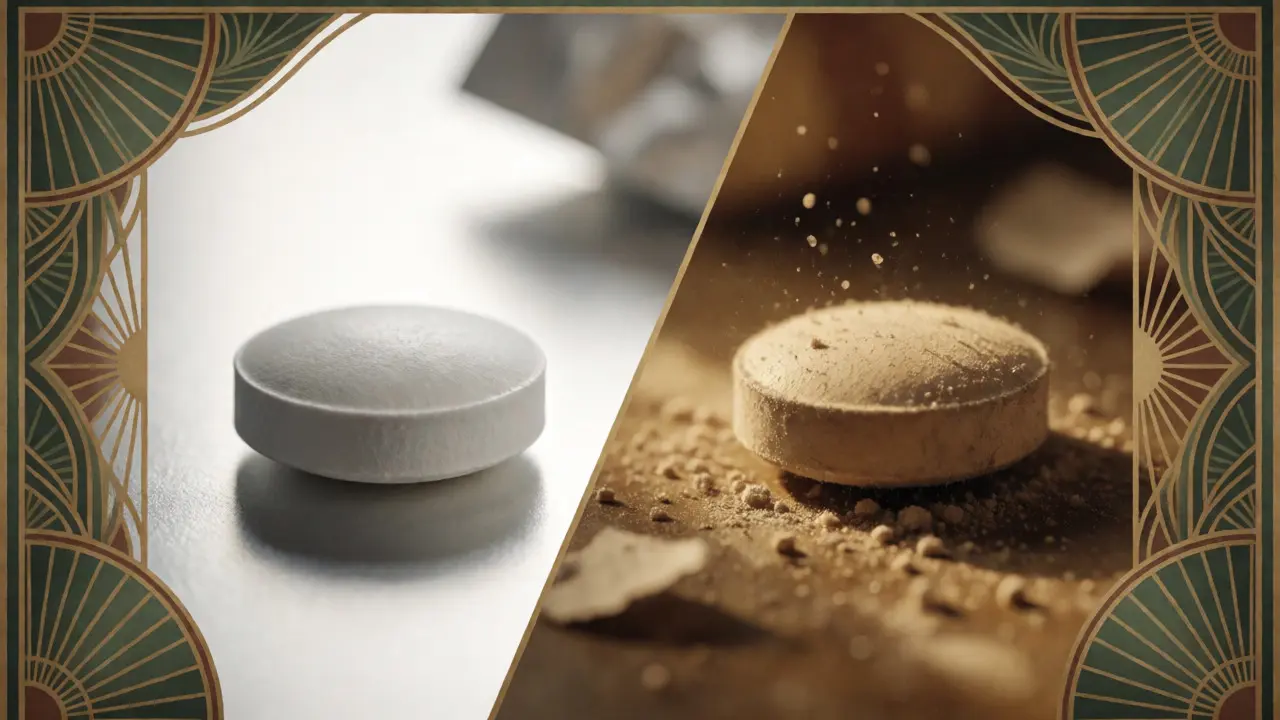
- Physical differences: Compare the pill to your old stock. Is the size, shape, or color slightly off? Does it crumble easily? Is there excess powder in the jar? Moldy-looking spots are a definite no-go.
- Sensory changes: Does the pill taste different? Does it smell unusual? While some generic brands change formulations, a sudden shift in taste or texture without notice from your pharmacy is suspicious.
In the UK, healthcare professionals are trained to look for specific tampering signs. Check for breaks in sealing tape. Examine the paper texture of the leaflet. Counterfeiters often buy short-dated products and alter the expiry labels, so if the date looks printed differently than the rest of the text, question it.
| Feature | Genuine Medication | Suspected Counterfeit |
|---|---|---|
| Pill Appearance | Uniform, smooth coating, distinct debossing | Cracked, bubbled coating, fuzzy edges, inconsistent color |
| Label Quality | Crisp print, correct fonts, accurate grammar | Blurred text, typos, mismatched fonts, poor alignment |
| Packaging Seals | Intact, factory-sealed, hard to break cleanly | Broken seals, loose caps, evidence of re-taping |
| Lot & Expiry | Laser-printed or embossed, matches database | Sticker-over, inkjet printed, non-existent, or altered dates |
| Price Source | Standard market rate, licensed pharmacy | Significantly discounted, unverified online seller, social media DM |
Why Online Pharmacies Are High-Risk Zones
Convenience often overrides caution. You order a refill via a website that promises next-day delivery and 50% savings. But where did that stock come from? The National Association of Boards of Pharmacy (NABP) identified thousands of websites promoting illegal sales of GLP-1 agonists recently. Their January 2024 analysis showed a 35% increase in illegal online pharmacy sites from 2022 to 2023.
Legitimate pharmacies in the US must be licensed in the state where they operate and require a valid prescription. Many rogue sites skip both steps. They accept credit cards without checking with your doctor. Worse, they may source inventory from unregulated warehouses in countries with lax oversight. When you buy from these sources, you bypass the Drug Supply Chain Security Act (DSCSA), which requires electronic tracing of prescription drugs in the US supply chain since November 2023. Without that digital trail, you have no way of knowing if your box passed through ten hands or ten countries.
Social media has made this worse. Criminal networks now use encrypted messaging apps to sell fake pills directly to consumers. These transactions leave no audit trail. If you get sick, there is no recall system, no customer service line, and no accountability.
How to Verify Your Medication Like a Pro
So, what do you actually do? You can’t run mass spectrometry in your kitchen. But you can take practical steps to protect yourself.
- Stick to trusted sources: Use a licensed brick-and-mortar pharmacy or a verified online pharmacy. In the US, look for the VIPPS (Verified Internet Pharmacy Practice Sites) seal from the NABP. In the UK, ensure the pharmacy is registered with the General Pharmaceutical Council.
- Ask your pharmacist: Pharmacists are your first line of defense. If your pill looks different, ask them. They track complaints and know if a specific manufacturer changed a supplier. Sometimes, a change in appearance is legitimate (e.g., a new generic manufacturer). Your pharmacist can confirm this instantly.
- Check the Lot Number: This is a pro tip. Every genuine batch has a unique lot number. You can often find this on the manufacturer’s website or by calling their consumer hotline. If the lot number doesn’t exist in their database, your product is suspect.
- Report suspicions: Don’t just throw it away. Report it to the FDA (via MedWatch) or the MHRA in the UK. This helps authorities identify patterns. For example, Eli Lilly specifically asks patients to call them if they suspect counterfeit Mounjaro or Zepbound.
Remember, visual inspection is not foolproof. As Pfizer experts admit, it takes laboratory testing to confirm 100% authenticity. However, catching obvious flaws prevents the majority of harm.
Specific Risks: What’s Inside the Fake?
Why does it matter if the pill is fake? Three main reasons:
- Toxicity: Counterfeiters use fillers like talc, flour, or even industrial dyes. Some have been found to contain heavy metals like lead or mercury.
- Incorrect Dosage: A fake Xanax bar might contain 0.5mg instead of 2mg, leading to withdrawal symptoms. Or, it might contain 10mg, causing severe sedation and respiratory depression.
- Wrong Ingredient: This is the deadliest scenario. DEA reports highlight fake oxycodone pills containing fentanyl. Patients expecting a manageable opioid dose receive a potent synthetic opioid, risking overdose and death.
In 2024, the FDA warned about counterfeit Ozempic® pens. Since these are injectables, users cannot visually inspect the liquid as easily as a tablet. If the concentration is wrong, blood sugar levels could crash unpredictably. Always inspect the packaging integrity of injectables carefully.
Next Steps: Building a Safety Habit
Protecting yourself isn’t about paranoia; it’s about protocol. Make these habits part of your routine:
- One Pharmacy Rule: Try to use one primary pharmacy. They build a history of your meds and will notice if a shipment looks odd.
- Keep Old Boxes: Don’t throw away the empty blister packs immediately. Keep one for comparison when a new refill arrives.
- Read the Leaflet: Actually read the patient information leaflet. Manufacturers update these documents. If yours is outdated, the stock might be old or fake.
- Trust Your Gut: If something feels off-smell, look, or effect-stop taking it. Call your doctor or pharmacist before your next dose.
The market for fake drugs is growing, driven by high prices for new biologics and the ease of global e-commerce. But you hold the power. By staying vigilant and demanding transparency from your suppliers, you reduce your risk significantly.
Can I tell if a pill is counterfeit just by looking at it?
Not with 100% certainty. Modern counterfeiters are skilled at mimicking colors, shapes, and imprints. However, physical checks can reveal obvious flaws like bad printing, crumbling tablets, or missing lot numbers. If a pill looks "off," treat it as suspect until verified by a professional or lab test.
Are generic medications more likely to be counterfeit?
Not necessarily. Counterfeits target high-demand, high-price brand-name drugs too, such as Ozempic, Mounjaro, and Xanax. Generic drugs are also targeted, especially if they are widely used and have complex manufacturing requirements. The risk depends more on the source of the purchase than the brand status.
What should I do if I suspect my medication is fake?
Stop taking the medication immediately. Do not throw it away; keep the packaging and remaining pills. Contact your pharmacist or doctor to discuss alternatives. Then, report the suspicion to your national health authority (like the FDA in the US or MHRA in the UK) and the manufacturer. Provide the lot number and expiration date.
Is buying from overseas online pharmacies safe?
It carries higher risk. While some international pharmacies are reputable, many operate in regulatory gray areas. The supply chain is longer and harder to trace. Ensure the pharmacy is accredited by a recognized body like the NABP VIPPS program or equivalent local accreditation. Avoid sites that do not require a prescription or list prices significantly below market average.
Why are weight-loss drugs like Ozempic targeted by counterfeiters?
High demand meets high price. Drugs like semaglutide (Ozempic) and tirzepatide (Mounjaro/Zepbound) are expensive and often in short supply. Counterfeiters exploit this scarcity by offering cheaper alternatives online. Because these are injectables, users may not inspect them as thoroughly as tablets, making them easier targets for falsification.
Kimberly Thomas
September 1, 2026 AT 07:05Stop pretending this is a new problem. The supply chain has been compromised for decades and you're just now noticing? It’s pathetic how people trust random websites because they want to save $5 on a prescription that costs more than their rent.
kishhore kumar
September 2, 2026 AT 18:45this is so true man i always check the lot number but sometimes its hard to see in low light 😕 do you guys use any specific app for scanning or just manual check??
Adam Cox
September 4, 2026 AT 01:00The article misses the point entirely. We don't need visual cues, we need regulation. If the FDA can't keep up with the volume of online sellers then shut them down. Period. This isn't about education it's about enforcement failure.
Rose Boerner
September 5, 2026 AT 01:08It is absolutely imperative that every citizen exercises due diligence before ingesting pharmaceuticals. One cannot simply rely on the integrity of unregulated entities when one's life hangs in the balance. The moral obligation to verify sources falls squarely upon the consumer, not merely the state. To neglect this duty is to invite preventable tragedy into one's household.
Akeem Feiton
September 5, 2026 AT 01:16Typical US-centric view. In other countries like India we have strict controls yet still face issues. But hey at least our meds are cheaper right? You Americans pay 10x for the same pill and still complain about fakes. Pathetic entitlement.
Kristina Rhodes
September 5, 2026 AT 17:19While the fear is understandable, perhaps we should look at this philosophically. Is the anxiety of checking pills worth the peace of mind lost? Or is vigilance itself a form of care? Either way, staying informed is a small step towards reclaiming agency over our health narratives. 💡
Eryn Manchego
September 6, 2026 AT 19:29love the breakdown on GLP-1s... super relevant rn since everyone's obsessed with ozempic. just remember if the price looks too good to be true it probably is 🚩 stay safe fam
Crystal Torres
September 8, 2026 AT 08:21I strongly recommend maintaining a consistent relationship with a single pharmacy provider. This allows for better tracking of medication changes and potential discrepancies. Furthermore, keeping old packaging provides a valuable reference point for comparison.
Patrick van der Velde
September 10, 2026 AT 03:12The notion that consumers can effectively police a global supply chain through visual inspection is laughably naive. Most individuals lack the pharmacological training to distinguish between minor manufacturing variances and genuine falsification. We are essentially gambling with our lives based on superficial aesthetics.
Vivek Chaturvedi
September 10, 2026 AT 19:48regulation is key. without strict laws online pharmacies will continue to exploit patients. moral responsibility lies with the government to enforce standards not just the buyer.
fred eden
September 10, 2026 AT 23:41That stat about 1 million deaths really hit me hard 😢 it's scary to think my grandma might have taken fake meds without knowing. Hope everyone stays safe out there! ❤️🙏
Pearl Richardson
September 11, 2026 AT 08:58One must consider the possibility that these 'counterfeits' are part of a larger systemic issue involving corporate negligence. 🧐 It is highly suspicious that regulatory bodies seem unaware of the scale until public outcry occurs. 🔍 The data suggests a coordinated effort to obscure the truth. 📉
larry williams
September 12, 2026 AT 09:40I appreciate the detailed guide provided here as it offers practical steps for individuals who may feel overwhelmed by the complexity of modern pharmaceutical supply chains. By adopting simple habits such as retaining old boxes and consulting pharmacists regularly, patients can significantly mitigate risks associated with counterfeit medications while fostering a sense of security in their treatment plans. It is reassuring to know that professional support systems exist to assist us in navigating these challenges together.
Stephen Horn
September 13, 2026 AT 06:44The efficacy of visual inspection is vastly overstated in this discourse. Sophisticated counterfeiting operations utilize industrial-grade printing and molding techniques that render human error inevitable. Consequently, reliance on subjective assessment constitutes a fundamental flaw in patient safety protocols. We require blockchain-enabled traceability rather than mere aesthetic scrutiny.