
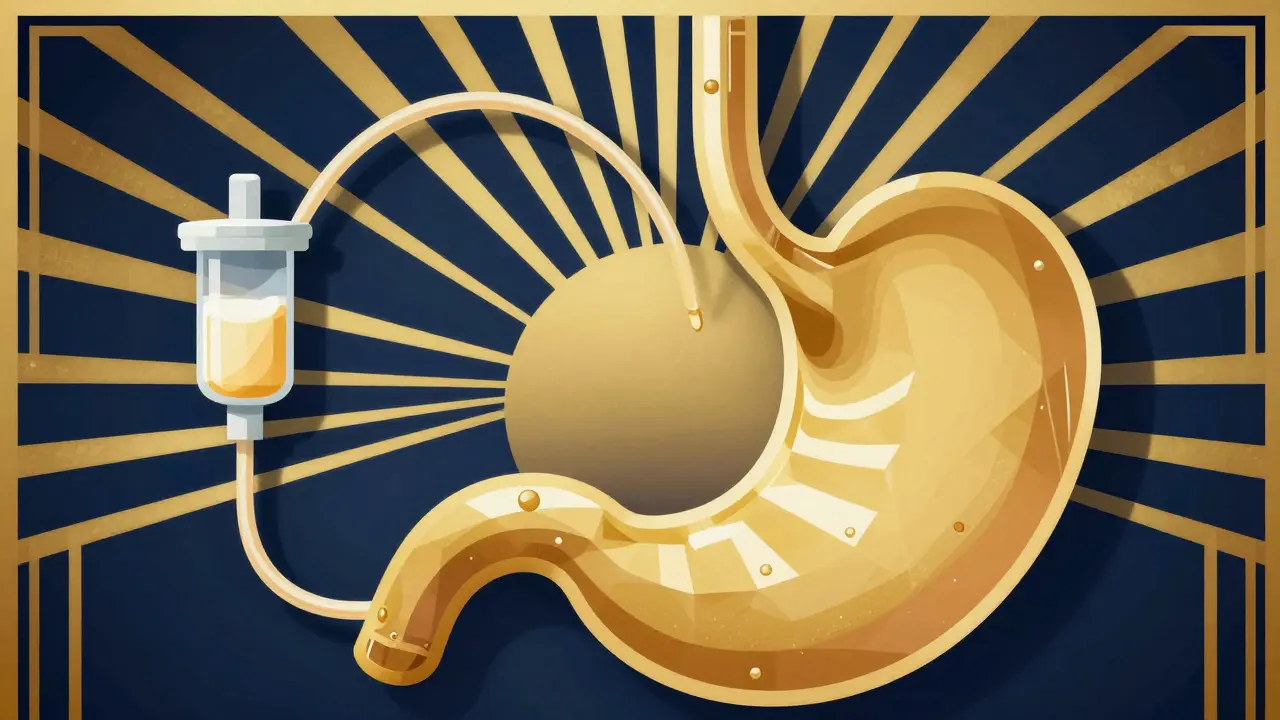
Imagine spending hours preparing a meal for someone who cannot swallow, only to watch it clog the very tube meant to save their life. It happens more often than you might think. Enteral feeding tubes are lifelines for millions of people with swallowing difficulties or neurological conditions, but they are also fragile pipelines that can easily become blocked. The biggest culprit? Medications.
When we talk about enteral feeding, we are referring to the delivery of nutrition and medications directly into the gastrointestinal tract via a tube. This includes nasogastric (NG) tubes, which go through the nose, and gastrostomy (G-tubes), which sit in the stomach. While these devices allow patients to receive essential drugs, improper handling leads to tube obstruction in up to 65% of blockage cases. The stakes are high: a blocked tube means missed doses, hospital readmissions, and significant distress for both the patient and the caregiver.
Why Tube Compatibility Matters More Than You Think
Not all pills play nice with tubes. In fact, many standard oral medications are designed to dissolve slowly in the stomach or release drugs over time. When you crush these pills or mix them incorrectly, you change how the body absorbs them. Some drugs lose their effectiveness entirely, while others can become toxic. According to data from the Institute for Safe Medication Practices (ISMP), improper administration contributes to treatment failure in 25-30% of cases.
The core issue lies in the physical properties of the medication versus the narrow diameter of the tube. Most enteral tubes range from 5 to 16 French (roughly 1.7 to 5.3 mm). Smaller tubes, like an 8 French NG tube, are particularly prone to clogging if particles aren't fully dissolved. Before giving any medication, you must verify its compatibility. Is it safe to crush? Does it need to be mixed with a specific amount of water? These questions determine whether the drug reaches the bloodstream or ends up as a solid plug inside the tube.
The Golden Rule of Flushing Protocols
If there is one habit you must adopt, it is this: flush, flush, and flush again. Water is your best friend when managing an enteral tube. Without adequate flushing, medications stick to the tube walls, feedings curdle, and blockages form. The Cleveland Clinic and other major health institutions agree on a simple protocol: use at least 15 mL of water before administering medication, between each different medication, and after the last dose.
Think of it like cleaning a coffee machine. If you pour milk, then coffee, then syrup without rinsing in between, you get a messy, unusable result. With tubes, the consequences are medical emergencies. A good rule of thumb is to use 15 mL of water for every 10 mL of medication mixture. For smaller children or sensitive patients, even small volumes matter. Never skip the post-medication flush, as this clears residual drug particles that could interact with the next feeding or cause irritation.
Medications You Should Never Crush
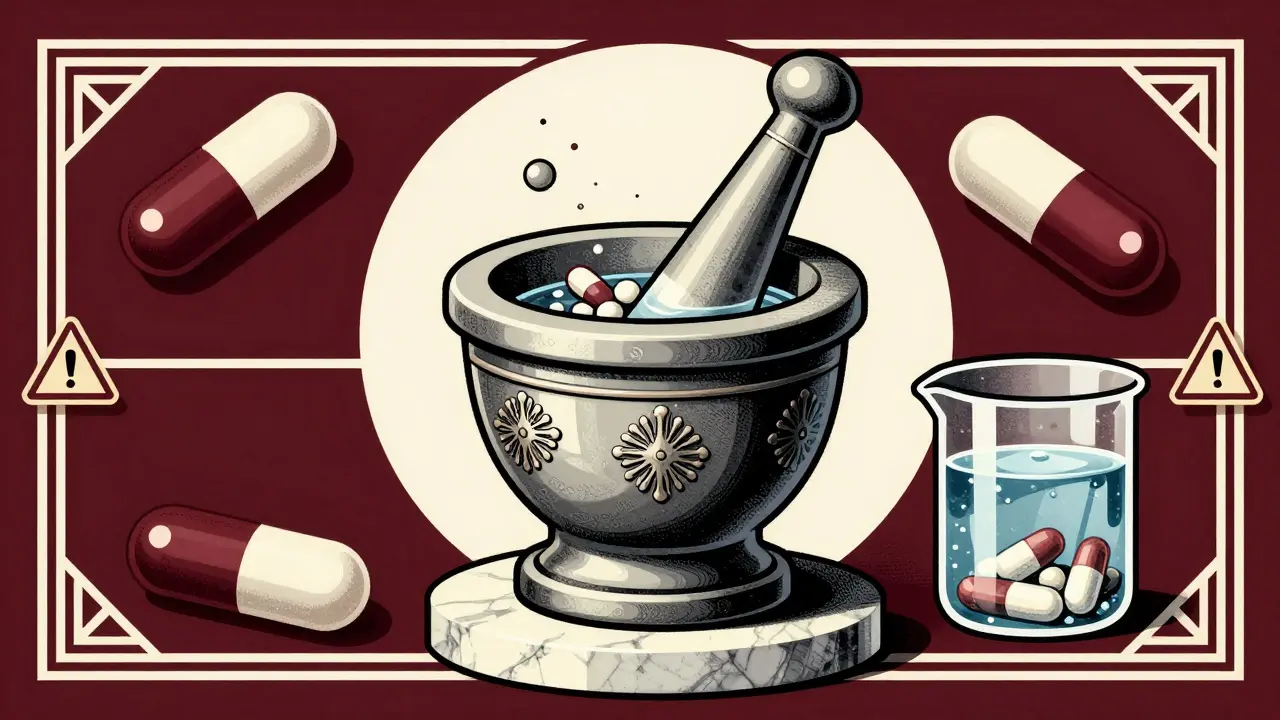
Crushing tablets seems like a logical solution, but it is dangerous for certain drugs. Extended-release (ER) and enteric-coated formulations are engineered to release medicine slowly or protect it from stomach acid. Crushing them destroys this mechanism. Here are critical examples to avoid:
- Mycophenolate (Cellcept®): Crushing this immunosuppressant can lead to toxic exposure levels because the entire dose hits the system at once.
- Bulk-forming laxatives (e.g., Metamucil®): These absorb water and expand rapidly. Putting them in a tube guarantees an immediate, hard-to-remove blockage.
- Enteric-coated Duloxetine: These capsules contain tiny pellets designed to survive stomach acid. Opening them compromises the drug's stability.
- Finasteride (Proscar®): Handling crushed finasteride poses risks of toxic exposure to caregivers due to its hormonal effects.
Always check the label or consult a pharmacist. If a drug is labeled "extended-release," "sustained-release," or "enteric-coated," do not crush it unless a liquid alternative exists. For instance, immediate-release phenytoin can sometimes substitute for long-acting capsules, but serum levels must be monitored closely due to its narrow therapeutic index.
Preparing Medications Safely: Step-by-Step
Preparation takes time, but rushing causes errors. Follow this sequence to ensure safety:
- Verify Tube Placement: Confirm the tube is in the stomach using pH testing or radiographic confirmation. Administering meds into the lungs can be fatal.
- Check Compatibility: Use resources like the NIH study database or hospital pharmacy guidelines to confirm the drug is suitable for tube administration.
- Prepare One Drug at a Time: Mix each medication separately. Do not combine multiple crushed pills in one syringe, as they may react with each other.
- Use Adequate Water: Dissolve the crushed tablet in at least 15-30 mL of warm water. Warm water helps dissolve particles better than cold.
- Administer and Flush: Give the medication, then immediately flush with another 15-30 mL of water.
- Document Everything: Record the volume used, the preparation method, and any observations. Documentation is key for tracking efficacy and preventing future errors.
A common mistake is adding medications directly to the feeding bag. Unless you have verified compatibility data, never mix drugs into the nutrition formula. This can cause precipitation, where solids form and clog the tube, or reduce the nutritional value of the feed.
| Formulation Type | Safety for Crushing | Risk Level | Recommendation |
|---|---|---|---|
| Immediate-Release Tablet | Generally Safe | Low | Crush and mix with 15-30 mL water |
| Extended-Release Capsule | Unsafe | High | Do not crush; seek liquid alternative |
| Enteric-Coated Pill | Unsafe | High | Do not crush; protects drug from acid |
| Liquid Solution | Safest | Very Low | Dilute if necessary; flush well |
| Bulk Laxative | Contraindicated | Critical | Never administer via tube |
Interactions Between Food and Medicine
Does food affect how drugs work in the gut? For most medications, the answer is no. A major task force by ASPEN found that withholding tube feedings for drug interactions is rarely necessary, with levodopa being a notable exception. However, some drugs require an empty stomach for proper absorption. Always check specific drug guidelines. If in doubt, pause feeding for 30 minutes before and after administering critical medications.
Another hidden risk is drug-feed interaction. Certain antibiotics bind with calcium in feeds, reducing their effectiveness. If a patient is on long-term antibiotics, discuss timing with the care team. The goal is to maintain therapeutic drug levels without compromising nutrition.
Troubleshooting Blockages and Errors
Despite best efforts, blockages happen. If resistance is met during flushing, stop immediately. Forcing water can damage the tube or injure the patient. Try gentle warm water irrigation with a large-bore syringe. If that fails, contact a healthcare provider. Enzymatic cleaners are sometimes used for stubborn clogs, but prevention is always better than cure.
Common signs of inadequate flushing include slow drainage, inability to aspirate stomach contents, and visible residue in the syringe. Regular maintenance checks, including verifying tube position daily, can prevent many issues. Remember, a blocked tube is a medical urgency, not just an inconvenience.
How much water should I use to flush an enteral feeding tube?
You should use at least 15 mL of water before, between, and after each medication. For every 10 mL of medication administered, add 15 mL of water. This ensures particles are cleared and prevents clogging.
Can I crush any pill and put it in a feeding tube?
No. Never crush extended-release, sustained-release, or enteric-coated medications. Doing so can cause toxicity or render the drug ineffective. Always consult a pharmacist or use a compatibility database before crushing.
What should I do if the tube gets blocked?
Stop forcing fluid immediately. Try gentle irrigation with warm water using a large syringe. If the blockage persists, contact a healthcare professional. Do not attempt aggressive clearing methods at home.
Is it safe to mix medications with tube feeding formula?
Generally, no. Mixing meds with formula can cause clogging or reduce drug absorption. Only do this if you have verified compatibility data from a pharmacist or clinical guideline. Administering separately is safer.
How do I know if a medication is compatible with my tube?
Check the drug label for "enteral tube" instructions. Consult resources like the NIH enteral medication database or your hospital’s pharmacy guidelines. Look for dissolution times and particle size data to ensure it won’t clog the tube.
jeremy pritchett
July 6, 2026 AT 02:29man this is exactly why i lost my mind last week with my dads ng tube. the nurse just threw pills in there like they were candy and boom clogged for 3 days. flushing is literally everything people stop treating it like a suggestion
Isis Fleming
July 6, 2026 AT 04:15It is imperative to note that while the article provides a solid foundation, the specific mention of warm water is often overlooked by lay caregivers who assume room temperature suffices. Warm water significantly aids in the dissolution of hydrophobic drug particles. Furthermore, one must consider the viscosity of the feeding formula itself; high-protein formulas are far more prone to precipitation when mixed with certain antibiotics like tetracyclines or fluoroquinolones. It is not merely about flushing volume but also the chemical compatibility between the nutrient substrate and the pharmacological agent. I would advise consulting the specific pH requirements of the medication as well, as gastric acidity can alter drug stability before absorption even occurs.
Sydney Jarrett
July 7, 2026 AT 15:01Oh please, let's pretend standard nursing protocols aren't already failing half the patients because hospitals are understaffed and overworked nurses don't have time to read labels. The real issue isn't 'flushing' it's the systemic failure of pharmaceutical companies to produce liquid formulations for every single extended-release drug so we don't have to play chemist in a hospital bed. And don't get me started on the cost of those specialized liquid meds which are always 5x the price of the pill version. It's a scam designed to bleed insurance dry while we babysit clogged tubes.
Kimberly Simbulan
July 8, 2026 AT 19:29Sydney you're absolutely right about the cost thing 😂 it feels like we're paying extra just to keep our loved ones alive without turning into pharmacists. But seriously, does anyone else feel guilty when they forget to flush properly? Like am i the only one who panics if the syringe gets stuck for even a second?
Sydney Jarrett
July 9, 2026 AT 16:44Guilt is an inefficient emotional response to a mechanical problem, Kimberly. If you are panicking, you are likely applying excessive pressure which increases the risk of tube rupture or tissue damage. You need to detach emotionally from the device. It is plastic. Your patient is human. Focus on the protocol: 15ml pre, 15ml inter, 15ml post. If it clogs, you call the doctor. You do not cry over the sink. The system is broken, yes, but your anxiety won't fix the supply chain issues regarding liquid metoprolol.
kavitha kumar
July 10, 2026 AT 03:14i had a nightmare with metamucil once... thought i could just crush it cause its fiber right?? big mistake huge mistake. the tube was completely blocked for hours and my mom was screaming in pain. never again. i swear some of these meds are designed to hurt us lol
Ben Murphy
July 11, 2026 AT 07:57The ethical implications of administering bulk-forming laxatives via enteral routes without explicit gastroenterological oversight are profound. To suggest otherwise is negligent. One must adhere strictly to the contraindications listed in the package insert. Ignorance is no excuse for malpractice in home care settings. If you cannot verify the osmotic properties and expansion rate of the substance, you have no business introducing it into the gastrointestinal tract of a dependent individual. This is basic bioethics.
Dawn Renee
July 11, 2026 AT 20:31I've been reading up on this and honestly I think the push for enteral feeding is part of a larger agenda to keep people dependent on medical devices rather than addressing root causes like gut health or natural swallowing reflexes. Why is everyone so quick to insert tubes instead of trying holistic approaches first? The pharmaceutical industry profits from the complications of tube feeding like blockages and infections. It's suspicious how many 'guidelines' come from institutions funded by drug makers. Just saying.
Blythe Ward
July 13, 2026 AT 20:28Dawn really out here connecting tube clogs to global conspiracies 🙄👏 but sure blame the pharma bros instead of your own lack of reading comprehension. the article says check compatibility u moron. maybe try that next time instead of theorizing about secret agendas while your patient starves 🤡💊
Casey Eickhoff
July 14, 2026 AT 07:33While the frustration expressed here is understandable, it is crucial to maintain a focus on evidence-based practice. The guidelines provided by ASPEN and ISMP are derived from extensive clinical data, not corporate lobbying. For those managing care at home, I highly recommend keeping a printed log of medication administration times and flush volumes. This documentation not only aids in troubleshooting but also provides valuable data for healthcare providers during consultations. Consistency is key to preventing the aforementioned obstructions.
Lorena Suarez
July 15, 2026 AT 04:48just wanted to say thanks for sharing this info. im new to caring for my grandma and feeling pretty overwhelmed. seeing others talk about their struggles makes me feel less alone. gonna print out the flushing guide and stick it on the fridge 🌸