

Imagine this: your grandmother takes five different pills every morning. One is for her heart, one for blood pressure, another for arthritis, plus a vitamin and a sleep aid. Sounds manageable, right? But did you know that adults over 65 account for just 16% of the population yet consume 34% of all prescription medications? It’s not just about taking pills; it’s about taking them safely. As we age, our bodies process drugs differently, making seniors more vulnerable to side effects and dangerous interactions. If you’re caring for an aging parent or grandparent, getting their medication routine right isn’t just helpful-it’s critical.
The stakes are high. According to recent data, there are roughly 350,000 preventable adverse drug events in nursing homes alone every year. That number doesn’t even fully capture the chaos happening in home settings. Whether you’re managing your own prescriptions or helping a loved one, these five evidence-based strategies can drastically reduce risks, save money, and keep independence intact.
Key Takeaways
- Keep a master list: Document every single pill, supplement, and cream with dosages and reasons for use.
- Use visual aids: Pill organizers and large-print labels significantly boost adherence, especially for those with mild memory issues.
- Watch for interactions: Check new meds against existing ones using resources like the Beers Criteria® to avoid harmful combinations.
- Store properly: Keep meds out of humid bathrooms and away from extreme temperatures to maintain potency.
- Talk to providers: Ask specific questions at appointments to ensure every medication is still necessary and safe.
Maintain a Living Medication List
You might think you remember what your dad takes. But do you remember the exact dosage of his beta-blocker? Or whether he switched brands last month? Memory is fallible, and relying on it is risky. The Medication List is your first line of defense. This isn't just a scrap of paper; it's a comprehensive record. It should include the name of every prescription, over-the-counter drug, vitamin, and herbal supplement. Don't forget to note the strength (like 5mg vs. 10mg), how often it's taken, and who prescribed it.
Why does this matter so much? Because polypharmacy-the use of multiple medications-is common among seniors. A study by the American Pharmacists Association found that 92% of pharmacists say having an updated list prevents dangerous drug interactions. When you visit a specialist, they need to see everything you take, not just what you mention verbally. Bring the list to every appointment. Update it within 24 hours of any change. Think of it as a passport for your health; without it, you risk getting lost in a sea of conflicting instructions.
Organize with Visual and Digital Tools
Opening seven little plastic containers every day can be frustrating, especially if your eyesight isn't what it used to be. For many seniors, the physical act of sorting pills is where errors happen. Enter the Pill Organizer. These simple devices compartmentalize doses by day and time. Research shows that color-coded systems improve adherence by nearly 50% in seniors with mild cognitive impairment.
If manual sorting feels too complex, consider technology. Apps like Medisafe or smart dispensers like Hero offer automated reminders and tracking. While some caregivers worry that tech adds confusion, studies indicate that properly implemented digital tools can raise adherence rates from 55% to 89% in those aged 75 and older. However, match the tool to the person. If your mom struggles with smartphones, a simple weekly box with large print labels might work better than a $500 gadget. Start small. Try a basic AM/PM organizer before jumping into complex systems. The goal is consistency, not complexity.
| Tool Type | Best For | Pros | Cons |
|---|---|---|---|
| Weekly Pill Box | Seniors with good dexterity but poor memory | Inexpensive, portable, easy to check visually | Requires weekly refilling, no alerts |
| Smart Dispenser | Complex regimens, caregivers monitoring remotely | Automated locking, app notifications, error reduction | Higher cost, requires charging/Wi-Fi |
| Laminated Chart | Those anxious about unfamiliar pills | Visual reassurance, low-tech, customizable | No timing enforcement, needs manual checking |

Monitor for Interactions and Side Effects
Just because two drugs are safe individually doesn't mean they're safe together. Aging livers and kidneys process medications slower, meaning drugs stay in the system longer. This increases the risk of toxicity. You need to be vigilant about Drug Interactions. The FDA warns that grapefruit juice interacts with over 85 common medications, including statins and blood pressure drugs. Alcohol can dangerously amplify sedatives and diabetes medications.
How do you catch these issues? Use the Beers Criteria®, a guideline updated regularly by the American Geriatrics Society. It lists potentially inappropriate medications for older adults. In 2023, it identified 138 such drugs. Before starting a new med, ask your pharmacist: "Does this interact with anything else I'm taking?" Also, watch for subtle changes. Is Grandpa suddenly more confused? Is Grandma stumbling more often? These could be signs of side effects, not just "getting old." Report them immediately. Sometimes, stopping a medication is safer than continuing it.
Store Medications Properly
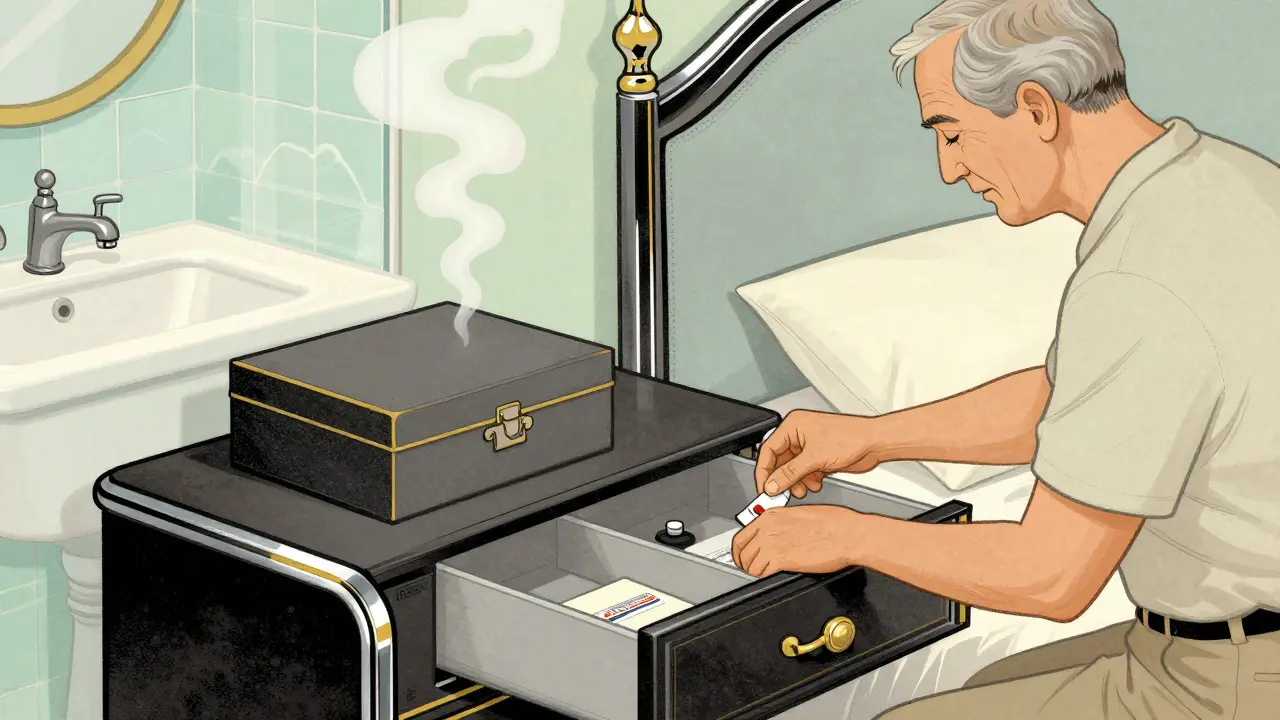
Where do you keep your pills? If you said the bathroom medicine cabinet, you're not alone. But that might be the worst place. Bathrooms are humid and hot. Steam from showers can degrade medications, rendering them less effective or even harmful. A University of Florida study noted that humidity affects 37% of common medications. Ideal storage is cool, dry, and dark-think a bedroom drawer or kitchen pantry, away from the stove or sink.
Temperature matters too. Most drugs need to be kept between 68-77°F (20-25°C). Extreme heat or cold breaks down chemical compounds. If you travel, don't leave pills in a hot car. And please, keep them locked up if grandchildren visit. The Poison Control Center reports 60,000 accidental pediatric poisonings annually from improperly stored meds. A simple lockbox costs ten dollars and provides peace of mind. Also, check expiration dates. The average senior home holds hundreds of dollars worth of expired or unused meds. Clean them out regularly to avoid confusion.
Establish Clear Communication Protocols
Doctors are busy. Appointments are short. If you don't ask the right questions, important details get missed. Prepare beforehand. Write down specific queries: "Is this medication still necessary?" "What are the signs of a dangerous side effect?" "Are there cheaper alternatives?" Structured communication reduces medication errors by 63% in patients with dementia, according to the Alzheimer's Association.
Don't hesitate to ask for a "brown bag review." Bring all your bottles to the doctor or pharmacist. Let them see exactly what you have. They might spot duplicates or outdated prescriptions. If you have Medicare Part D, look into Medication Therapy Management (MTM) services. Eligible beneficiaries (those taking 8+ chronic condition meds) get free reviews. CMS reported a 19% drop in hospitalizations for participants. Use these resources. Your voice matters in healthcare decisions. Advocating for clarity ensures safety.
Frequently Asked Questions
What is polypharmacy?
Polypharmacy refers to the use of multiple medications by a patient, often defined as taking five or more prescription drugs daily. It is common in seniors due to multiple chronic conditions but increases the risk of adverse drug events and interactions.
Can I crush my medication if I have trouble swallowing?
Not always. Some medications are extended-release or enteric-coated, meaning crushing them releases the drug too quickly or causes stomach irritation. Always check with a pharmacist before altering the form of any medication.
How often should I update my medication list?
Update your list immediately whenever a medication is added, changed, or stopped. Additionally, review it thoroughly at least once every six months, or before any major medical appointment, to ensure accuracy.
Are supplements safe to take with prescription drugs?
Not necessarily. Supplements like St. John's Wort, garlic, and ginkgo biloba can interact with blood thinners, antidepressants, and other drugs. Treat supplements like medications and discuss them with your healthcare provider.
What should I do if I miss a dose?
It depends on the medication. Generally, if it's close to the next dose time, skip the missed one. Never double up unless instructed by a doctor or pharmacist. Check the specific guidance on the label or call your pharmacy for advice.
Next Steps for Safer Medication Use
Start today. Pick one tip and implement it. Maybe it’s cleaning out the bathroom cabinet or writing down every pill your parent takes. Small steps lead to big safety improvements. Remember, medication management is a marathon, not a sprint. Regular reviews, open communication, and proper organization create a safety net that protects health and dignity. If you feel overwhelmed, ask for help. Pharmacists are invaluable allies in this journey. They are accessible experts ready to answer your questions and catch errors before they become emergencies.
Venkatesan V.K.
August 31, 2026 AT 05:54the stats are accurate but the advice is painfully basic for anyone who actually manages a household
youre telling people to keep a list and store pills correctly like its some kind of revelation when in reality the pharmaceutical industry pushes these drugs on us anyway
grammatically i have no complaints but emotionally this article feels empty
it lacks the urgency needed to make people change their habits
also why is there no mention of cost barriers that prevent adherence
Pearl Richardson
September 2, 2026 AT 02:03I find it deeply suspicious that we are only now being reminded about the dangers of polypharmacy 🤔
Consider the timeline: Big Pharma lobbies heavily against regulations that would limit prescribing practices. The "Beers Criteria" mentioned here is useful, sure, but who updates it? Who funds the research behind it?
We are told to trust our pharmacists, yet they are often beholden to corporate contracts that prioritize volume over patient safety. I am not saying this is a conspiracy theory; I am saying follow the money.
The statistic regarding 350,000 adverse events in nursing homes is likely underreported because reporting mechanisms are flawed. If you look at the data from home settings, which are unregulated, the numbers could be exponentially higher.
Furthermore, the emphasis on "visual aids" distracts from the root cause: over-medication driven by profit motives rather than genuine health outcomes. We need systemic change, not just better pill boxes. 😐📉🧐
larry williams
September 2, 2026 AT 23:39It is truly heartening to see such comprehensive guidance laid out so clearly for those of us navigating the complex world of senior care
I have personally witnessed how a simple medication list can transform the daily routine of a loved one from chaotic anxiety into structured peace of mind
The point about visual aids resonates deeply with me as my father struggled immensely with small print labels until we switched to large-print organizers which he found incredibly empowering
I believe that every caregiver should take a moment to appreciate the resilience of seniors who manage these regimens with such dignity despite the physical and cognitive challenges they face
Let us remember that consistency is key and that small steps towards organization can lead to monumental improvements in quality of life
You are doing an amazing job advocating for safety and I encourage everyone reading this to start with just one tip today without feeling overwhelmed by the entire process
Keep up the wonderful work and know that your efforts are making a tangible difference in countless households across the country
Stephen Horn
September 4, 2026 AT 04:05While the sentiment is appreciated, one must question the efficacy of relying solely on patient compliance tools like pill organizers
The Beers Criteria® is indeed a gold standard, yet it is frequently ignored by general practitioners who lack geriatric specialization
We operate in a healthcare system that prioritizes speed over thoroughness, meaning that even the most diligent caregivers often hit bureaucratic walls when trying to reduce unnecessary prescriptions
It is not merely about storage or lists; it is about challenging the medical establishment's tendency to prescribe first and ask questions later
If we do not address the systemic inertia, these tips remain superficial bandages on a gaping wound of institutional negligence
I suggest looking beyond the individual responsibility narrative and examining the structural failures that allow polypharmacy to flourish unchecked
Gurjit Singh
September 5, 2026 AT 16:57People forget that supplements are not harmless candy. My uncle took ginkgo biloba thinking it was natural and safe while on blood thinners and ended up in the ER. It is irresponsible to treat vitamins as secondary to prescription meds. You must disclose everything to your doctor. There is no excuse for ignorance when the information is available. Stop guessing with your health.
hareesh kumar
September 5, 2026 AT 20:01wait hold on are we really talking about pill organizers like thats gonna solve everything?? lololol no way jose!!!
i mean sure maybe for some people but what about the fact that half the time the pharmacy gives you the wrong dosage or mixes up the bottles??? i had this happen to my mom last week and she almost double dosed her beta blocker!!
and dont get me started on the "smart dispensers"... who has the money for that?! $500 for a box that talks to you?? ridiculous!!
plus the article ignores the real issue which is that doctors barely spend 10 minutes with patients anymore so how are they supposed to catch interactions?? its all a big scam to sell more meds i swear!!
anyway great post i guess if you ignore the obvious flaws in the system hahaha
Vivek Chaturvedi
September 6, 2026 AT 08:03the bathroom cabinet thing is crucial
humidity kills meds
simple fix saves money
do it
Patrick van der Velde
September 6, 2026 AT 18:20One finds it amusing that we celebrate the ability to sort pills into plastic compartments as if it were a triumph of modern medicine. In truth, it highlights the absurdity of a system where the elderly are expected to self-manage complex chemical cocktails without adequate professional oversight. The reliance on "brown bag reviews" suggests that the primary care model has failed to integrate holistic medication management into routine practice. We are essentially outsourcing clinical vigilance to laypeople. It is inefficient, inelegant, and frankly, beneath the standard of care we ought to demand. The focus on low-tech solutions masks the high-tech failures of our healthcare infrastructure.
Eryn Manchego
September 7, 2026 AT 10:36love the vibe here!! super practical tips for keeping things chill and safe 💖
especially the part about matching the tool to the person so important!! if grandma hates apps dont force the app!! use the laminated chart!! simple effective stress free!!
also shoutout to pharmacists they are literally unsung heroes in this whole saga 🦸♀️✨
keep spreading the word stay organized stay healthy!!
Crystal Torres
September 8, 2026 AT 21:48I appreciate the emphasis on communication protocols. However, I feel compelled to add that many seniors struggle with hearing loss, which makes verbal instructions during short appointments difficult to retain. Visual confirmation of dosage changes is vital. Additionally, involving a second family member in the appointment can significantly reduce errors. This dual-verification method ensures that critical information is captured accurately. It is a small adjustment that yields substantial safety benefits.