
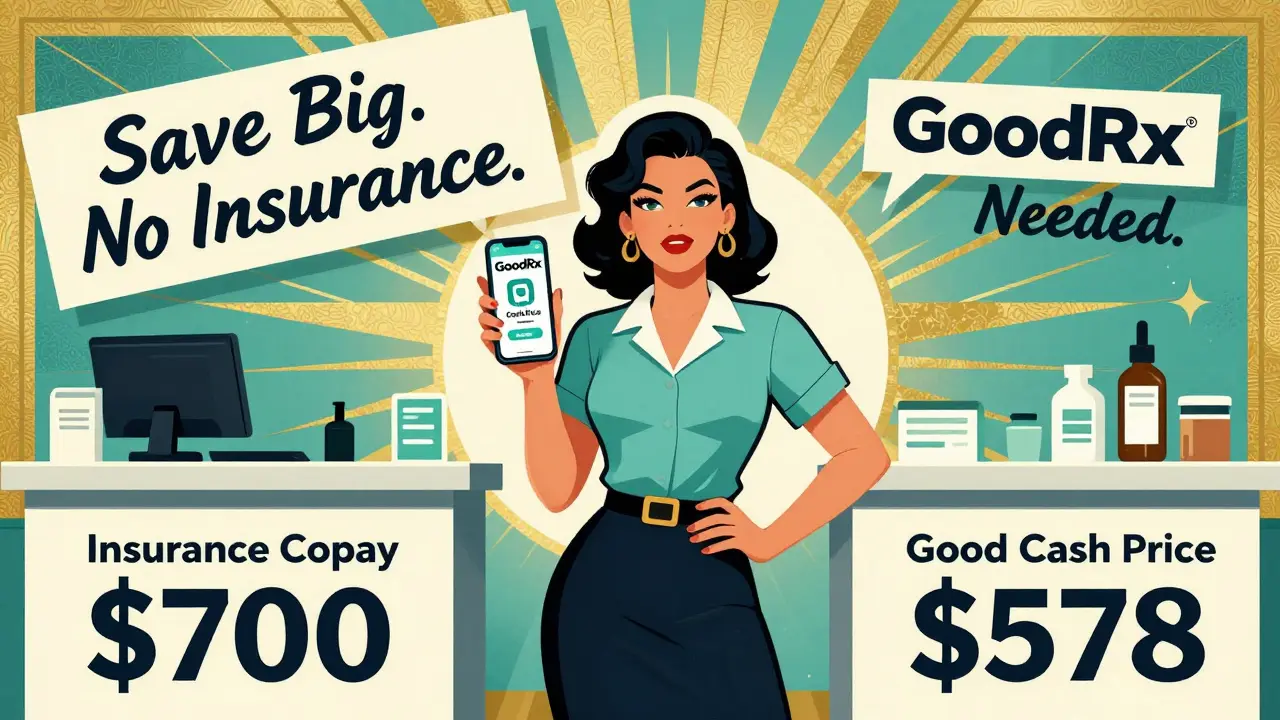
What if you could pay less for your prescription than your insurance copay? It sounds too good to be true, but for millions of Americans, it’s happening every day-thanks to services like GoodRx. You don’t need to be uninsured. You don’t need to switch plans. You just need to know how to compare prices before you pay.
How GoodRx Actually Works (It’s Not What You Think)
GoodRx isn’t insurance. It doesn’t cover you. It doesn’t bill anyone. Instead, it acts like a price comparison tool for prescriptions-except instead of comparing hotels or flights, it’s comparing drug prices across thousands of pharmacies. Here’s how it works: GoodRx partners with Pharmacy Benefit Managers (PBMs) like Express Scripts and OptumRx. These PBMs have negotiated deals with pharmacies to offer lower prices for insured patients. GoodRx gets access to those same discounted rates and passes them along to you-for free. You enter your drug name and zip code, and GoodRx shows you the lowest cash price nearby. You print a coupon or show the barcode on your phone, and the pharmacy applies the discount at checkout. It’s that simple. No enrollment. No monthly fee. No paperwork. And here’s the kicker: you can’t use GoodRx and your insurance at the same time. You have to pick one.When GoodRx Beats Insurance
Most people assume insurance always saves money. But that’s not true. Especially if you’re paying a high deductible, your drug isn’t on your plan’s formulary, or you’re in the Medicare Part D coverage gap (the “donut hole”). Take Jardiance, a popular diabetes drug. One user on Reddit paid $700 out-of-pocket through Medicare before hitting the donut hole. With GoodRx, they paid $578. That’s $122 saved-just by switching. Or consider semaglutide (Ozempic). One person reported their insurance copay was $935.80. GoodRx offered it for $523.30. That’s nearly $413 saved in one go. A 2022 study from the University of Maryland found GoodRx saved users money on 87% of generic prescriptions. For non-formulary brand-name drugs-those not covered by your plan-it’s even more common. In fact, a 2023 NCPA survey showed 34% of insured patients saved more using GoodRx than their insurance copay.What About GoodRx Gold?
GoodRx offers a paid subscription called GoodRx Gold: $9.99 per month for individuals, $19.99 for families. It gives you deeper discounts-sometimes up to 90% off-and free home delivery for 38,000+ pharmacies. For people on expensive medications like insulin, the math adds up fast. Humalog insulin costs $336.99 retail. GoodRx Gold brings it down to $98.47. That’s a 71% savings. If you’re on insulin year-round, the $120 annual fee pays for itself in less than two months. But Gold isn’t for everyone. If you only take a few generic drugs a year, the free version is enough. The subscription is worth it if you’re on multiple high-cost meds, need delivery, or want extra discounts on pet prescriptions and vitamins.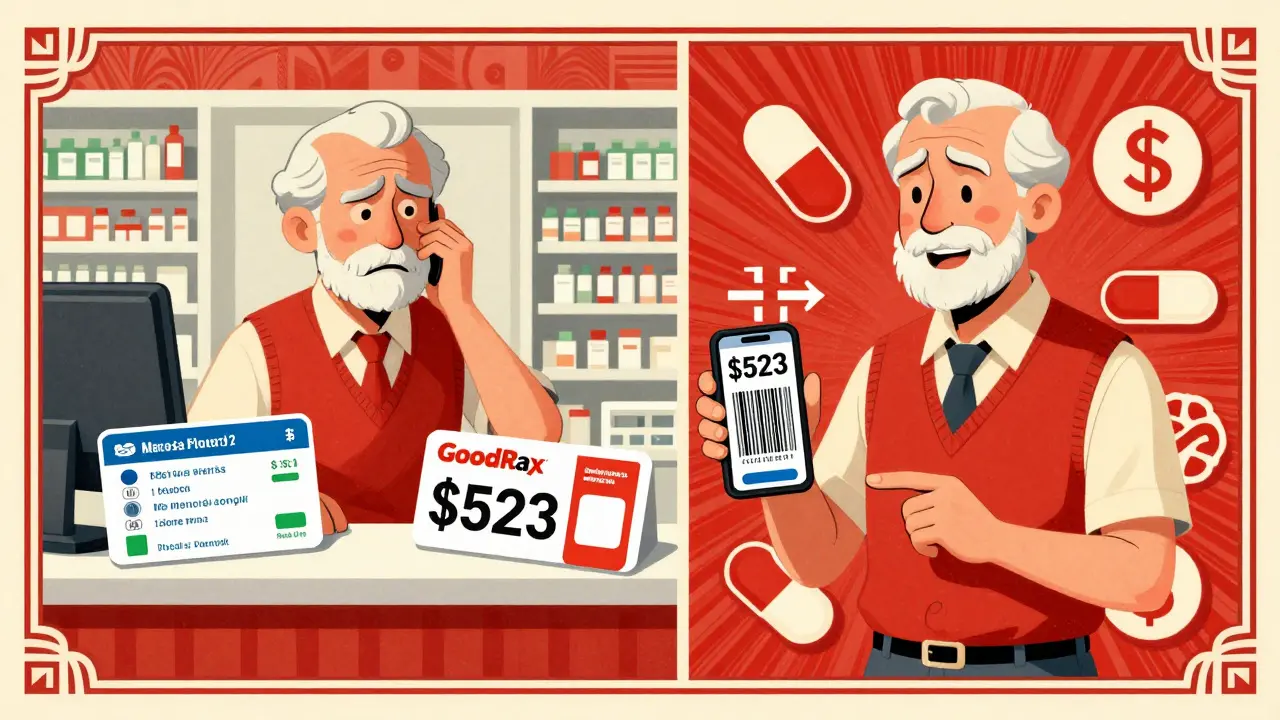
Other Services: SingleCare, RxSaver, and More
GoodRx isn’t the only game in town. SingleCare and RxSaver are two of its biggest competitors. SingleCare offers similar discounts but doesn’t update prices in real time. Its network is slightly smaller, but it includes telehealth visits-something GoodRx doesn’t offer yet. RxSaver has fewer participating pharmacies but often has lower prices on certain generics like metformin or lisinopril. The difference? GoodRx has 75% of the market. It has the most pharmacies, the most drugs, and the most accurate pricing. But that doesn’t mean you shouldn’t check the others. One user found a $20 difference between GoodRx and SingleCare for their thyroid med. That’s $240 a year just from checking both. Amazon Pharmacy also entered the space in 2020. It’s cheaper on some generics-up to 12% lower than GoodRx-but only if you’re an Amazon Prime member. It also doesn’t show you local pharmacy prices. You’re locked into their delivery system.Where GoodRx Falls Short
GoodRx isn’t perfect. And it’s not always the answer. First, not all pharmacies accept it. Only about 65% of independent pharmacies participate. Big chains like CVS, Walgreens, and Walmart do-but smaller ones might refuse your coupon. Some say it’s because they don’t want to deal with the paperwork. Others say the discount is too low for them to profit. Second, it doesn’t work with Medicare or Medicaid. Federal law bans pharmacies from accepting third-party coupons if you’re on those programs. If you try, you could get flagged for fraud. That’s why some users accidentally get their Medicare coverage suspended after presenting a GoodRx coupon alongside their card. Third, it doesn’t help with your deductible. If you’re trying to reach your annual deductible, using GoodRx means your spending won’t count toward it. That could leave you paying more later in the year. Manufacturer coupons (from the drug company itself) often do count-but those are separate from GoodRx. And for specialty drugs? Sometimes insurance still wins. GoodRx Gold might charge $1,200 a month for Jardiance, but Medicare Part D’s coverage gap might cap it at $900. That’s why you always have to check both.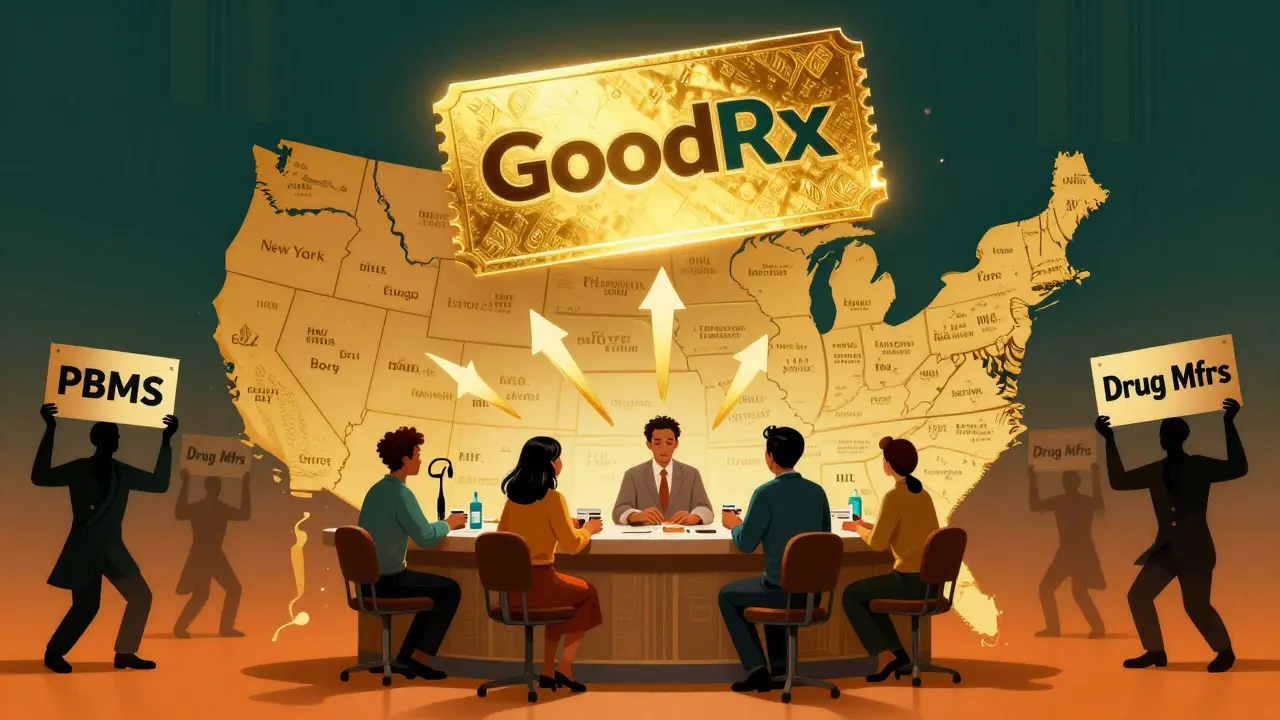
How to Use It Without Making Mistakes
You don’t need to be a pharmacy expert to use GoodRx. But there are a few things you should do every time:- Check your insurance copay first. Look at your Explanation of Benefits (EOB) or call your insurer.
- Search GoodRx for the same drug. Compare the cash price.
- Check SingleCare and RxSaver too. One price might be lower.
- Ask the pharmacist: “What’s your cash price without insurance?” Sometimes they’ll give you a better deal than the coupon.
- If you’re on Medicare, never show GoodRx with your Medicare card. Use one or the other-never both.
- For controlled substances like Adderall or oxycodone, GoodRx doesn’t work at all. DEA rules block it.
The Bigger Picture: Why This Exists
GoodRx didn’t create broken drug pricing. It just exposed it. In the U.S., the same pill can cost $5 at Walmart and $700 at a small pharmacy down the street. Why? Because drug manufacturers set list prices. PBMs negotiate rebates with them. Pharmacies get paid based on those confusing deals. Insurance companies pay one price. Cash patients pay another. And no one outside the system knows the real cost until they check. GoodRx shines a light on that mess. But experts warn it might make things worse. Harvard’s Dr. Aaron Kesselheim found that when discount services like GoodRx become popular, PBMs sometimes raise list prices to compensate for lost rebates. That could mean higher premiums for everyone else down the line. Still, for the 28 million Americans without prescription coverage-and the millions more with high deductibles-it’s a lifeline.Final Advice: Always Compare
There’s no single answer to “Should I use GoodRx?” It depends on your drug, your insurance, your pharmacy, and your budget. If you’re paying full price, use GoodRx. If your insurance has a high deductible, use GoodRx. If your drug isn’t covered, use GoodRx. If you’re on Medicare and in the donut hole, check both GoodRx and your plan’s cost calculator. The only rule that matters? Never assume. Always check. You’re not trying to beat the system. You’re just trying to pay less for medicine that keeps you alive. And in a system that’s designed to confuse you, that’s not just smart-it’s necessary.Can I use GoodRx with my insurance?
No, you cannot use GoodRx and insurance at the same time. You must choose one. GoodRx gives you a cash price, while insurance applies your copay or coinsurance. Always compare both prices before deciding which to use.
Is GoodRx free to use?
Yes, the basic GoodRx service is completely free. You can search for prices, get coupons, and use them at the pharmacy without paying anything. GoodRx Gold is a paid subscription that offers deeper discounts and home delivery, but it’s optional.
Does GoodRx work for Medicare Part D users?
Yes, but with major restrictions. Medicare Part D beneficiaries can use GoodRx to pay cash for prescriptions, but they cannot combine it with their Medicare coverage. Using GoodRx instead of Medicare may help save money in the coverage gap (donut hole), but you must never present both your Medicare card and a GoodRx coupon at the same time-this can trigger fraud investigations.
Why do some pharmacies refuse GoodRx?
Some independent pharmacies don’t accept GoodRx because the discounted price they receive from the PBM is too low to cover their costs. GoodRx works best at large chains like CVS, Walgreens, and Walmart, which have volume deals with PBMs. About 35% of independent pharmacies don’t participate, so always call ahead to confirm.
Can GoodRx help with expensive drugs like Ozempic?
Yes, GoodRx is one of the most effective tools for saving on expensive medications like Ozempic, Wegovy, and Jardiance. Users regularly report savings of 40-60% compared to insurance copays, especially before meeting their deductible. GoodRx Gold can reduce the monthly cost of Ozempic from over $900 to under $600.
Is GoodRx safe to use?
Yes, GoodRx is a legitimate, widely used service backed by major PBMs and accepted at over 70,000 pharmacies. It’s not a scam. However, users must follow rules-especially those on Medicare-to avoid accidental violations. Always use GoodRx as a cash payment option, never as a supplement to insurance.
Do I need a prescription to use GoodRx?
Yes. GoodRx is not a substitute for a prescription. You must have a valid prescription from a licensed provider before you can use a GoodRx coupon. The service only lowers the price at the pharmacy-you still need a doctor to prescribe the medication.
henry mateo
December 30, 2025 AT 08:12just used goodrx for my metformin and saved $42 this month. my insurance wanted $58, goodrx said $16. i thought it was a scam at first but the pharmacist didn’t even blink. weird how the system works but hey, free money.
Glendon Cone
January 1, 2026 AT 04:25bro this is wild 😍 i’ve been using goodrx for my insulin and it’s literally saved my life. paid $300/month before, now $98 with gold. also got my dog’s antibiotics for $12 instead of $80. 🐶💊
everyone should check this before paying full price. it’s not magic, it’s just the system being broken and goodrx exposing it. thank you for this post.
Henry Ward
January 3, 2026 AT 01:51you people are idiots. goodrx isn’t helping you-it’s helping the PBMs and drug companies raise list prices so they can charge insurance more later. you’re not saving money, you’re just making the system more broken. you’re all complicit in the collapse of healthcare. this isn’t a hack, it’s a trap.
Sandeep Mishra
January 3, 2026 AT 06:22in india, we don’t have this problem because medicines are priced by the government. but i see what you mean-when you’re forced to choose between food and medicine, any tool that helps is sacred.
thank you for writing this. it’s not about beating the system. it’s about surviving it.
Joseph Corry
January 3, 2026 AT 22:20the entire premise is predicated on a neoliberal fragmentation of pharmaceutical pricing architecture, wherein the opacity of PBM-negotiated rebates creates arbitrage opportunities for third-party aggregators like goodrx. it’s not a solution-it’s a symptom of systemic market failure. you’re not a savvy consumer; you’re a data point in a rent-extraction scheme.
srishti Jain
January 4, 2026 AT 23:48my insurance denied my adderall. goodrx didn’t work either. waste of time. just pay cash at walgreens. easier.
Nadia Spira
January 6, 2026 AT 15:45you’re all so naive. goodrx is a gateway drug to pharmaceutical deregulation. you think you’re saving money? you’re just enabling the collapse of insurance-based healthcare. next thing you know, your premiums will double because everyone’s opting out. you’re not clever-you’re contributing to the destruction of collective care.
Kunal Karakoti
January 6, 2026 AT 17:22there’s a deeper question here: why should a person have to become a price detective just to afford medicine? we’ve normalized absurdity. if a pill can cost $5 or $700 depending on who you are, then the system isn’t broken-it was designed this way. goodrx doesn’t fix it. it just lets us breathe while we wait for something better.
Kelly Gerrard
January 8, 2026 AT 11:48I am so grateful for this post. It is a beacon of clarity in a landscape of chaos. Thank you for empowering individuals with knowledge. This is not just about savings-it is about dignity. I will share this with my elderly neighbors who are struggling.
Aayush Khandelwal
January 8, 2026 AT 17:58goodrx is the american dream: find the loophole, exploit the glitch, survive the machine. i used to think it was shady, but then i saw my friend pay $2 for his blood pressure med. that’s not cheating-that’s hacking capitalism with a coupon. also, rx saver gave me a better deal on lisinopril than goodrx. always check three apps. it’s like haggling at a bazaar but with pills.
Colin L
January 9, 2026 AT 03:52you know what’s worse than goodrx? the fact that we’ve normalized this. i’ve been in the uk for 15 years and i still can’t believe how insane this is. you go to the pharmacy, you hand over a piece of paper, you pay £2 for everything. no coupons. no comparisons. no anxiety. just medicine. and here you are, doing math like it’s a game show. you’re not saving money-you’re just trying not to cry. and i’m sorry, but that’s not progress. that’s just survival with extra steps. and don’t even get me started on how the pbms are just middlemen who do nothing but inflate prices. i’ve seen it. i’ve lived it. and i miss the nhs every single day.