
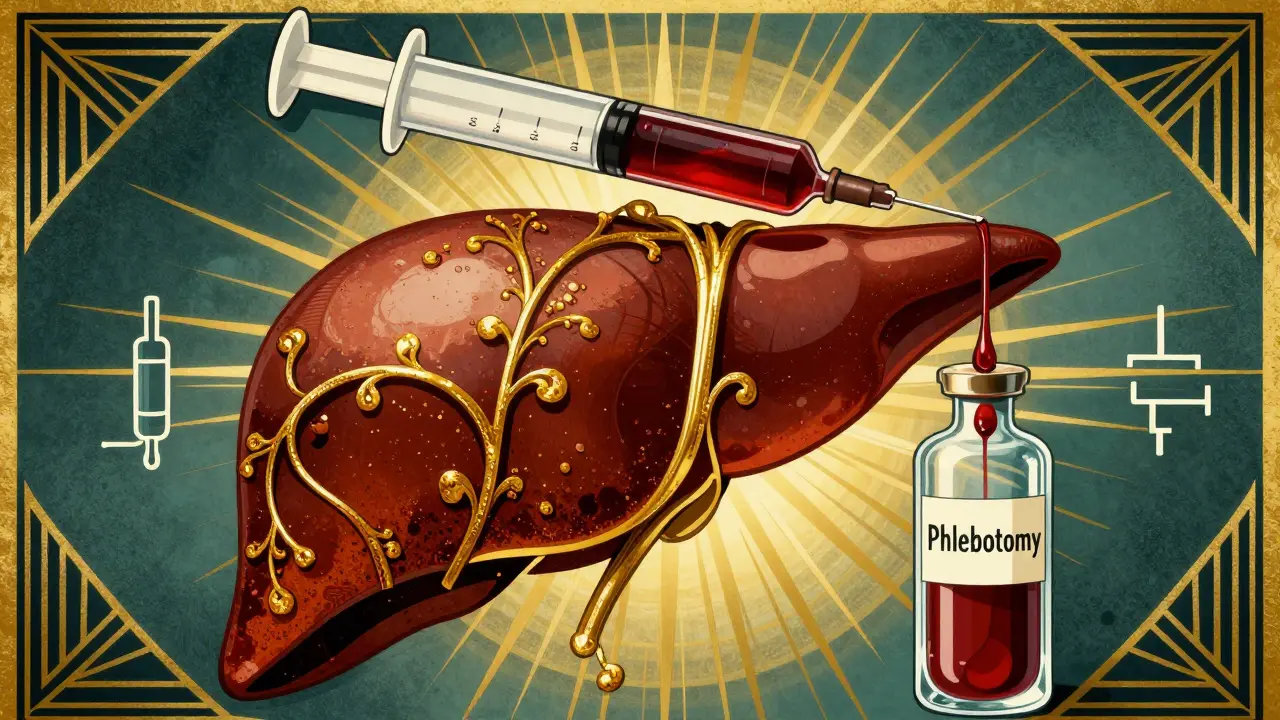
Most people think too much iron is a good thing - after all, iron helps carry oxygen in your blood. But when your body can’t get rid of excess iron, it starts storing it where it shouldn’t: in your liver, heart, pancreas, and joints. This isn’t just a minor imbalance. It’s hemochromatosis, a silent genetic disorder that slowly destroys organs over decades - and it’s far more common than you think.
What Exactly Is Hemochromatosis?
Hemochromatosis is a hereditary condition where your body absorbs too much iron from food. Normally, your gut adjusts how much iron it takes in based on your needs. But with hemochromatosis, that system breaks down. You keep absorbing iron even when you don’t need it - and your body has no way to flush it out. Over time, that extra iron builds up like rust inside your organs.
This isn’t something you catch from diet or supplements. It’s inherited. About 1 in 200 people of Northern European descent carry two copies of the faulty HFE gene - usually the C282Y mutation - and will develop iron overload if untreated. In Ireland, Scotland, and Wales, the rate is even higher: 1 in 83 people carry the gene. Most people don’t know they have it until their liver or joints start failing.
How Does Iron Damage Your Liver?
The liver is ground zero for iron overload. It’s the main storage site, and when it gets flooded, things go wrong fast. Iron triggers inflammation, scarring, and eventually, cirrhosis. By the time symptoms show up, the damage may already be advanced.
Here’s how it progresses:
- Early stage (ferritin 300-1,000 ng/mL): Fatigue, joint pain, abdominal discomfort. No visible damage yet.
- Mid stage (ferritin 1,000-3,000 ng/mL): Liver enzymes rise. Fibrosis begins. Diabetes may develop as iron kills insulin-producing cells in the pancreas.
- Advanced stage (ferritin >3,000 ng/mL): Cirrhosis, liver cancer, or liver failure can follow. Once cirrhosis sets in, your risk of liver cancer jumps 20-fold.
Studies show that if your ferritin level is over 1,000 ng/mL at diagnosis, you have a 50-75% chance of already having cirrhosis. And once cirrhosis is there, your 10-year survival rate drops to about 60%. But if you catch it early - before ferritin hits 1,000 - your survival rate stays above 95%.
Why Do Symptoms Take So Long to Show Up?
Iron builds up slowly - about half a gram per year. That means it can take 20-30 years to reach dangerous levels. Men usually start showing symptoms in their 30s or 40s. Women often don’t notice anything until after menopause, because monthly blood loss used to protect them.
Early signs are vague and easily blamed on stress, aging, or depression:
- Constant tiredness (74% of patients)
- Joint pain, especially in knuckles and knees (65%)
- Loss of sex drive or erectile dysfunction (54%)
- Darkening skin (bronze or gray tint, 45%)
- Abdominal pain or bloating (38%)
Doctors rarely test for iron overload unless someone has liver disease or diabetes. That’s why most patients see 3-5 doctors over 5-7 years before getting the right diagnosis. One Reddit user described waiting 8 years before his ferritin hit 2,850 ng/mL - by then, he needed 62 phlebotomies to get back to normal.

How Is It Diagnosed?
You don’t need a biopsy anymore. Two simple blood tests tell the story:
- Transferrin saturation - measures how much iron is bound to the transport protein. If it’s above 45%, that’s a red flag.
- Serum ferritin - shows how much stored iron you have. Over 300 ng/mL in men or 200 ng/mL in women means you need further testing.
If those are high, a genetic test for the HFE gene (C282Y, H63D) confirms it. The C282Y homozygous mutation accounts for 80-95% of cases. Other types exist, but they’re rare.
Today, genetic testing costs $150-$300 - down from $1,200 in 2000. Many insurance plans cover it if your doctor suspects hemochromatosis. And if you’re diagnosed, your siblings and children should be tested too - 70% of cases are found through family screening.
Phlebotomy: The Simple, Free Treatment That Saves Lives
There’s no drug for hemochromatosis. But there’s a treatment that’s been used since the 1950s - and it works better than any pill ever could: phlebotomy.
It’s just like donating blood - except it’s medical, not voluntary. Every time you give 450-500 mL of blood, you remove about 200-250 mg of iron. Your body doesn’t make new red blood cells fast enough to replace the iron you lose, so your stored iron drops.
The treatment has two phases:
- Induction: Weekly phlebotomy until ferritin hits 50 ng/mL. This takes 12-18 months for most people with advanced overload. One patient needed 62 sessions over 15 months.
- Maintenance: Once iron is normal, you switch to phlebotomy every 2-4 months to keep ferritin between 50-100 ng/mL. Most people need 4-6 sessions a year.
Cost? $0-$50 per session, covered by most insurance. Compare that to iron-chelating drugs like deferasirox - which cost $25,000-$35,000 a year and come with kidney and liver risks.
And the results? Patients who stick with it report near-total symptom reversal. Fatigue lifts. Joint pain fades. Skin color returns to normal. Liver enzymes drop. Diabetes improves or disappears.
What If You Can’t Do Phlebotomy?
Some people can’t tolerate regular blood draws. Maybe they have anemia, heart failure, or poor veins. In those cases, doctors turn to iron-chelating drugs - but only as a last resort.
Chelators bind to iron and help your body excrete it through urine or stool. But they’re expensive, have side effects, and don’t work as well as phlebotomy. They’re also not approved for HFE-related hemochromatosis - only for secondary iron overload from blood transfusions.
There’s hope on the horizon. A new drug called PTG-300 mimics hepcidin - the hormone your body should be making to block iron absorption. Early trials show it cuts transferrin saturation by over 50% in 12 weeks. But it’s still experimental. Phlebotomy remains the gold standard.
Why Most People Never Get Treated
It’s not that the treatment doesn’t work. It’s that most people never get diagnosed - and those who do often quit treatment too soon.
Here’s what happens:
- After 6-12 months of phlebotomy, symptoms vanish. People think they’re cured and stop coming in.
- Iron starts building up again. Liver damage resumes.
- Five years later, they’re back in the hospital with cirrhosis.
A 2022 survey found that 42% of patients experience “treatment fatigue.” They’re tired of the appointments, the needles, the routine. But stopping means risking death.
Another problem? Blood donation centers often won’t accept therapeutic phlebotomy. You need to go to a hospital or specialized clinic. Scheduling can be a nightmare - especially for older patients with bad veins.
Doctors don’t help either. Only 12% of primary care physicians routinely check transferrin saturation in patients with fatigue or joint pain. Most still think it’s “just aging.”
What You Can Do Now
If you have unexplained fatigue, joint pain, or liver problems - especially if you’re of Northern European descent - ask your doctor for two simple tests: transferrin saturation and serum ferritin. Don’t wait for a specialist to order them. Push for it.
If you’re diagnosed:
- Start phlebotomy immediately - don’t wait for symptoms to worsen.
- Keep up with maintenance sessions. This isn’t a cure - it’s lifelong management.
- Avoid iron supplements, vitamin C with meals (it boosts iron absorption), and raw shellfish (risk of deadly infection in iron-overloaded people).
- Get screened for diabetes and heart problems - they often come with hemochromatosis.
- Tell your family. Your siblings and kids should get tested.
Early treatment doesn’t just prevent liver failure. It prevents heart attacks, diabetes, arthritis, and early death. It’s one of the few genetic diseases where a simple, cheap, and safe treatment can completely change your life expectancy.
What’s Next for Hemochromatosis?
Researchers are now looking at polygenic risk scores - combining dozens of genes beyond HFE to predict who will develop severe iron overload. A 2023 study showed 89% accuracy using 27 genetic markers. That could mean screening entire populations in the future.
Meanwhile, MRI scans can now measure liver iron without a biopsy. The R2* technique gives exact numbers, helping doctors track progress without invasive procedures.
But the biggest breakthrough isn’t a new drug or test. It’s awareness. Hemochromatosis is the most common genetic disorder in white populations - yet it’s still underdiagnosed by 85-90%. If you know the signs, you can save yourself - or someone you love - from a preventable death.
Can you get hemochromatosis from eating too much red meat?
No. Hemochromatosis is genetic. You can’t get it from diet. But eating a lot of red meat or taking iron supplements can speed up damage if you already have the gene. The problem isn’t how much iron you eat - it’s that your body absorbs too much of it, no matter what.
Is phlebotomy safe? Can I donate blood afterward?
Yes, phlebotomy is very safe when done properly. You lose the same amount of blood as a regular donor. After treatment, many people can resume donating blood - but only if they’re cleared by their doctor and the blood center allows therapeutic donors. Some centers do, others don’t.
Can women get hemochromatosis?
Yes, but they’re often diagnosed later. Monthly periods protect women by shedding iron, so symptoms usually appear after menopause. But once they do, the damage can be just as severe. Women with the gene should not ignore fatigue or joint pain - especially after age 50.
Does alcohol make hemochromatosis worse?
Absolutely. Alcohol increases iron absorption and directly damages the liver. If you have hemochromatosis, drinking even moderate amounts raises your risk of cirrhosis and liver cancer by 5-10 times. Complete abstinence is strongly recommended.
Can you reverse liver damage from hemochromatosis?
If you catch it early - before cirrhosis - yes. Iron removal can normalize liver enzymes and reverse fibrosis. But once cirrhosis is established, the scarring is permanent. Treatment can still stop further damage and reduce cancer risk, but you’ll need ongoing monitoring.
Should I get tested if my parent has hemochromatosis?
Yes. If one of your parents has the C282Y homozygous mutation, you have a 50% chance of being a carrier and a 25% chance of having two copies. Genetic testing is simple, cheap, and life-saving. Don’t wait for symptoms.
Lydia H.
January 18, 2026 AT 20:25Iron overload is wild because it’s so invisible until it’s not. I had a cousin who thought he was just ‘getting old’-fatigue, joint pain, mood swings-turned out his ferritin was over 3,000. He didn’t even know his dad had it. Phlebotomy didn’t just fix his health-it gave him back his life. Why isn’t this routine screening?
Lewis Yeaple
January 19, 2026 AT 00:16While the clinical data presented is largely accurate, one must consider the confounding variable of dietary iron bioavailability. Non-heme iron absorption is modulated by polyphenols and phytates, which are prevalent in plant-based diets. Consequently, individuals consuming predominantly vegetarian diets may exhibit delayed phenotypic expression despite homozygous C282Y status. This nuance is absent from the narrative.
Jake Rudin
January 20, 2026 AT 20:02It’s not just about iron-it’s about control. Our bodies evolved to hoard it, because famine was real. Now? We’re drowning in steak and fortified cereal, and our genes haven’t caught up. The real tragedy isn’t the disease-it’s that we’ve built a medical system that waits for organs to fail before it asks, ‘Why is this happening?’ We diagnose too late because we don’t teach prevention-we teach reaction.
And yet, the cure is simpler than a vitamin. You bleed. You live. It’s almost poetic. We’ve outsourced healing to pills and procedures, when sometimes the answer is just… letting go. Letting blood. Letting go of excess. Letting the body reset.
Why do we fear the simple? Why does a $0 treatment feel less valid than a $30k drug? Because we’ve been trained to equate cost with value. But here? Value is measured in years. Not dollars.
Astha Jain
January 21, 2026 AT 01:16bro why is everyone so obsessed with iron?? like i get it but its just one mineral?? why are we making this into some deep existential crisis??
Phil Hillson
January 22, 2026 AT 01:58So let me get this straight-we’re telling people to bleed themselves weekly for over a year… and that’s the ‘gold standard’? No wonder people quit. This isn’t medicine-it’s medieval torture with insurance coverage. And don’t even get me started on how phlebotomy centers treat patients like blood vending machines. They don’t care if you’re dizzy or fainting. They just want their quota.
Meanwhile, Big Pharma is sitting on PTG-300 like it’s the Holy Grail. Why? Because pills = profits. Blood draws = nothing. This whole system is rigged. You’re not sick-you’re inconvenient.
sujit paul
January 23, 2026 AT 16:39One must contemplate the metaphysical implications of iron accumulation: it is not merely a biochemical anomaly, but a symbolic manifestation of modern humanity’s inability to release what no longer serves. The body hoards, as the soul clings. Phlebotomy, then, is not merely therapeutic-it is a ritual of surrender. To give blood is to relinquish attachment. To endure it is to transcend the ego’s illusion of permanence. The liver, the heart, the pancreas-they are temples. And when the iron floods them, it is not disease-it is divine correction.
Yet the medical establishment, blinded by empirical reductionism, fails to perceive the sacred geometry of this process. They measure ferritin, but not the spirit. They count sessions, but not the soul’s sigh of relief.
Malikah Rajap
January 23, 2026 AT 23:08I’m so glad this post exists. I’ve been telling my doctor for years that my fatigue isn’t ‘stress’-and every time, she shrugs and says, ‘Maybe try yoga?’ I finally pushed for the tests after reading this… ferritin was 2,100. I started phlebotomy last month. My energy’s already better. I cried in the chair the first time. Not from pain-from relief. Someone finally saw me.
To anyone reading this who feels like their body is betraying them, but no one believes you: please, ask for transferrin saturation. Don’t wait. I almost did.
Aman Kumar
January 24, 2026 AT 11:52The systemic negligence surrounding hemochromatosis is not coincidental-it is structural. The pharmaceutical-industrial complex thrives on chronicity. A one-time, low-cost, high-efficacy intervention like phlebotomy disrupts the revenue model. Hence, the deliberate obfuscation: vague symptoms, inadequate physician education, and the stigmatization of therapeutic blood donation as ‘unhygienic’ or ‘unregulated.’ This is medical apartheid for the genetically predisposed.
Moreover, the normalization of ‘aging fatigue’ among women is a patriarchal construct. Menopause is not a deficiency-it is a transition. Yet we pathologize the natural, while ignoring the hereditary. The data is clear. The silence is criminal.
Jackson Doughart
January 25, 2026 AT 21:39I appreciate the depth of this post. It’s rare to see a medical topic explained with both precision and humanity. I work in primary care, and I’ve seen too many patients dismissed for ‘chronic fatigue’ when the real issue was iron overload. We need better screening protocols-especially for those with Northern European ancestry. I’m going to start ordering transferrin saturation on anyone over 30 with unexplained joint pain or elevated liver enzymes. Thank you for the clarity.
Tracy Howard
January 26, 2026 AT 22:28Canada’s been doing therapeutic blood donation since the 90s. We even let people donate at Red Cross centers if they’re diagnosed. Why can’t the U.S. do the same? It’s not rocket science. It’s just… basic care. But no, we’d rather spend $30k on a pill that doesn’t even work as well. Typical. We’re so obsessed with ‘innovation’ we forget how to do the simple things right.