

The Changing Conversation Around Hormone Treatment
For decades, you likely heard mixed messages about managing menopause. In the early 2000s, many doctors stopped prescribing Hormone Replacement Therapy due to safety fears. However, medical science has moved significantly since then. By 2026, we know much more about who benefits and who faces higher risks. The core issue remains balancing symptom relief against long-term health outcomes.
Hormone Replacement Therapy is essentially a way to replenish the declining levels of key chemicals in your body during midlife. When your ovaries slow down, you lose estrogen and progesterone. This drop triggers hot flashes, night sweats, and mood swings. For some women, simply replacing these hormones improves their daily quality of life dramatically. But before you decide to start, you need to understand the full picture of how it works, why safety matters, and what your doctor will watch for.
Understanding the Basics of Hormone Therapy
To grasp why Hormone Replacement Therapy is prescribed, you first need to know what happens during Menopause.A natural biological transition marked by the cessation of menstruation and decline in reproductive hormones. During this phase, your body produces less Estrogen.The primary female sex hormone responsible for regulating the menstrual cycle and maintaining reproductive tissues. While estrogen protects your bones and skin, low levels cause vasomotor symptoms like sudden heat waves.
Treatment isn't one-size-fits-all. If you still have a uterus, adding Progesterone.A hormone that prepares the uterus for pregnancy and prevents uterine lining thickening. is crucial. Without it, taking estrogen alone increases the risk of endometrial cancer. Most formulations come as combinations of both. The goal is to mimic your natural hormonal profile before menopause, using the lowest effective dose to manage symptoms while keeping risks manageable.
Real Benefits Beyond Symptom Relief
You probably know about stopping hot flashes, but the benefits go deeper than just comfort. North American Menopause Society data suggests that starting treatment in the right window helps protect bone density. Your bones rely on estrogen to stay strong. Without it, they become brittle. Studies show that Hormone Replacement Therapy reduces fracture risk by roughly 34% compared to placebo. That is a significant protection against hip fractures, which can drastically reduce independence later in life.
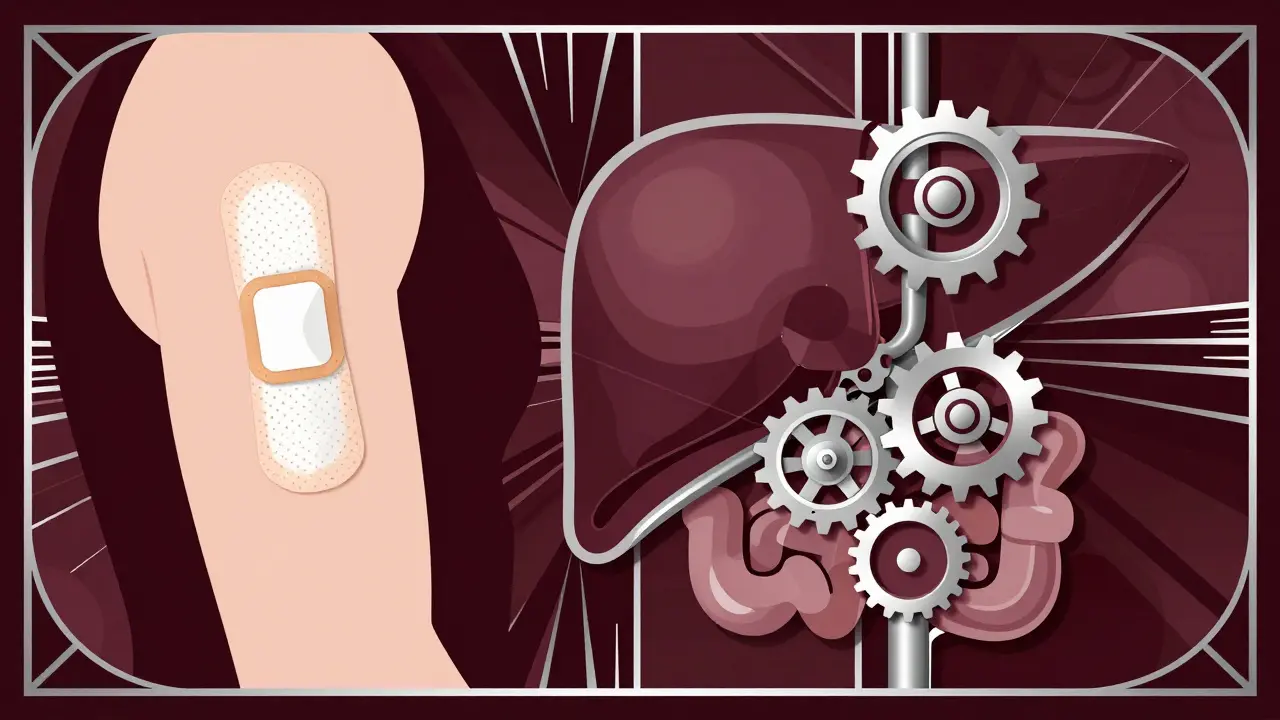
Many users report better sleep too. Night sweats disrupt rest patterns, leading to fatigue and irritability. Research indicates that Transdermal Patches.Medicated patches applied to the skin to deliver hormones directly into the bloodstream. can cut hot flash frequency by 80% to 90%. For comparison, non-hormonal antidepressants often only reduce them by about 50-60%. For someone whose insomnia affects work and mental health, that difference matters.
Navigating the Health Risks
Every effective medical intervention carries risks, and honesty about them is vital. The big concern historically was breast cancer. Data from the Women's Health Initiative showed a slight increase in invasive breast cancer cases for women using combined estrogen-progestogen therapy. Specifically, there were approximately 8 additional cases per 10,000 women-years. While that sounds scary, putting it in perspective is key. The absolute risk remains relatively low for healthy individuals.
Blood clots represent another major consideration. Venous thromboembolism is a serious condition where a clot forms in deep veins. Interestingly, the method of delivery changes this risk significantly. Oral pills pass through your liver first, which raises clotting factors. A 2018 review found that Transdermal Patches carry a 1.5 to 2-fold lower risk of blood clots than oral tablets. The absolute risk for deep vein thrombosis with patches is about 1.3 per 1,000 women-years, whereas pills sit closer to 3.7 per 1,000.
| Delivery Type | Blood Clot Risk | Liver Processing | Suitability |
|---|---|---|---|
| Oral Estrogen.Pill | Higher (3.7 per 1,000) | Posses Liver First | Convenient, lower cost |
| Transdermal Patches | Lower (1.3 per 1,000) | Bypasses Liver | Better for those with clot risk |
The Critical Role of Timing
Perhaps the most misunderstood concept is "when" you start. Medical experts call this the timing hypothesis. It suggests that age and time since menopause matter immensely. Guidelines state that initiating treatment before age 60 or within 10 years of menopause onset offers the best benefit-to-risk ratio.
If you wait until you are 70, the vascular risks change. The arteries are stiffer, and the likelihood of cardiovascular events rises. However, for women in their 40s and 50s, the impact can be protective. Some data indicates a 32% reduction in coronary heart disease risk when started young. After that window closes, the balance tips toward potential harm for the heart. Your doctor will calculate your personal timeline carefully during your initial consultation.

Monitoring Protocols and Safety Checks
Safety isn't a one-time decision; it requires active monitoring. Before you even take the first pill or apply the first patch, a baseline assessment happens. This includes measuring your blood pressure, calculating BMI, and performing a clinical breast exam. You should also get a mammogram depending on your age and family history.
Once you start, follow-up visits usually occur at three months to adjust dosage. After stabilization, annual check-ins become standard. These visits track weight, blood pressure, and any new symptoms like unexplained bleeding. Breakthrough bleeding occurs in about 30-50% of users initially. While often temporary, persistent bleeding after six months requires a scan to rule out endometrial thickening. Keeping up with these appointments ensures you catch problems early.
Choosing the Right Formulation
You might hear about bioidentical hormones versus prescription options. True bioidentical hormones are molecularly identical to what your body makes, but compounded versions lack rigorous FDA oversight. Major medical societies advise sticking to FDA-approved products because they undergo strict testing for purity and dosage accuracy. Prescription gels, rings, and patches offer precision that custom compounding often lacks.
Formulations vary based on your specific needs. Vaginal rings deliver low doses locally for dryness without high systemic levels. Systemic patches treat whole-body symptoms. Some newer treatments combine estrogen with tissue-selective modulators to protect the uterus without using traditional progesterone. Discussing these options with a specialist helps tailor the approach to your unique medical history.
Decision Factors for Candidates
Not everyone is a candidate. If you have a history of breast cancer, stroke, or active blood clots, these treatments are generally contraindicated. Unexplained vaginal bleeding is also a red flag requiring investigation before treatment begins. Conversely, severe osteoporosis or debilitating vasomotor symptoms make you a prime candidate. The decision always involves weighing your personal risk factors against the severity of your current symptoms.
Is Hormone Replacement Therapy safe for everyone?
No. It is not recommended for women with a history of breast cancer, heart disease, or blood clots. It is safest for healthy women under 60 experiencing moderate to severe symptoms.
How soon will I feel better?
Most women report significant improvement in hot flashes within three months. Sleep and mood improvements may take slightly longer to stabilize.
Do I need a uterus to take progesterone?
Yes. If you have a uterus, you need progesterone to prevent endometrial cancer. If you had a hysterectomy, estrogen alone is sufficient and safer.
Can I stop HRT anytime?
You should taper off rather than stop abruptly to minimize rebound symptoms. Always consult your doctor before discontinuing.
Does age limit my ability to start?
Starting before age 60 or within 10 years of menopause is ideal. Starting later increases cardiovascular risks, making other treatments preferred.
Are transdermal patches better than pills?
Transdermal methods bypass the liver, reducing the risk of blood clots and strokes compared to oral estrogen formulations.
Beccy Smart
March 30, 2026 AT 14:52I honestly feel so overwhelmed by all these charts though 🙀 still going to try the patch option soon ✨
Victor Ortiz
April 1, 2026 AT 01:46The general consensus in this thread ignores the underlying metabolic pathways completely. Most individuals focus solely on symptom relief without considering hepatic processing. Your body reacts differently depending on age and vascular health. Starting therapy late creates unnecessary strain on the heart. Arteries become less flexible after decades of decline. Blood viscosity increases significantly with oral formulations. Transdermal delivery skips the first pass effect entirely. This distinction is critical for anyone with clotting factors in their history. Family genetics play a larger role than the media suggests. You must screen for thrombophilia before taking any pill. Compounded hormones lack stability testing standards entirely. FDA approved versions ensure dosage consistency across batches. Bone density preservation requires continuous suppression of resorption. Osteoporosis leads to hip fractures that destroy independence rapidly. Quality of life improvements justify the monitored risks involved. Never assume safety without active medical supervision protocols.
Ruth Wambui
April 2, 2026 AT 18:27They always push the chemical soup down our throats until the next crisis emerges. The big pharma lobby writes those safety studies behind closed doors silently. Real holistic options get buried under layers of complex medical jargon. Natural balancing methods exist outside the approved formularies quietly. We are essentially test subjects for their latest profit margins greedily. Freedom of choice has been erased from the healthcare system entirely now.
Michael Kinkoph
April 4, 2026 AT 02:21ONE! MUST! UNDERSTAND! THE! MEDICAL! PROTOCOLS! STRICTLY! Adherence! is! non-negotiable! for! optimal! outcomes!! DO! NOT! IGNORE! RISK! FACTORS!!
Jonathan Sanders
April 4, 2026 AT 15:55Certainly! shouting in caps lock makes you feel more informed somehow. I bet you read the entire study while ignoring the fine print sections. Your personal crusade against common sense is entertaining to observe. Logic does not appear to be part of your current toolkit unfortunately. Please continue to lecture the room about protocol adherence. We shall nod and pretend to care about your excitement. The irony of demanding strictness while being loose with facts is rich.
emma ruth rodriguez
April 6, 2026 AT 02:53Medical evidence supports the initiation of therapy during the perimenopausal transition most effectively. Patient selection criteria determine the overall success rate significantly. Clinical trials demonstrate superior outcomes when interventions occur early. Monitoring frequency should remain consistent with established guidelines strictly. Annual screening ensures that potential adverse events are identified promptly.
Kendell Callaway Mooney
April 6, 2026 AT 06:18Many women find this info helpful for planning their care journey. Different cultures view menopause differently based on local traditions. Some communities prefer natural remedies alongside medical options. Education helps families understand what changes to expect. Listening to doctors remains the safest path for everyone involved here.
dPhanen DhrubRaaj
April 6, 2026 AT 07:59sometimes the noise is louder than the signal regarding health advice. people should just listen to their own bodies mostly. fear sells well in news cycles constantly. patience might be required for finding balance. i hope everyone finds what works for them eventually
Vikash Ranjan
April 8, 2026 AT 07:00You are dodging the core issue of biological necessity here completely. Menopause is not something one simply balances away easily. Ignoring hormonal decline accelerates degenerative processes faster. Denying modern medicine keeps people suffering in silence unnecessarily. Science provides tools to mitigate aging effects effectively.
Amber Armstrong
April 10, 2026 AT 06:11I remember my mother struggling through those years without any help or understanding from anyone around her. She would wake up soaking wet every single night and could not sleep a wink due to constant heat waves. The exhaustion made it hard for her to hold down a job or enjoy time with us kids regularly. Seeing her suffer made me realize how poorly understood this phase was back then. Now reading this article brings a deep sense of relief that effective treatments exist today. Understanding the exact mechanism gives us power over symptoms rather than letting them control us entirely. It feels validating to know science recognizes the critical loss of protection in our bones specifically. We owe it to ourselves to actively seek answers when life gets difficult physically and mentally. Support networks matter so much during these major transitions in our overall health journey. Fear should not stop us from getting better guidance from qualified professionals nearby. Every woman deserves peace of mind regarding her personal hormonal future choices now. We must advocate for proper care without shame attached to seeking help. Knowledge empowers us to navigate these medical decisions with confidence and clarity. Sharing stories helps others feel less isolated in their experiences personally. We are building a better conversation around aging than previous generations had ever.
Rick Jackson
April 11, 2026 AT 07:11Finding balance is always the hardest part of navigating change. Empathy drives better discussions than anger or fear does usually. Thank you for sharing such a meaningful personal reflection here today. We learn the most from listening to lived experiences directly. Hope you find the support you need moving forward safely.