
When you pick up a generic pill at the pharmacy, you probably don’t think about how long it took to get there. But behind every affordable generic drug is a complex, tightly timed process run by the U.S. Food and Drug Administration (FDA). For manufacturers, knowing FDA generic approval timeline isn’t just helpful-it’s critical to business planning. For patients, it means faster access to cheaper medicines. So how long does it really take?
Standard Review: The 10-Month Clock
The FDA’s standard review clock for a generic drug application (called an ANDA, or Abbreviated New Drug Application) starts the moment the agency accepts the submission as complete. That’s not the same as when you send it in. First, there’s a 60-day filing review to check if everything’s there: chemistry data, manufacturing details, bioequivalence studies, labeling, and more. If anything’s missing, the FDA sends back a refusal-to-file letter, and the clock doesn’t start until you fix it and resubmit. Once accepted, the official review period is 10 months. This is the target set under the Generic Drug User Fee Amendments (GDUFA). As of late 2025, the FDA’s median approval time for standard generics is 25 days after the 10-month goal date. That means many applications are approved right on time-or even early. But don’t be fooled: that number hides a lot of variation.Why Some Approvals Take Much Longer
Not all generic drugs are created equal. A simple tablet of ibuprofen? That’s straightforward. The FDA has reviewed hundreds of these. But a complex nasal spray, an injectable with multiple active ingredients, or a delayed-release capsule? Those are different. These are called “complex generics,” and they can take 18 to 36 months-or longer. Why? Because proving bioequivalence isn’t as simple as showing the same chemical. With complex products, the FDA needs to test how the drug behaves in the body, how it’s absorbed, how stable it is over time. Sometimes, they need to develop new testing methods. One manufacturer reported a complex nasal spray generic taking 1,087 days from submission to approval. That’s nearly three years. Another, for a standard tablet, got approved in 278 days. The FDA now has dedicated review teams for complex generics. Since 2023, these teams have cut approval times for these products by 22%. Still, the science is harder, and the bar for safety is higher.Priority Review: Faster Path for Critical Drugs
If a generic drug treats a condition with no existing generic version-or if there’s a shortage-the FDA can give it priority review. This doesn’t mean a magic shortcut, but it does mean the agency moves it to the front of the line. There’s no official public timeline for priority generics, but data from 2025 shows these applications are often approved within 6 to 8 months. The FDA has also launched a new program called the Commissioner’s National Priority Voucher (CNPV), which aims to cut review times for high-priority generics from 10 months down to just 1 to 2 months. This is still in pilot mode, but early results are promising. One oncology generic approved under a similar pilot program saw its review time drop by 40%. Priority status is usually given to drugs that treat rare diseases, address public health emergencies, or replace brand-name drugs that are in short supply. The FDA doesn’t accept requests for priority status-you have to qualify based on real-world need.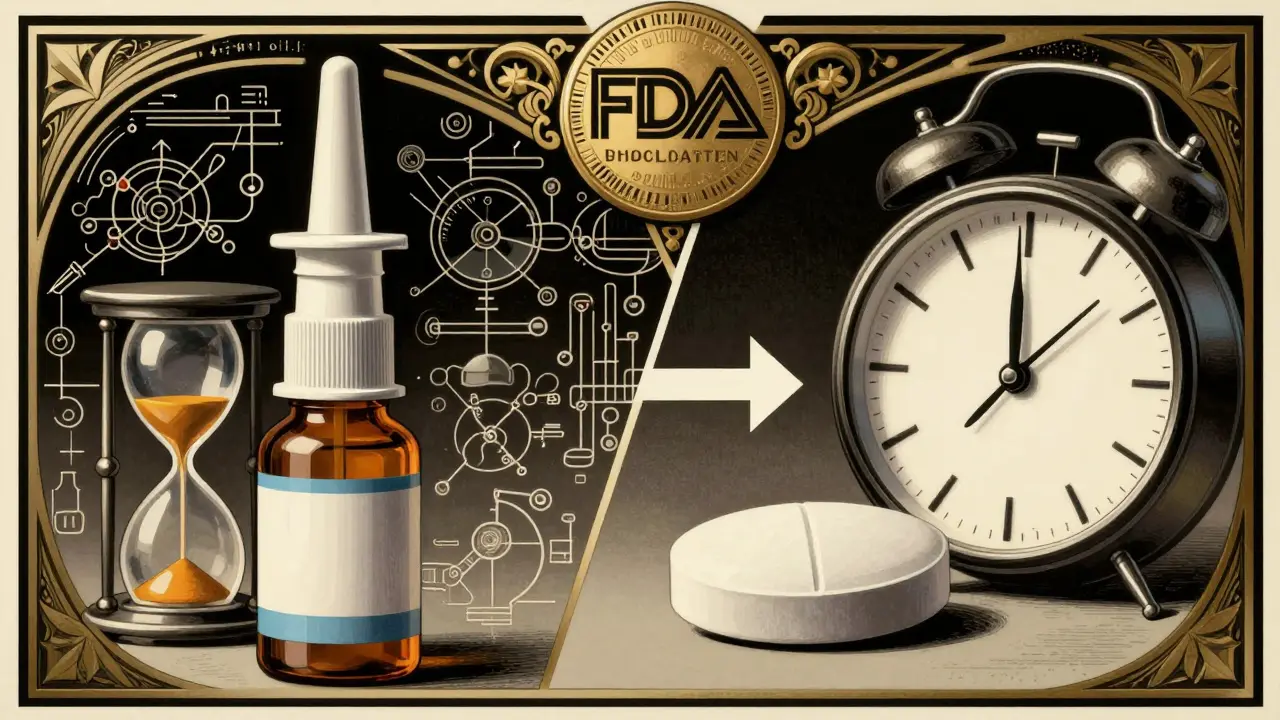
What Happens When the FDA Says “No”
Getting an approval letter is great. Getting a Complete Response Letter (CRL) is not. A CRL means the FDA found issues that prevent approval-maybe missing data, manufacturing inconsistencies, or labeling errors. In Q2 2025, 42.3% of generic applications received a CRL on the first review. Fixing a CRL usually takes 3 to 6 months. Then you resubmit, and the clock starts again. Some companies get stuck in a loop: submit, get a CRL, fix, resubmit, get another CRL. Each cycle adds time. Experts say the biggest cause of delays? Incomplete chemistry, manufacturing, and controls (CMC) information. If you don’t show the FDA exactly how you make the drug-and prove it’s consistent-you’re asking for trouble.AI and New Tools Are Speeding Things Up
The FDA isn’t just relying on human reviewers anymore. In 2024, they began using artificial intelligence to scan ANDA submissions. The AI flags inconsistencies in data, spots missing references, and even predicts potential bioequivalence issues before a reviewer even opens the file. In pilot programs, this reduced review time for standard generics by 15.8%. They’re also testing “rolling review,” where companies can submit parts of their application as they’re ready-instead of waiting to send everything at once. This helps avoid bottlenecks. One manufacturer said rolling review shaved 90 days off their timeline. The goal? By 2027, the FDA wants to hit a median approval time of just 20 days for standard generics and 10 days for priority ones. That’s not fantasy-it’s part of GDUFA III, the current funding agreement running through 2027.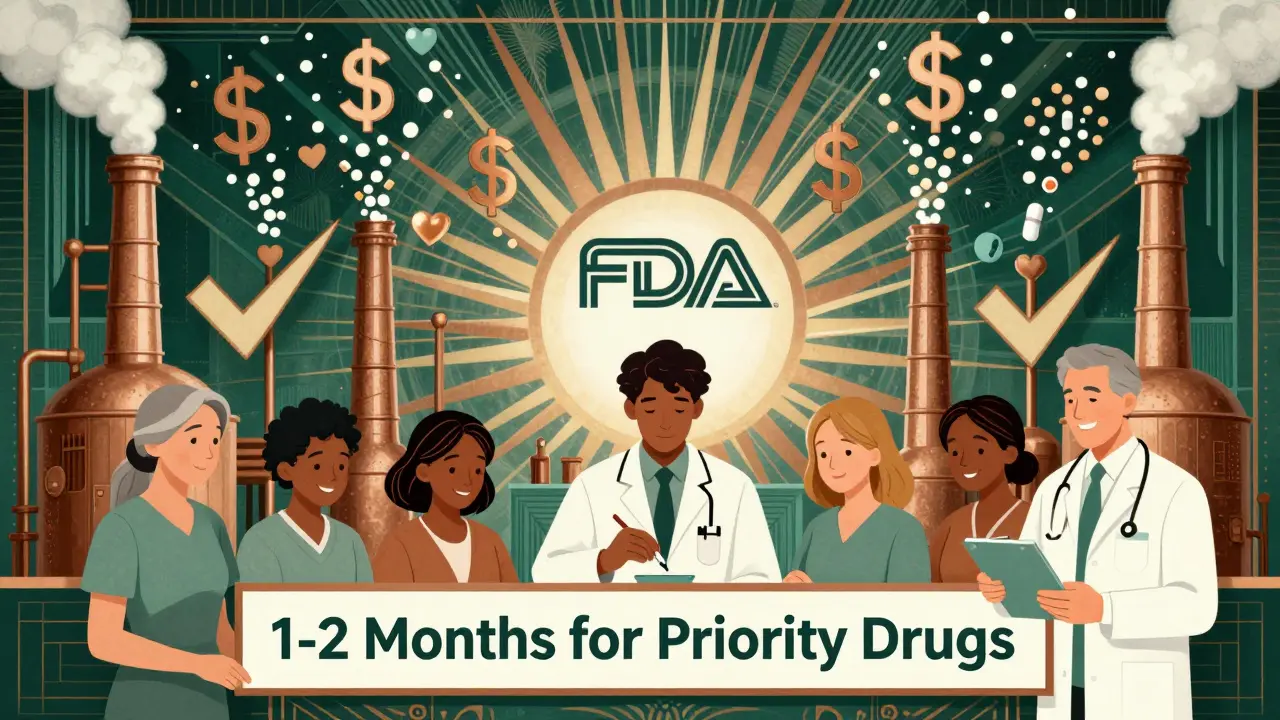
Who’s Getting Approved the Fastest?
Not all companies are equal in this race. Teva Pharmaceutical leads the pack with 18.3% of all approved generics in 2025, followed by Viatris (14.2%) and Sandoz (11.7%). These companies don’t just submit applications-they build relationships. They hold pre-submission meetings with the FDA. They use the agency’s guidance documents religiously. They invest in quality control before they even file. Smaller companies and first-time filers often take longer. Only 4.7% of ANDA submissions qualify for fee waivers, but even those with waivers can succeed-if they prepare well. The American Association of Pharmaceutical Scientists recommends: “Don’t rush the application. Get the CMC data perfect. One clean submission beats three messy ones.”Why This Matters to You
Generic drugs make up 90% of all prescriptions in the U.S. but cost only 23% of what brand-name drugs do. That’s why the FDA’s speed matters. Over the past decade, faster approvals have saved the healthcare system an estimated $1.7 trillion. If you’re a patient, faster approvals mean you can get your medication cheaper, sooner. If you’re a pharmacist, it means fewer shortages. If you’re a manufacturer, it means predictable timelines and better planning. But there’s a flip side. Some experts worry that pushing for speed could risk quality. Dr. Peter Lurie from the Center for Science in the Public Interest warned in August 2025: “Rushing approvals without thorough inspection could let substandard drugs into the market.” The FDA says it uses a risk-based approach-focusing more resources on high-risk products and less on low-risk ones. So far, no major safety issues have emerged from accelerated reviews.What’s Next?
The FDA’s generic approval system is evolving. More AI. More rolling review. More transparency. More priority pathways. The goal isn’t just speed-it’s reliability. The agency wants to approve 90% of standard applications by their goal date and 75% of priority ones. The data shows they’re getting closer. Median approval times have dropped from 26 days over 10 months in 2020 to just 25 days in 2025. That’s an 18.7% improvement in just four years. For now, if you’re waiting for a generic drug, here’s what to expect:- Simple tablet or capsule: 10-14 months total
- Complex formulation (injection, nasal spray): 18-36 months
- Priority status (no generic available or shortage): 6-10 months
- Under CNPV pilot (if eligible): 1-2 months
How long does the FDA take to approve a generic drug?
For a standard generic drug, the FDA aims to complete its review in 10 months after accepting the application. The median approval time as of late 2025 is 25 days after that goal date, meaning many are approved on time. Complex generics can take 18 to 36 months. Priority applications for drugs in shortage or with no existing generic may be approved in 6 to 10 months, and under the new Commissioner’s National Priority Voucher program, some may be approved in just 1 to 2 months.
What is an ANDA?
ANDA stands for Abbreviated New Drug Application. It’s the form generic drug manufacturers submit to the FDA to prove their product is bioequivalent to a brand-name drug. Unlike new drugs, generics don’t need full clinical trials-they only need to show they work the same way in the body. The ANDA process is faster and cheaper, which is why generic drugs cost less.
What causes delays in FDA generic approval?
Delays usually come from incomplete or unclear application data, especially in chemistry, manufacturing, and controls (CMC). Complex drug formulations like injectables or nasal sprays require more testing and take longer. A Complete Response Letter (CRL) from the FDA means issues were found, and fixing them can add 3 to 6 months per cycle. Pre-approval inspections that aren’t scheduled quickly can also slow things down.
Can the FDA approve a generic drug faster than 10 months?
Yes. If the drug treats a condition with no existing generic version or if there’s a shortage, the FDA can give it priority review. These applications are often approved in 6 to 10 months. The new Commissioner’s National Priority Voucher program aims to cut approval times even further-to just 1 to 2 months-for the most critical generics.
How many generic drugs does the FDA approve each year?
In 2025, the FDA approved more first-time generic drugs than novel brand-name drugs for the first time in years. As of late September 2025, first generic approvals were pacing ahead of 2024 levels. The agency approved over 1,000 generic drugs in 2024, and 2025 is on track to exceed that number. This trend is driven by increased funding, AI tools, and GDUFA performance goals.
Do generic drugs take longer to work than brand-name drugs?
No. By law, generic drugs must be bioequivalent to their brand-name counterparts. That means they work the same way in the body, at the same rate, and with the same effectiveness. The FDA requires strict testing to prove this before approval. Any difference in how a patient feels is usually due to inactive ingredients or psychological factors-not the active drug.
If you’re waiting for a generic drug to be approved, the best thing you can do is check the FDA’s website for updates on specific products. If you’re a manufacturer, focus on quality over speed. A clean, complete application today saves months of back-and-forth tomorrow.
Matt Davies
December 20, 2025 AT 03:15Wow, this is actually one of the most clear-headed breakdowns of FDA timelines I’ve ever read. I used to think generics were just knockoffs, but now I get how much science goes into making sure a nasal spray works the same as the brand. The 1,087-day example for that complex spray? Mind blown. We take this stuff for granted until it’s not on the shelf.
mark shortus
December 21, 2025 AT 14:34THEY’RE RUSHING THIS AND IT’S A DISASTER. I SAW A GENERIC FOR MY MOTHER’S BP MED THAT MADE HER DIZZY AS HELL. THE FDA IS OUT OF CONTROL. THEY’RE JUST CRANKING THESE OUT LIKE CANDY TO SAVE MONEY. SOMEONE’S GONNA DIE AND THEN THEY’LL SAY ‘WE DIDN’T KNOW’ - BUT WE DID KNOW. THIS ISN’T INNOVATION, IT’S NEGLIGENCE. 🤬
Kitt Eliz
December 23, 2025 AT 04:41Okay but the AI part?? 🤯 The FDA using AI to scan ANDAs?? That’s next-level. I work in pharma QA and we’ve been begging for this for years. Rolling review is genius too - no more waiting 6 months to submit the whole thing. If you’re a small company reading this: stop trying to do it all at once. Submit early, submit often. The system’s changing - get on board or get left behind. 💪🧪
Dominic Suyo
December 23, 2025 AT 21:07Let’s be real - this whole ‘25 days after 10 months’ metric is PR fluff. The median is meaningless when 30% of applications get CRLs and vanish into the void for 18 months. And don’t even get me started on Teva’s monopoly. This isn’t efficiency, it’s a corporate oligopoly dressed up as public health. The FDA’s just a rubber stamp for Big Pharma’s shadow subsidiaries. 🤡
Takeysha Turnquest
December 24, 2025 AT 04:35So let me get this straight… the FDA approves 1000 generics a year but a kid with asthma can’t get his inhaler because it’s ‘complex’? And we’re celebrating AI? Who’s the AI working for? Who owns the data? Who decided what ‘bioequivalent’ means anymore? We’re not curing disease - we’re optimizing supply chains. And I’m not buying it. 🌑
Glen Arreglo
December 25, 2025 AT 06:32As someone who’s been through the ANDA process twice, I can say this: the biggest killer isn’t complexity - it’s incomplete CMC data. Companies think they can wing it with half-baked manufacturing specs. Nope. The FDA’s reviewers aren’t dumb. They’ve seen it all. One typo in a batch record can cost you six months. Do the work right the first time. It’s not glamorous, but it’s the only way to win.
Nina Stacey
December 26, 2025 AT 08:15My cousin works at a generic manufacturer. They spent $2M on a single ANDA for a simple tablet. Got a CRL because the label said ‘take with food’ instead of ‘take with a meal.’ They had to re-submit. Took 8 months. Meanwhile, the brand-name drug costs $400 a pill. We’re not fixing a broken system - we’re just making the paperwork harder.
Laura Hamill
December 27, 2025 AT 15:48THEY’RE HIDING SOMETHING. WHY IS THE COMMISSIONER’S VOUCHER PROGRAM SO SECRET? WHO GETS TO PICK THE ‘CRITICAL’ DRUGS? WHAT IF THEY’RE CHOOSING DRUGS THAT BENEFIT BIG PHARMA? AND WHY ISN’T ANYONE TALKING ABOUT THE FACT THAT MOST GENERIC FACTORIES ARE IN INDIA AND CHINA?? THEY COULD BE CUTTING CORNERS. I’M NOT TRUSTING THIS. 🚩
Jedidiah Massey
December 28, 2025 AT 13:35Let’s not romanticize this. GDUFA is a user fee regime - meaning manufacturers pay to play. The FDA’s timeline improvements are directly correlated to the $1.2B in fees collected. This isn’t public health - it’s a transactional ecosystem where capital dictates speed. The ‘median approval’ is a marketing metric. Real-world delays? Still brutal for small players. 🧠💸