
The Secret Weapon: Controlling Humidity
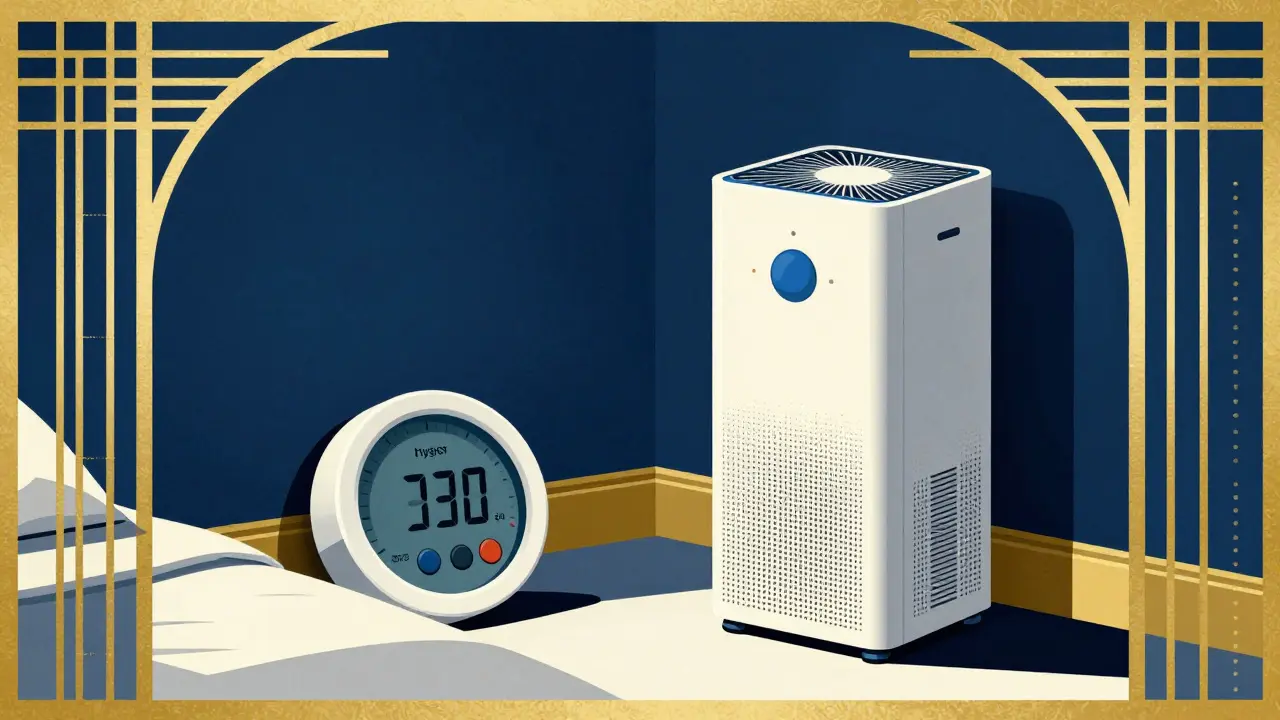
If you only do one thing on this list, make it this: get your humidity under control. Dust mites don't actually drink water; they absorb moisture from the air. When the relative humidity drops below 50%, they physically cannot stay hydrated and begin to die off. In fact, keeping your room at 45% humidity or lower can wipe out about 90% of the population within two weeks.
To do this right, don't rely on the "feel" of the air. Buy a digital hygrometer-a small device that measures moisture-and place it exactly where you sleep. If you see numbers climbing toward 55% or 60%, it's time to bring in a dehumidifier. This is far more effective than any spray or powder because it attacks the mites' basic biological need for water. For those living in damp climates or with concrete slabs in their homes, adding a vapor barrier can prevent moisture from seeping up through the floor and fueling a mite colony.
Locking Them Out with Bedding Barriers
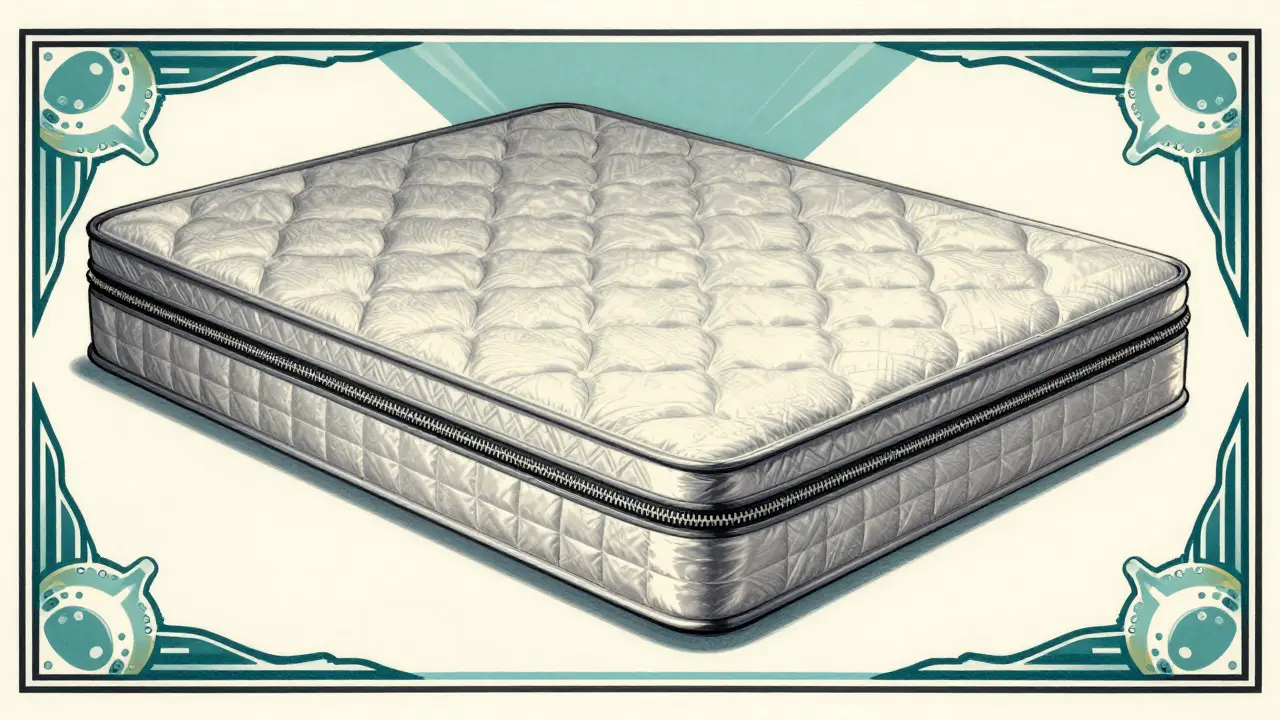
Your mattress is essentially a giant hotel for mites. Since they love the warmth and skin cells found in your bed, the best strategy is to seal them in. This is where Mattress Encasements come in. These aren't just mattress protectors; they are specialized covers with a pore size of 10 micrometers or less. This tiny gap is too small for a mite to squeeze through, effectively trapping existing mites inside and preventing new ones from moving in.
Don't be fooled by cheap covers. Many budget options develop micro-tears after a few months of use, which acts like an open door for the mites. Look for certified products that can withstand at least 10,000 abrasion cycles. You should also encase your pillows, as these are the closest points of contact with your respiratory system during the night. When you combine these barriers with a strict washing routine, you move from a "fair" level of control to a "very good" level, potentially reducing allergens by up to 90%.
The Science of the Weekly Wash
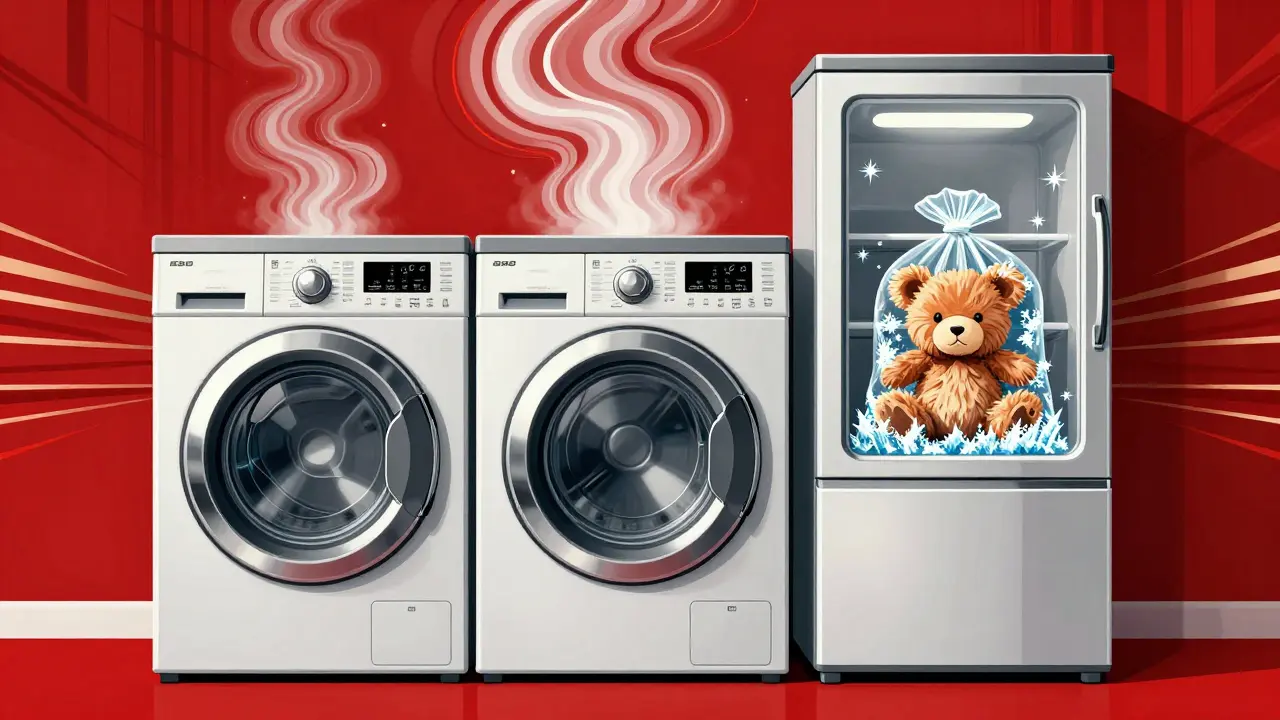
Cold water doesn't kill dust mites. If you're washing your sheets in cool water, you're mostly just moving the allergens around. To actually eliminate the pests, you need heat. The magic number is 130°F (54.4°C). Washing your bedding at this specific temperature kills 100% of dust mites.
For the best results, follow this protocol:
- Wash all bedding once a week-not every two weeks.
- Ensure the wash cycle lasts at least 20 minutes at 130°F.
- Avoid overcrowding the machine; fill it to a maximum of 50% capacity so the water and soap can actually agitate the fabric.
- If you have delicate fabrics that can't handle hot water, use a dryer on high heat for at least 15 minutes. This high-heat drying combined with a warm wash can achieve similar results to a hot wash.
Cleaning Tactics That Actually Work
Most standard vacuums just blow the smallest allergen particles back into the air, meaning you're basically breathing in the dust you're trying to remove. To stop this, you need a HEPA Vacuum. A High-Efficiency Particulate Air filter is designed to trap those tiny mite waste particles rather than recirculating them.
When cleaning, slow down. Vacuuming at a pace of about one foot per second allows the vacuum's suction and the filter to actually capture the allergens. Focus heavily on mattress seams, upholstered furniture, and the edges of carpets. If you can, remove wall-to-wall carpeting entirely and replace it with hard flooring. This is one of the most effective long-term moves you can make, as carpets are the primary breeding grounds for mites in the rest of the house.
| Method | Estimated Allergen Reduction | Effort Level | Effectiveness Rating |
|---|---|---|---|
| Humidity Control (<45% RH) | ~90% | Low (Automatic) | Very Good |
| Carpet Removal | ~90% | High (Renovation) | Very Good |
| Encasements + Hot Wash + Humidity Control | 80-90% | Medium | Very Good |
| HEPA Vacuuming Alone | 60-70% | Medium | Good |
| Mattress Encasements Alone | 30-40% | Low | Fair |
Common Pitfalls to Avoid
Many people fall into the trap of buying a "mite-proof" spray or a chemical powder and thinking the job is done. While some plant-based powders can work for a few months, they are temporary fixes. Chemical interventions like tannic acid sprays only provide moderate results and don't address the root cause: the environment. If you don't fix the humidity and the bedding, the mites will simply return as soon as the chemical wears off.
Another mistake is the "biweekly" wash. Many people assume washing sheets every two weeks is enough. However, dust mites reproduce quickly and feed constantly. A 14-day gap is more than enough time for a population to rebound. Stick to a strict 7-day cycle to keep the numbers low.
Do I really need to wash my sheets at 130°F?
Yes, if you want to kill the mites. Lower temperatures might remove some allergens, but they won't kill the mites themselves. If your machine doesn't hit 130°F, you can compensate by using a high-heat dryer setting for at least 15 minutes after the wash.
Are mattress encasements worth the money?
Absolutely, provided they have a pore size of 10 micrometers or less. They act as a physical wall that prevents mites from entering your sleeping surface and traps existing ones inside where they can't bother you. Just avoid the ultra-cheap versions that tear easily.
How often should I vacuum my mattress?
You should vacuum your mattress and the surrounding area at least once a week using a HEPA-filter vacuum. Focus on the seams and folds where dust and skin cells accumulate most.
Can a dehumidifier really solve the problem?
It is the single most effective tool. Because dust mites require a specific level of humidity to survive, keeping your room below 50% RH (relative humidity) essentially starves them of moisture, leading to a massive population crash within a few weeks.
What do I do with non-washable items like stuffed toys?
The best method is to seal them in a plastic bag and place them in the freezer for 24 hours. This kills or disables the mites without damaging the fabric of the toy.
Next Steps for Your Home
If you're starting from scratch, don't try to do everything in one day. Start by buying a digital hygrometer to see where your humidity stands. If it's above 50%, prioritize a dehumidifier. Next, invest in a quality mattress and pillow encasement. Once the barriers are in place and the air is dry, transition to a weekly 130°F laundry routine. If you still notice symptoms after a month of strict adherence, it might be time to look into replacing carpets with hard flooring or consulting an allergy specialist to see if you're reacting to something else in your environment.
Quinton Bangerter
April 22, 2026 AT 22:25Sure, follow the "science," but who actually makes these hygrometers? Probably the same corporations selling the dehumidifiers. It's a convenient loop to make you buy more plastic junk for your home. And please, tell me you aren't actually believing that a 10-micrometer pore size is a foolproof shield when the government probably has smaller nanobots that can penetrate anything. The whole setup is a racket to sell you "certified" covers that are probably made in the same factory as the cheap ones.
dallia alaba
April 23, 2026 AT 08:09Adding to the bedding section, it's also worth mentioning that if you have pets that sleep on the bed, they can carry a lot of extra organic matter that feeds these mites. Even if you use encasements, the top of the duvet becomes a feast. I always recommend a high-thread-count cotton sheet over the protector because it adds another layer of filtration for your skin cells. Also, remember that steam cleaning is an amazing alternative for upholstered furniture if you can't get a HEPA vacuum right away because the high-temperature steam kills them on contact without needing harsh chemicals. It's all about creating a hostile environment for them to survive. If you combine the low humidity, the heat-washing, and the HEPA filtration, you're basically creating a desert for these things. They can't survive without that moisture. Most people fail because they only do one of these things and wonder why the allergies don't go away. You have to attack from all angles. It's not about one "magic" product, but a systemic change to your bedroom's ecosystem. Start with the humidity, then the barriers, then the cleaning routine. That's the only way to get long-term relief. Don't forget to check your curtains too, as they are often overlooked dust traps that trigger morning sneezes. Get a steamer for those or wash them every few weeks. Consistency is the only thing that actually works in the long run.
Shalika Jain
April 25, 2026 AT 04:58Imagine actually spending your weekends scrubbing your mattress with a vacuum. How utterly bourgeois to have that much free time for "environmental shifts." I'll stick to my luxury linens and just sneeze occasionally, thanks.
caesar simpkins
April 25, 2026 AT 21:01Oh my god, the thought of millions of bugs in the bed is absolutely horrifying! I can't even look at my pillow the same way now. Total nightmare fuel!
Tokunbo Elegbe
April 26, 2026 AT 12:40The HEPA filter is a must!!! I never realized how much dust was actually in the air until I saw the filter after one month!!! Just shocking!!!
Truman Media
April 28, 2026 AT 06:10It is a wonderful journey to improve our living space for a better life. We all seek a peaceful sleep! :) :)
Bob Collins
April 28, 2026 AT 08:26Fair point on the vacuuming speed. Most people just zip across the carpet and wonder why it's still dusty. Slow and steady wins the race here.
Don Drapper
April 28, 2026 AT 17:02The lack of rigor in this guide is appalling. One does not simply "buy a dehumidifier" without considering the cubic footage of the room and the saturation point of the air. This is an amateur's approach to a biological infestation. Utterly pedestrian!
Grace Grace
April 30, 2026 AT 16:24I tried the freezir method for my plushies and it worked greattt!! I just forgot them in there for three days lol.
Wendy Ajurín
May 2, 2026 AT 07:37Regarding the washing temperature, it is important to verify that your water heater is actually capable of reaching 130°F, as many modern energy-efficient heaters are capped at 120°F by default.
Lucy Kuo
May 3, 2026 AT 08:34What a magnificent and detailed guide to reclaiming our sanctuary from these invisible intruders! It is simply divine to have such clarity on the matter.
aman motamedi
May 3, 2026 AT 08:53I shall consider the purchase of a hygrometer.
William Young
May 5, 2026 AT 07:32Hard floors are definitely the way to go if you have allergies. Much easier to keep clean than carpets.