

Most parents think of their homes as safe havens, but for a curious toddler, every cabinet and drawer is a treasure chest waiting to be opened. Pediatric exploratory ingestion is the unintentional swallowing of toxic substances by children under five during normal developmental exploration. It is not just an accident; it is a predictable outcome of how young brains work. According to the American Association of Poison Control Centers' 2022 annual report, 90% of all poison exposures happen in children under six years old. The highest risk group? Kids aged one to four. Why? Because this is when finger-to-mouth activity peaks, and curiosity outpaces caution.
You might wonder if you are doing enough. You probably are, but the landscape of household hazards is changing. Liquid medications, e-cigarette refills, and concentrated cannabis edibles have replaced many traditional risks like aspirin bottles. The goal isn't to create a sterile environment where nothing can go wrong-it's impossible. The goal is to build layers of defense so that if your child does find something dangerous, they don't swallow it, or if they do, help arrives fast enough to prevent harm.
Understanding the Explorer in Your Child
To stop the problem, you first need to understand the driver. Exploratory behavior is a natural developmental phase where children learn about their world through touch, taste, and manipulation. The Society for Academic Emergency Medicine notes that this behavior accounts for roughly 75% of exposures in children under five. It’s not mischief; it’s biology. Children at this age are wired to investigate. They pull themselves up, crawl into low spaces, and put everything they can grasp into their mouths.
This risk isn't evenly distributed. Boys and children with hyperactive temperaments tend to explore more aggressively, increasing their exposure risk. But even the most cautious child is vulnerable because their motor skills develop faster than their judgment. By the time a child can open a simple latch, they haven't yet learned that the shiny bottle inside contains bleach, not juice. This gap between ability and understanding is where prevention must focus.
The New Generation of Household Hazards
If you grew up fearing pill bottles, your hazard map needs updating. The nature of pediatric poisoning has shifted dramatically. Solid pills are less common culprits now because they are harder to swallow quickly and often taste bad. Liquids, however, are easy to gulp down. The World Health Organization reports that liquid medications present a 69% higher injury incidence than solid compounds. They flow easily, lack the burning sensation of powders, and often come in flavors kids love.
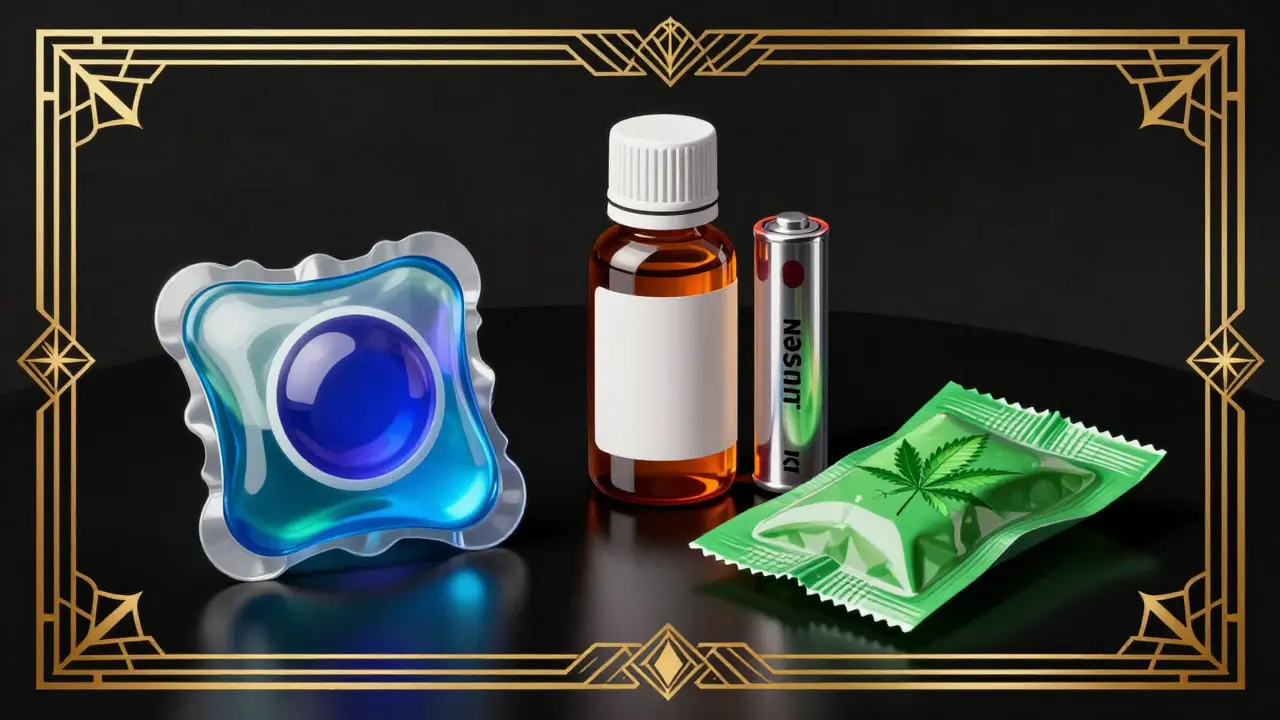
Consider these modern high-risk items:
- Liquid Nicotine Refills: E-cigarettes have introduced a potent new toxin. Between 2012 and 2020, calls to poison control regarding nicotine poisoning increased by 1,500%. A single drop of concentrated e-liquid can be fatal to a small child.
- Button-Cell Batteries: Found in remote controls and toys, these are particularly dangerous. Tissue damage begins within 15 minutes of ingestion. The American Academy of Pediatrics notes that 85% of severe injuries from these batteries occur in children under four.
- Laundry Detergent Pods: These colorful, jelly-like packets attracted children like candy. While industry changes like opaque packaging have reduced incidents by 39%, they remain a significant risk if accessible.
- Cannabis Edibles: In states with legal recreational marijuana, concentrated edibles accounted for 7% of pediatric ingestions in 2022, with hospitalization rates 3.2 times higher than traditional poisoning cases.
The common thread? These items often look appealing, smell pleasant, or come in containers that attract attention. The California Poison Control System found that pretty containers increase ingestion risk by 47%. If it looks like fun, your child will try it.
Building Physical Barriers That Work
Education alone doesn't stop a toddler from opening a cupboard. You need physical barriers. The National Safety Council found that comprehensive baby-proofing reduces access to toxic substances by 45%. But not all locks are created equal, and placement matters more than you might think.
| Safety Measure | Impact on Risk Reduction | Key Implementation Detail |
|---|---|---|
| Child-Resistant Containers | Reduces childhood deaths from aspirin by 45% | Mandated since 1970; remember they are 'resistant,' not 'proof' |
| High Storage (1.5m+) | Prevents 82% of access attempts by under-fours | Must be out of reach even when standing on furniture |
| Separate Food/Cleaner Cabinets | Reduces confusion-related ingestions by 37% | Never store cleaners near food or drink supplies |
| Original Packaging Only | Prevents 29% of mistaken identity incidents | Avoid repackaging chemicals into water bottles or jars |
Start with height. Keep all hazardous substances in locked cabinets at least 1.5 meters (5 feet) above floor level. This simple rule prevents the vast majority of access attempts. Next, separate your storage. Don’t keep cleaning supplies in the same cabinet as snacks. When kids see a bottle next to a box of crackers, they assume it belongs there too. Keeping products in their original containers is also crucial. Repackaging bleach into a soda bottle is a recipe for disaster, accounting for nearly a third of mistaken ingestion incidents.
Don't forget the "invisible" hazards. Handbags and backpacks left on the floor are major culprits. UCSF Benioff Children's Hospital warns that medications stored in purses account for 22% of poisoning incidents during visitor periods. If guests bring meds in their bags, ask them to store those bags out of reach immediately.
Medication Safety: Precision Saves Lives
Medications are among the most common causes of pediatric poisoning. The issue isn't just access; it's administration. Parents often use kitchen spoons to dose medicine, but this is dangerously inaccurate. A 2021 study published in Pediatrics found that 76% of parents made dosing errors with kitchen utensils, compared to only 12% using calibrated devices. Kitchen spoons vary wildly in size, leading to overdoses or underdoses.
Always use the dosing device provided with the medication-oral syringes or dosing cups. If it’s lost, buy a replacement from the pharmacy rather than guessing with a teaspoon. Furthermore, never call medicine "candy." This linguistic habit tricks children into thinking it’s a treat, making them more likely to seek it out. Instead, say, "This is medicine, and it tastes yucky, but it makes you feel better." Set realistic expectations.
Engineering Solutions: Bittering Agents and Smart Tech
Sometimes, the best prevention is built into the product itself. Many mild-to-moderately toxic household products now contain bittering agents like denatonium benzoate. Research shows this reduces the likelihood of multiple swallows by 68%. It won't stop a child from tasting it once, but it usually stops them from drinking the whole bottle. However, rely on this as a backup, not a primary strategy, as it offers no protection against single large doses.
Technology is also stepping in. Smart home technologies for poison prevention, such as connected cabinet locks, have seen 200% annual growth since 2020. While currently expensive at around $149 per unit, they offer peace of mind by alerting you if a cabinet is opened. For most families, mechanical locks are sufficient, but smart tech is an emerging option for high-risk households.

Creating a Rapid Response Plan
Despite your best efforts, accidents happen. The difference between a minor scare and a medical emergency is speed. The Society for Academic Emergency Medicine emphasizes that 78% of optimal outcomes correlate with intervention within 30 minutes of exposure. Do not wait for symptoms. Do not try home remedies like inducing vomiting unless instructed by a professional.
Your first step should always be to call Poison Control. In the US, the number is 1-800-222-1222. This service is free, confidential, and staffed by experts who can guide you through the exact steps needed for the specific substance ingested. Keep this number posted prominently in your home, perhaps near the phone or on the fridge. Download the Poison Control mobile app as well; 89% of users report accessing critical information within 90 seconds of a suspected exposure.
When you call, have the following ready:
- The name of the substance (bring the container if possible).
- An estimate of how much was swallowed.
- The time of ingestion.
- Your child’s age and weight.
- Any symptoms currently observed.
Having this information ready speeds up the assessment process significantly. Remember, calling Poison Control is not an admission of failure; it’s a proactive health decision.
Maintaining Consistency Across Caregivers
The biggest challenge in prevention isn't buying locks; it's maintaining habits. A multi-center study published in Pediatrics found that 63% of households report safety lapses when care transitions between parents, grandparents, and babysitters. Grandparents’ homes are particularly risky, with 71% of parents reporting inconsistent safety practices there.
Have honest conversations with anyone who cares for your child. Show them where the locks are. Explain why certain cabinets are off-limits. Provide a list of emergency numbers for their phones. Education retention drops sharply without reinforcement; a Johns Hopkins study showed that teach-back methods (asking caregivers to demonstrate what they learned) result in 82% accuracy at 30 days, compared to 47% with verbal instructions alone. Make sure everyone is on the same page.
Next Steps for Immediate Action
You don't need to spend hours to make a difference. Start with a quick audit today. Get down on your hands and knees and look around at eye level. What do you see? Is there a loose button battery? A half-empty bottle of cleaner on a low shelf? A purse on the floor? Fix these immediate issues first. Then, schedule a deeper review for the weekend. Install cabinet locks, move hazardous items to high shelves, and update your emergency contact list. Prevention is a continuous process, not a one-time task. Stay vigilant, stay informed, and keep your child’s curiosity safe.
What should I do immediately if my child swallows a toxic substance?
Call Poison Control immediately at 1-800-222-1222 (in the US). Do not induce vomiting unless instructed by a professional. Have the product container ready to provide details about the substance, amount ingested, and time of exposure. Early intervention within 30 minutes leads to the best outcomes.
Are child-resistant containers enough to prevent poisoning?
No. Child-resistant containers are designed to delay access, not prevent it entirely. Studies show that while they reduce deaths significantly, they are not foolproof. Always store these containers in locked cabinets or high places, especially for high-risk items like medications and button batteries.
Why are liquid medications more dangerous than pills?
Liquid medications are easier to swallow quickly and often come in appealing flavors. Unlike solid pills or powders, they don't typically cause a burning sensation that limits consumption. The WHO reports a 69% higher injury incidence with liquids due to their ease of ingestion.
How can I safely store medications in my home?
Store all medications in locked cabinets at least 1.5 meters (5 feet) above the floor. Keep them in their original packaging to avoid confusion. Never use kitchen spoons for dosing; always use the provided calibrated device. Ensure visitors store their personal medications in secure locations, not in handbags left on the floor.
What are the biggest emerging risks for toddler poisoning in 2026?
Current high-risk items include liquid nicotine refills for e-cigarettes, button-cell batteries, concentrated cannabis edibles, and laundry detergent pods. These items are often attractive to children due to their appearance or packaging. Stay updated on local regulations and product warnings for these specific hazards.