
When a patient picks up a prescription and sees a pill that looks completely different from what they’re used to, their first thought isn’t always, ‘Great, I’m saving money.’ More often, it’s, ‘Is this even the same drug?’ This moment of doubt is common-and it’s not just about confusion. It’s about trust. And if you’re a pharmacist, how you respond can make the difference between a patient sticking with their treatment or stopping it altogether.
Why Patients Hesitate (It’s Not Just About Price)
Many assume patients resist generics because they’re cheaper. But cost isn’t the main driver. A 2021 study in the Journal of the American Pharmacists Association found that 27% of patients express concern about generics-not because they think they’re less effective, but because they don’t believe they’re the same. One patient told me, ‘My blue oval pill became a white rectangle. I thought they gave me the wrong medicine.’ That’s not irrational. It’s human. The FDA requires generics to be bioequivalent: they must deliver 80-125% of the active ingredient compared to the brand. That’s a tight range. But only 32% of patients know this. Most think generics contain less of the active ingredient-some even believe it’s as low as 80%. That’s a myth. The active ingredient is identical. What changes? The fillers, the color, the shape. The brand name. The marketing. And when patients switch from a pill they’ve taken for years to one that looks different, their brain flags it as a potential risk. Especially older adults. Data from the AHRQ shows 38% of patients over 65 worry about generics, compared to 22% of younger adults. Rural patients are even more hesitant-47% versus 29% in urban areas. These aren’t just numbers. These are people who’ve been told for decades that brand names mean quality. Now they’re being asked to trust something that looks foreign.The Worst Thing You Can Say (And What to Say Instead)
Saying, ‘It’s the same drug, just cheaper’ is a mistake. A 2023 review in U.S. Pharmacist found this phrase cuts acceptance rates to 31%. Why? Because it implies the only reason to choose generics is cost-and that can make patients feel like they’re being pushed into a lower-quality option. Even saying ‘It’s cheaper’ only increases acceptance by 7%. That’s barely a bump. The right approach? Focus on equivalence, not price. Say: ‘This medication contains exactly the same active ingredient as the brand, but without the brand-name marketing costs.’ That simple shift increases acceptance by 29%. Even better? Personalize it. Say: ‘I prescribe this generic for my own family.’ That single line, backed by research from the American Journal of Managed Care, boosts acceptance by 37 percentage points. Why? Because patients don’t just want facts-they want reassurance from someone they trust.The ‘Ask-Tell-Ask’ Framework That Works
Don’t just launch into a lecture. Start with a question.- Ask: ‘What are your thoughts about this generic version?’
- Tell: ‘It’s the same active ingredient as the brand. The FDA requires it to work the same way-within 80-125% of the brand’s absorption. That’s a strict standard.’
- Ask again: ‘So, what part of that feels unclear to you?’
Use Visuals. Show, Don’t Just Tell.
One of the biggest triggers for hesitation? Pill appearance. A 2022 survey found 68% of patients would accept a generic if they could see a side-by-side comparison of the old and new pills. The FDA now offers free visual tools-counter mats, brochures, even 3D images of pills showing how the active ingredient is identical. Keep these handy. When a patient looks confused, pull out the image. Point to the active ingredient. Say: ‘This part? Same. This part? Just the coating. Like changing the wrapper on a candy bar.’ Kaiser Permanente tried this with 12,000 patients. They used a ‘teach-back’ method: after explaining, they asked patients to describe the difference in their own words. Acceptance jumped from 54% to 81%.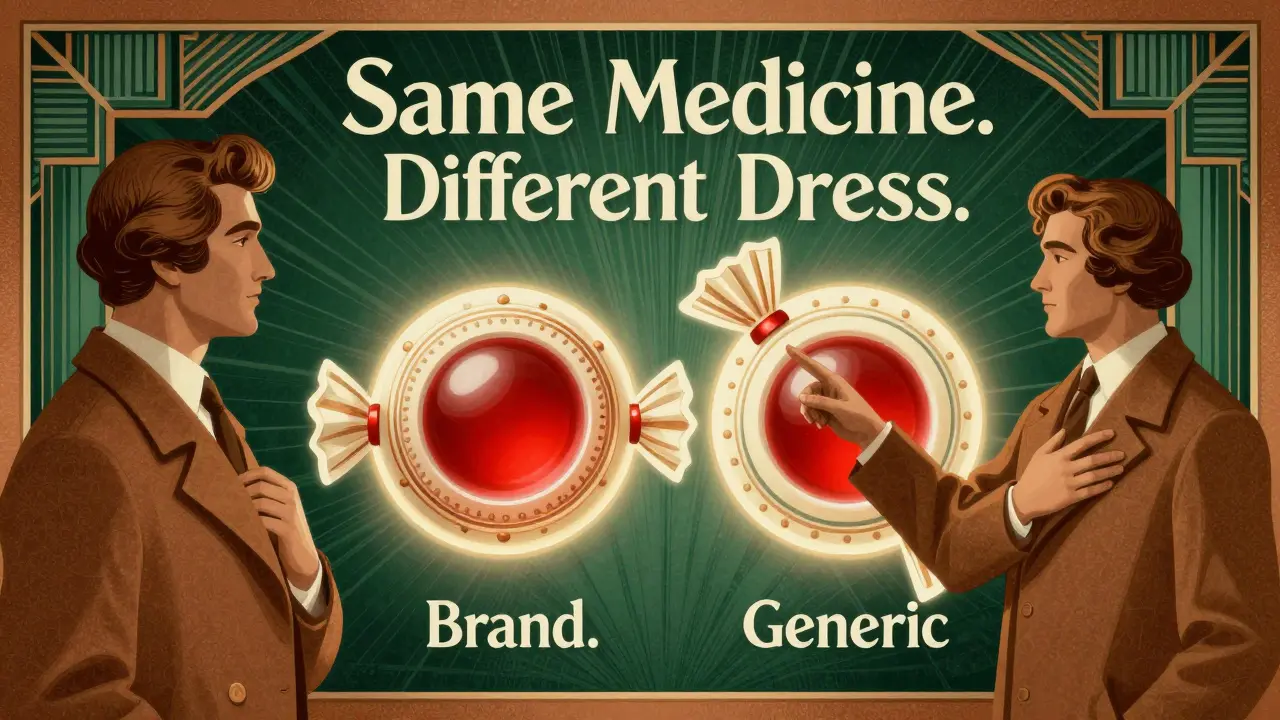
Timing Matters More Than You Think
Most pharmacists wait until the patient walks up to the counter. That’s too late. The FDA’s 2022 report found that 89% of patients accept generics if they’re told about the substitution at the time of prescribing. That’s when the prescriber says, ‘I’m prescribing this generic because it’s just as effective and saves you money.’ When the pharmacist is the first to mention it, acceptance drops to 63%. And if the patient finds out only when they get the pill? That’s when panic sets in. The best practice? Work with prescribers. If a doctor writes a brand-name prescription, ask if they’d be open to switching to generic-and explain why. Many don’t realize how much patients worry about this. A 2022 AMA report found that team-based care-where both doctor and pharmacist explain the switch-boosts acceptance to 85%.The VALUE Method: When Patients Are Really Stuck
Some patients aren’t just unsure-they’re scared. Maybe they had a bad experience. Maybe they read something online. Maybe they’re convinced generics didn’t work for them before. Use the VALUE method:- Validate: ‘It makes sense you’d feel that way-many people do.’
- Acknowledge: ‘I know changing pills can feel unsettling.’
- Listen: Don’t interrupt. Let them finish.
- Understand: ‘So you’re worried it won’t control your blood pressure like the other one?’
- Educate with empathy: ‘Let me show you how the FDA tests these. Here’s what’s the same… and what’s different.’
What Happens When You Don’t Talk About It
A patient in a Medscape forum shared how they stopped taking warfarin after switching to a generic-without explanation. They thought it wasn’t working. Weeks later, they had a blood clot. Hospitalized. That’s not rare. And it’s not just about safety. It’s about trust. When patients feel ignored, they disengage. They stop taking meds. They switch to more expensive brands. The Generic Pharmaceutical Association estimates this costs the system $8.2 billion a year. Worse, overemphasizing cost backfires. Dr. Thomas Moore’s 2021 study in JAMA Internal Medicine found that when cost was the only reason given, trust dropped by 22%. Patients think: If the only reason is money, maybe they don’t think it’s good enough for me.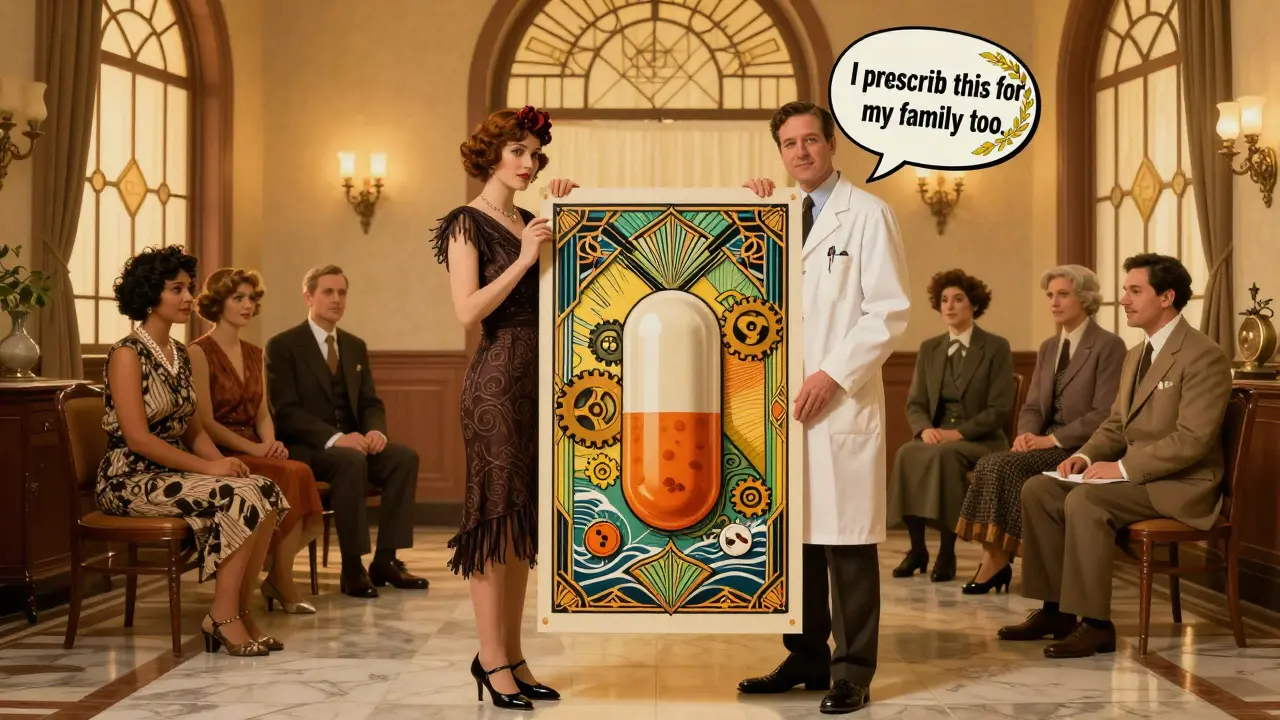
Teresa Marzo Lostalé
December 29, 2025 AT 00:37Wow. This hit me right in the feels. I remember when my grandma switched to generic blood pressure meds and cried because her little blue pill was gone. She said it felt like losing a friend. Turns out, it wasn’t about the drug-it was about the ritual. The shape, the color, the way it sat in her palm. We didn’t fix it with facts. We fixed it with a photo of the two pills side by side and a hug. Sometimes, medicine is just a container for trust.
❤️
ANA MARIE VALENZUELA
December 29, 2025 AT 01:01Ugh. So we’re just supposed to coddle people’s irrational fears now? The FDA has strict standards. If you can’t handle a different-shaped pill, maybe you shouldn’t be on meds at all. This article reads like a PSA for the emotionally fragile. We’re not babysitting. We’re pharmacists. Stick to the science, not the therapy.
Also, ‘I prescribe this for my family’? That’s emotional manipulation dressed up as professionalism.
Bradly Draper
December 30, 2025 AT 09:05I’ve been a tech at a pharmacy for 12 years. I’ve seen this over and over. Old folks get scared. Younger ones? They just wanna know if it’s gonna work. The ‘same active ingredient’ line? That’s gold. But honestly? The best thing you can do is just look them in the eye and say, ‘I got you.’ Doesn’t matter what you say after that. They feel it.
People don’t forget how you made them feel. Not the science. Not the price. Just how you made them feel.
Gran Badshah
December 31, 2025 AT 16:04Interesting. In India, generics are the only option. Brand names are luxury. But here, people act like generics are some kind of betrayal. I think it’s about identity. The pill is part of their routine. Change the pill, change the self. We don’t talk about this enough. The pill is a symbol. Not just medicine.
Also, why is everyone so shocked? We change phone cases, car models, coffee cups. Why not pills?
Ellen-Cathryn Nash
January 2, 2026 AT 07:57It’s so sad how we’ve turned healthcare into a transactional nightmare. People aren’t ‘resisting’ generics-they’re resisting being treated like a cost center. When a pharmacist says, ‘It’s cheaper,’ what they’re really saying is, ‘Your health is negotiable.’
And now we’re rewarding pharmacies for ‘acceptance rates’? That’s not progress. That’s corporate gaslighting. If you’re measuring trust like a KPI, you’ve already lost.
Also, VR demos? Really? We’re out here trying to heal people and the solution is a headset?
Samantha Hobbs
January 2, 2026 AT 11:05OMG YES. I had a panic attack when my antidepressant changed shape. I thought I was being given something weaker. I called my doctor at 2am. She was like, ‘It’s the same. Chill.’ But I didn’t believe her until I saw the FDA chart. Like, actual paper. Printed. With my name on it. That’s what worked. Not a lecture. Not a chart on a screen. A piece of paper. With my name on it.
So… can we just print these and hand them out? Like, literally? I’d take one for my mom.
Nicole Beasley
January 4, 2026 AT 01:36Okay but can we talk about how wild it is that we’ve been using the same chemical compound for decades but the pill looks like a different candy every time? 🤯
It’s like if your favorite cereal changed shape every year and you had to relearn how to eat it. And then someone says, ‘It’s the same taste!’ but you don’t trust them because the box is a different color. 🤦♀️
Also, the ‘I prescribe this for my family’ line? That’s the whole vibe. 🫶
sonam gupta
January 4, 2026 AT 05:32Julius Hader
January 6, 2026 AT 02:29Love this. I’m not a pharmacist, but I’ve watched my mom go through this. She’s 78. Took the same blue pill for 15 years. When it changed, she thought she was being poisoned. I sat with her. Showed her the FDA page. She didn’t understand the 80-125% thing. But she understood when I said, ‘This is the same medicine, just without the fancy wrapper.’ She cried. Not because she was scared. Because someone finally listened.
That’s the whole thing. Not the science. Not the cost. Just someone saying, ‘I see you.’
Vu L
January 6, 2026 AT 02:52So… the solution to patient mistrust is… more talking? Wow. Groundbreaking. What if the real problem is that we’ve been sold a lie for 50 years-that brand names are better? That’s the cultural brainwashing. Not the pill shape.
And now we’re gonna train pharmacists to be therapists? Who’s gonna pay for that? Who’s gonna pay for the VR headsets? This article reads like a marketing pitch disguised as medical advice.
James Hilton
January 6, 2026 AT 14:06Let me get this straight. We’re spending millions on VR demos and FDA brochures because people are scared of a white rectangle instead of a blue oval?
Bro. It’s a pill. Not a family heirloom.
But hey, if you wanna make a 70-year-old feel like they’re getting a new wedding ring instead of a blood pressure pill, go for it. I’ll be over here, saving $80 a month and not crying over pill aesthetics.
Also, ‘I prescribe this for my family’? That’s not empathy. That’s emotional blackmail. With a clipboard.
Mimi Bos
January 7, 2026 AT 04:42so like… i just had this moment where i was like… wait… why do we even have brand names? like… why does it matter if the pill is blue or white? its the same chemical. its not like its a different flavor of ice cream. but then i remembered… we’ve been trained since birth to trust logos. coca-cola > generic cola. nike > no name shoes. so why not pills? it’s not the pill. it’s the branding. and we’re all just… trained monkeys. 🐒
also i typoed ‘medication’ as ‘medication’ like 3 times. forgive me.
Payton Daily
January 7, 2026 AT 23:15Let me tell you something. This whole thing? It’s not about pills. It’s about control. The pharmaceutical industry created brand names so they could charge 10x. Then they created fear around generics so people would pay more. Then they created this whole ‘communication strategy’ so pharmacists become salespeople in white coats.
And now we’re teaching people to say, ‘I prescribe this for my family’? That’s not trust. That’s manipulation. That’s emotional theater.
Real trust isn’t built with a script. It’s built when the system stops treating people like wallets.
And don’t even get me started on VR demos. We’re not in a sci-fi movie. We’re in a pharmacy. With old people who can’t afford their meds. And you want to give them a headset?
Wake up.
It’s not about the pill. It’s about the profit.
Kelsey Youmans
January 9, 2026 AT 12:04While the empirical data presented in this communication framework is compelling, one must not overlook the epistemological implications of pharmaceutical trust as a sociocultural construct. The transition from branded to generic therapeutics constitutes not merely a pharmacokinetic shift, but a profound rupture in the patient’s phenomenological experience of illness and self-identity. The act of substitution, when unaccompanied by empathic validation, may precipitate what Bourdieu might term a ‘symbolic violence’-a diminishment of the patient’s perceived agency within the healthcare ecosystem.
Thus, while the ‘Ask-Tell-Ask’ protocol and visual aids represent pragmatic interventions, they remain insufficient absent a broader reconfiguration of the physician-pharmacist-patient triad into a truly collaborative hermeneutic space.
One must ask: Are we optimizing for compliance-or for dignity?