

Getting sick while traveling is stressful enough. Now imagine trying to find a pharmacy or clinic in a country where you don’t speak the language, your prescription doesn’t match local drug names, and you have no idea where to go. This happens to thousands of travelers every year. The good news? You don’t have to wing it. There are apps built specifically to help you find pharmacies, clinics, and even get the right medication - no matter where you are.
Why You Need These Apps Before You Leave
Most people pack sunscreen, adapters, and a guidebook. Few pack a plan for medical emergencies. But 1 in 4 international travelers experience a health issue abroad, according to the CDC. It’s not just about getting sick - it’s about getting the right treatment. A common cold might turn into a week-long nightmare if you can’t find a pharmacy that carries your medicine. Or worse, you end up with the wrong drug because the brand name is different overseas. Apps like Convert Drugs Premium, Air Doctor, and TravelSmart solve this by translating your medications into local equivalents and showing you nearby clinics with real-time availability. They’re not magic, but they’re the closest thing to a personal health translator when you’re far from home.How Medication Equivalence Works
Your prescription says amoxicillin. In France, it’s sold as Amoxil. In Thailand, it’s Amoxi-500. In Brazil, it’s Amoxicilina. Same drug. Different names. If you don’t know this, you might walk into a pharmacy and get nothing - or worse, something unsafe. Apps like Convert Drugs Premium and TravelSmart have databases of over 15,000 drugs mapped across 100+ countries. You type in the generic name (or scan your prescription), and the app tells you exactly what to ask for. It even shows you the dosage and form (tablet, syrup, injection) so you don’t get confused. Dr. Susan Kansagra, former head of CDC’s Travel Medicine Branch, found in a pilot study that travelers using these apps reduced medication errors by 37%. That’s not a small number. It’s the difference between a quick fix and a hospital visit.Top Apps for Finding Pharmacies and Clinics
Not all apps are created equal. Here’s what the top options actually do - and who they’re best for.| App | Medication Equivalence | Clinic/Pharmacy Location | Telemedicine | Offline Access | Platform | Cost |
|---|---|---|---|---|---|---|
| Convert Drugs Premium | 220 countries | Basic map | No | No | iOS only | $7.99 one-time |
| Air Doctor | 195 countries | 25,000+ providers | Yes (24/7) | Partial | iOS, Android | $49-$79 per consult |
| mPassport | 15,000+ drugs | 35,000+ facilities | No | Yes | iOS, Android | Free with premium upgrade |
| TravelSmart | 5,000+ drug translations | Integrated with insurance | Yes | Yes | iOS, Android | Requires Allianz insurance |
| Epocrates | 10,000+ drugs (U.S. focus) | U.S. clinics only | No | Yes | iOS, Android | Free basic, $159.99/year premium |
Convert Drugs Premium is the gold standard for medication matching - if you’re on iPhone. Air Doctor is the best for urgent care, especially if you need to talk to a doctor right away. mPassport works well in major cities and lets you book appointments ahead of time. TravelSmart is great if you already have Allianz insurance - it links directly to your policy. Epocrates? Stick to the U.S. It’s a tool for doctors, not tourists.
What to Do When You’re Stuck
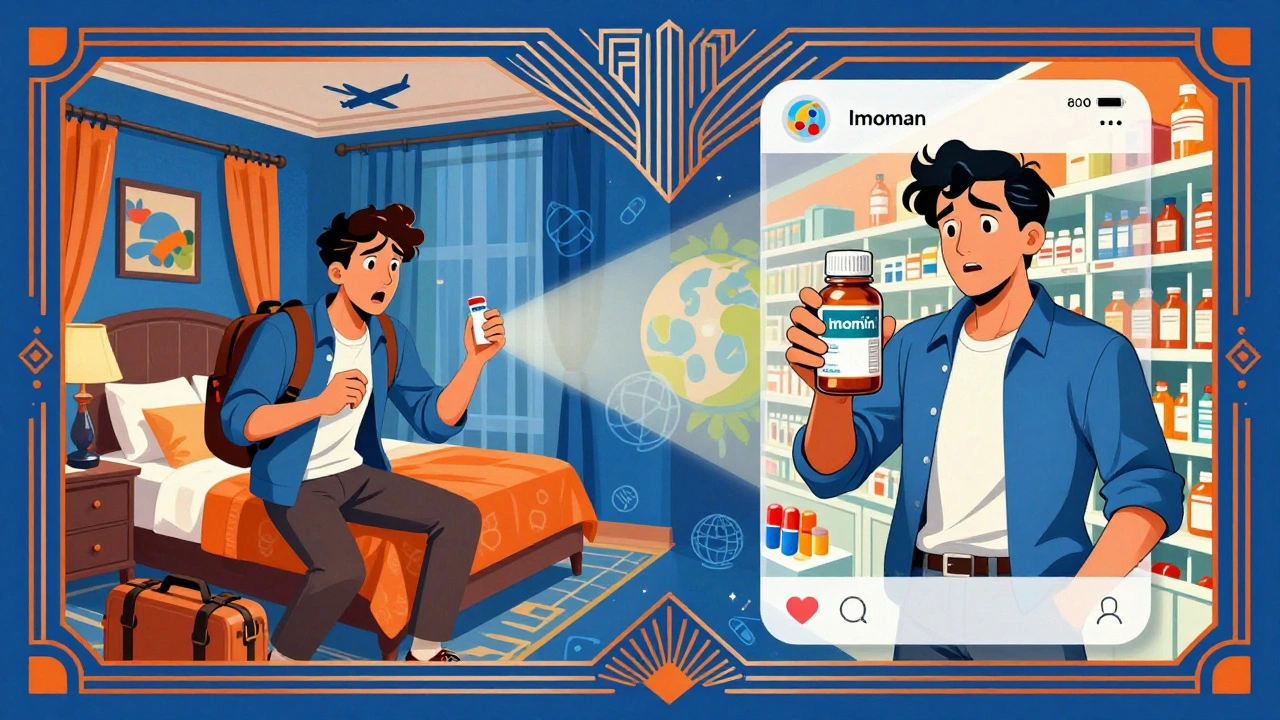
You’re in a small town in Portugal. Your stomach is upset. You’ve got a prescription for loperamide, but the pharmacist doesn’t recognize it. You open Convert Drugs Premium. It says: “Ask for Imodium.” You walk in, say the name, and get the pills. That’s the power of these apps. But here’s what most people forget: download offline data before you leave. If you’re on a train in the Andes or in a rural village in Vietnam, you won’t have Wi-Fi. TravelSmart and mPassport let you download medication dictionaries and clinic lists ahead of time. Do it. Right now. Don’t wait until you’re sick. Also, carry a printed copy of your prescription - even if you have the app. Some pharmacies won’t trust a phone screen. Write down your generic drug names. Know your dosage. Bring your doctor’s contact info.Real User Stories
One traveler on Reddit, u/TravelMedTech, got sick in Bangkok. His U.S. prescription for ciprofloxacin wasn’t recognized. He opened mPassport. It showed him the Thai brand name: Ciproxin. He found the pharmacy, got the medicine, and was fine by morning. Another user, u/EuropeTraveler, tried Epocrates in France. It didn’t recognize his German e-prescription. He ended up at a clinic, paid €80, and got a new prescription. He now uses Convert Drugs Premium and Air Doctor together. The pattern? People who use just one app get stuck. People who use two - one for meds, one for clinics - rarely panic.What Experts Say
The International Society of Travel Medicine recommends using at least two apps: one for medication translation, one for finding care. Why? Because no app covers everything. Dr. Mark Gendreau from Allianz warns that apps like TravelSmart are great - but only if you’re insured through them. If you’re not, you’re paying out of pocket for services you thought were covered. And Dr. David Oshinsky from NYU Langone says it plainly: “These tools help, but they don’t replace a pre-travel visit to a travel clinic.” If you’re going to a high-risk area, need vaccines, or have a chronic condition, talk to a doctor first. Apps can’t give you a yellow fever shot.
How to Get Started
Here’s your simple 5-step plan:- Download two apps before you leave - one for meds (Convert Drugs Premium or TravelSmart), one for clinics (Air Doctor or mPassport).
- Enter your medications, allergies, and emergency contacts into the apps.
- Download offline data for your destination countries.
- Take a screenshot of your prescription and save it in your phone’s photos.
- Carry a small printed list of your generic drug names and dosages.
Do this two weeks before you fly. Test the apps. Make sure they work on your phone. Try searching for a drug you use. See if the location feature finds a nearby pharmacy in your city. Fix issues now - not when you’re feverish in a foreign hotel.
What’s Coming Next
The market is changing fast. Convert Drugs Premium is finally coming to Android in late 2023. Air Doctor added an AI symptom checker that reduces misdiagnoses. The EU is rolling out digital health cards that will let you use e-prescriptions across member states - which could make medication apps less critical in Europe soon. But for now, in most of the world, these apps are your best safety net. They’re not perfect. They won’t replace a good doctor. But they’ll save you time, money, and stress when you need it most.Frequently Asked Questions
Can I use these apps without an internet connection?
Some apps, like TravelSmart and mPassport, let you download medication databases and clinic maps for offline use. But real-time features like telemedicine or live location tracking require internet. Always download offline content before you leave home.
Are these apps safe to use with my personal health data?
Reputable apps like Air Doctor and mPassport comply with GDPR and other privacy standards. Avoid apps that ask for unnecessary permissions like contacts or camera access. Stick to apps from trusted developers - check reviews and company websites for their privacy policy.
Do I still need travel insurance if I use these apps?
Yes. Apps help you find care, but they don’t pay for it. Travel insurance covers medical bills, emergency evacuation, and hospital stays. Apps like TravelSmart integrate with Allianz insurance - but only if you have it. Always buy insurance before you leave.
What if my medication isn’t in the app?
If your drug isn’t listed, search for its generic name instead of the brand. If that doesn’t work, go to a clinic or hospital. Pharmacists there can help identify alternatives. Never guess or take someone else’s medicine. Always ask for a doctor’s advice if you’re unsure.
Are these apps reliable in developing countries?
Coverage is spotty in rural or low-income areas. Apps work best in cities and tourist hubs. In places like rural Africa or Southeast Asia, clinics may not be listed at all. Always carry backup medication and know the nearest embassy. Use apps as a guide, not a guarantee.
Webster Bull
December 12, 2025 AT 16:08Just downloaded mPassport before my trip to Vietnam. Best decision ever. Offline mode saved me when the train lost signal near Hanoi. Found a pharmacy in 2 minutes, got my amoxicillin as Amoxi-500. No panic, no stress. Seriously, do this before you fly.
Also, screenshot your prescription. I did. Pharmacist didn’t trust my phone but loved the pic. 🙌
Jade Hovet
December 13, 2025 AT 12:01OMG YES!! 😭 I used Air Doctor in Bali when I got food poisoning. Got a doctor on video call in 8 mins. They emailed me the prescription and told me exactly what to ask for. I was crying before, laughing after. Apps aren’t just helpful-they’re lifesavers. 💊✈️
Himmat Singh
December 15, 2025 AT 07:48While the premise is technically sound, the entire narrative exhibits a dangerous overreliance on commercial software solutions for what are fundamentally systemic healthcare disparities. The suggestion that a $7.99 application can substitute for the structural inadequacies of global pharmaceutical distribution networks is not merely reductive-it is ethically negligent. One cannot algorithmically resolve the absence of regulatory harmonization, linguistic barriers, or infrastructural collapse through proprietary mobile interfaces. The data presented lacks critical context regarding sampling bias, commercial sponsorship, and the exclusion of low-income regions where such tools are functionally irrelevant. This is not empowerment; it is digital colonialism dressed in UX design.
Willie Onst
December 16, 2025 AT 07:45Love this post. Honestly, I used to think I was too careful until I got stuck in Morocco with a bad stomach bug and zero clue what to ask for. Found a pharmacy, showed them my screenshot of 'loperamide'-they just shrugged. Then I opened Convert Drugs Premium. It said 'Imodium'. They nodded like it was obvious. I almost hugged the guy. 🤗
Pro tip: Always carry a printed list. Even if you're tech-savvy, people trust paper more than phones in small towns.
Jennifer Taylor
December 17, 2025 AT 00:47WAIT. Are you telling me these apps are tracking my meds and location?! 🤯
Who owns the data?! Is Apple selling my diarrhea history to Big Pharma?!
And what if the app glitches and gives me the WRONG drug?! I read about a guy in Peru who got antibiotics meant for cows because the app mixed up the database!!
Also, why is there no app for when you just want to cry and eat ice cream in a foreign hotel?!
Also, is this a CIA operation? I think they’re using this to map where Americans get sick. I’m canceling my trip. 🚨
Jamie Clark
December 17, 2025 AT 22:53Stop pretending these apps are magic. You’re not ‘empowered’-you’re just using a glorified Google Translate for pills. Half these apps are built by two guys in a garage with scraped data from 2017. The ‘15,000 drugs’ claim? Most are outdated brand names. The ‘clinics’? Often closed, unlicensed, or just pharmacies with a sign.
And don’t get me started on ‘offline mode’-you think downloading a 50MB database means you’re safe in rural Laos? You’re one broken GPS away from a dead phone and a fever.
This isn’t safety. It’s a placebo for anxious tourists who think tech fixes biology. Go see a travel clinic. Get real advice. Stop outsourcing your health to an iOS app.
Shelby Ume
December 19, 2025 AT 20:57As someone who has worked in global public health for over 15 years, I appreciate the effort to highlight accessible tools-but this piece undersells the complexity. Medication equivalence databases are invaluable, yes, but they are not substitutes for clinical judgment or local pharmacist expertise. The recommendation to rely on two apps ignores that in many regions, even the most reliable apps lack coverage for traditional medicines, herbal formulations, or non-prescription alternatives that are culturally and clinically significant.
Furthermore, the cost structure of Air Doctor and Convert Drugs Premium creates a two-tiered system: those who can pay for premium features are ‘safe,’ while others are left to navigate uncertainty. We must advocate for open-source, community-curated alternatives-not just commercial products.
That said: download the apps. But also learn the local word for ‘pharmacy’ and carry a translation card. Tech is a tool, not a shield.
nithin Kuntumadugu
December 21, 2025 AT 17:12LOL. You think these apps are legit? 😏
Convert Drugs Premium? That’s just a rebranded Russian data scraper with a fancy UI.
And Air Doctor? They’re owned by a shell company linked to a pharmaceutical conglomerate that sells the exact drugs they recommend. Coincidence? I think not.
Meanwhile, in India, we’ve had a 20-year-old open-source app called MedSearch that works offline, no ads, no tracking-and you’ve never heard of it because Big Tech buried it.
Wake up. You’re being sold a lie. And now you’re gonna pay $7.99 to be lied to. 🤡
Hamza Laassili
December 22, 2025 AT 16:25Ugh. Why do Americans always think they need an app for everything?! In my country, we just ask people. We talk. We point. We use our eyes and ears. You don’t need a $7.99 app to find a pharmacy-you need common sense and a little courage.
Also, why are you all so scared of getting sick? It’s not the end of the world. I got sick in Mexico and just drank lime soda and slept it off. No app. No panic. Just life.
And why is everyone obsessed with iPhones?! Android users exist too, you know! Stop gatekeeping health tools like they’re designer sneakers!
Rawlson King
December 24, 2025 AT 12:10Let me be blunt: You’re not preparing for travel-you’re preparing for failure. These apps are crutches for people who refuse to do the real work: learning basic medical terminology in the local language, understanding the healthcare system of your destination, and carrying sufficient backup medication.
Downloading an app doesn’t make you responsible. It makes you lazy.
And if you’re relying on a phone to tell you what medicine to take, you shouldn’t be traveling at all.
Just say no to digital dependency. Be a human. Not a gadget.
John Fred
December 24, 2025 AT 21:07Yessss! This is the kind of intel you need before you jet off 🚀
Pro tip: Use Convert Drugs + Air Doctor together. One for meds, one for docs. That’s the dream team right there.
Also, ALWAYS download offline. I learned the hard way in Nepal-no signal, no service, just me and a fever. Saved my life. 💪
And yes, print your script. No shame. Paper > pixels when your phone dies 😎💊
Michael Gardner
December 26, 2025 AT 18:14Interesting. But let’s not pretend these apps are neutral tools. They’re designed to normalize the idea that health access is a product you buy-not a right you expect. The fact that we need to pay $7.99 to know if ‘amoxicillin’ is called ‘Amoxi-500’ in Thailand is a symptom of a broken global system.
And yet… I still use them. Because I’m not a martyr. I’m just a traveler who doesn’t want to die in a foreign ER.
So I’ll use the app. But I’ll also protest the system that made it necessary.