
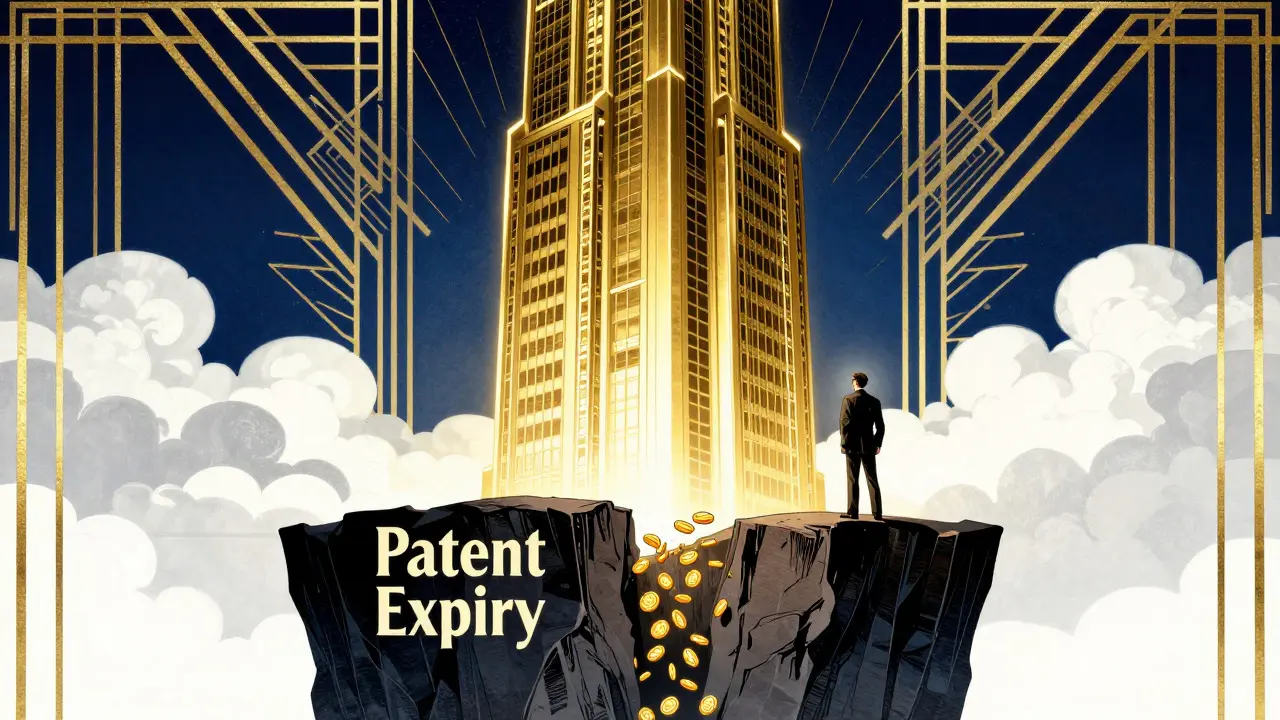
Imagine spending billions of dollars and over a decade developing a life-saving drug, only to watch your revenue drop by 80% in the first year after a competitor releases an identical version. This is the reality for brand-name pharmaceutical manufacturers when generic drugs enter the market. It is not just a business setback; it is a fundamental economic shift that reshapes the entire healthcare landscape.
The relationship between brand manufacturers and generic producers is complex. On one side, you have companies investing heavily in research and development (R&D) to create novel therapies. On the other, you have manufacturers who produce therapeutically equivalent versions at a fraction of the cost. Understanding this dynamic is crucial for anyone following health economics, from investors watching stock prices to policymakers trying to lower healthcare costs.
The Economic Reality of Generic Entry
Generic drugs are not inferior copies. By definition, they must contain the same active ingredients, strength, dosage form, and route of administration as the original brand-name drug. The Food and Drug Administration (FDA) requires them to be bioequivalent, meaning they work in the body the same way. However, because generic manufacturers do not bear the initial R&D costs, their pricing model is entirely different.
The price difference is staggering. According to FDA data, generic drugs typically cost 80-85% less than their brand-name counterparts. In 2014 alone, the Congressional Budget Office estimated that generics saved the United States approximately $253 billion. Today, generics account for about 90% of all prescriptions filled in the U.S., yet they represent only about 20% of total prescription drug spending. This disparity highlights the core economic tension: while generics drive down overall system costs, they strip brand manufacturers of their monopoly profits.
| Feature | Brand-Name Drugs | Generic Drugs |
|---|---|---|
| Market Share (U.S.) | ~10% of prescriptions | ~90% of prescriptions |
| Spending Share (U.S.) | ~80% of total spending | ~20% of total spending |
| Pricing Power | Monopoly during patent term | Highly competitive commodity market |
| Cost Savings | None relative to self | 80-85% less than brand |
| Primary Driver | Innovation & R&D recovery | Manufacturing efficiency & volume |
The Patent Cliff: A Financial Precipice
For brand manufacturers, the expiration of a patent is known as the "patent cliff." It is a sudden and severe drop in revenue that can shake investor confidence and alter company strategy. When a blockbuster drug loses its exclusivity, brand sales can plummet by 80-90% within the first year. Consider Humira, a top-selling arthritis drug that lost patent protection in 2023. Its manufacturer, AbbVie, faced billions in lost revenue almost overnight as biosimilar and generic competitors entered the market.
This cliff effect forces brand companies to constantly innovate. They cannot rely on a single drug forever. The pressure to replace expiring patents with new blockbusters drives the high-risk, high-reward nature of pharmaceutical R&D. If a company fails to launch a successful new drug before its current ones face generic competition, its financial stability is at risk. Stock prices often reflect this anxiety, with volatility spiking around expected patent expiration dates.
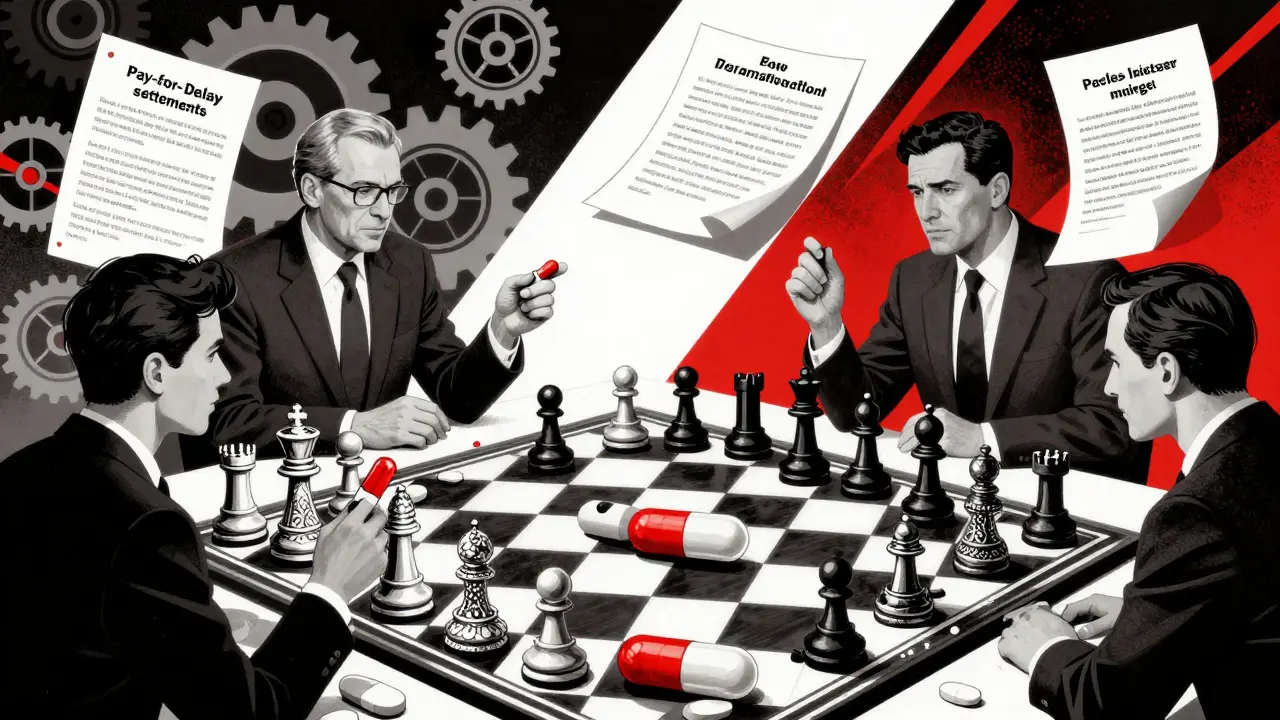
Strategies to Delay Generic Competition
Faced with such drastic revenue loss, brand manufacturers employ various strategies to extend their market dominance. These tactics are controversial but legally permissible under current frameworks established by laws like the Hatch-Waxman Act of 1984.
- Pay-for-Delay Settlements: Brand companies sometimes pay generic manufacturers to delay entering the market. A study cited by the Blue Cross Blue Shield Association estimates these deals increase prescription drug costs by nearly $12 billion annually. Critics argue this practice hurts patients by keeping prices artificially high.
- Patent Thicketing: Brands file multiple patents for minor aspects of a drug-such as the color of the pill or the packaging-to create a web of legal barriers. The Congressional Budget Office suggests limiting these practices could save $1.8 billion over ten years.
- Product Hopping: When a patent is nearing expiration, a brand might reformulate the drug (e.g., changing from a tablet to a capsule) and encourage doctors to switch patients to the new version. This resets the clock for generic entry. Ending this practice could reduce federal spending by $1.1 billion over a decade.
- Authorized Generics: Some brand manufacturers introduce their own generic version of the drug right at patent expiry. This allows them to capture some of the generic market share rather than losing it entirely to competitors.
The Role of Intermediaries: PBMs and Pricing Opacity
The impact of generics on brand manufacturers is not just a two-way street. Pharmacy Benefit Managers (PBMs) play a critical role in this ecosystem. PBMs negotiate rebates with both brand and generic manufacturers in exchange for placing drugs on insurance formularies. While generics theoretically offer massive savings, opaque PBM practices can distort these benefits.
Research from the Schaeffer Center at USC indicates that patients may still pay 13-20% more than necessary for generic drugs due to these intermediaries extracting excess profits. For brand manufacturers, this means that even when generics are available, the rebate structures negotiated with PBMs can keep brand drugs attractive to insurers, thereby slowing the erosion of brand market share. This complexity adds another layer to the economic equation, making it difficult for consumers to see the true cost savings of generics.
Supply Chain Risks and Market Consolidation
The intense price competition in the generic market creates its own set of problems. As prices drop, margins for generic manufacturers shrink. With multiple competitors driving prices down by approximately 20% every three years, some companies struggle to stay profitable. This has led to significant consolidation in the industry, with nearly 100 mergers and acquisitions occurring between 2014 and 2016.
Paradoxically, this consolidation can lead to supply shortages. When manufacturing becomes unprofitable, companies may close facilities or stop producing certain low-margin drugs. The FDA has noted that the pressure to lower manufacturing costs can lead to quality issues and supply disruptions. For brand manufacturers, these shortages can sometimes present an opportunity to retain market share if their branded product remains available, though regulatory scrutiny increases in such scenarios.
Future Outlook: Innovation vs. Access
Looking ahead, the tension between innovation incentives and affordable access remains unresolved. Legislative efforts are gaining momentum to ban pay-for-delay settlements and increase transparency in PBM pricing. The FDA’s Generic Drug User Fee Amendments (GDUFA), reauthorized through 2027, aim to accelerate generic approvals while maintaining quality standards.
By 2028, analysts predict that approximately $400 billion in brand drug revenue will be at risk from patent expirations. This looming threat is pushing major pharmaceutical companies to diversify. Novartis, for example, spun off its generics division, Sandoz, into a separate publicly traded company in 2022. This move allowed Novartis to focus on innovative medicines while letting Sandoz operate independently in the competitive generic market.
For brand manufacturers, the path forward involves balancing the need for high returns on R&D investments with the inevitable entry of cheaper alternatives. For the healthcare system, generics remain the primary mechanism for cost containment. The challenge lies in designing policies that preserve the incentive for innovation while ensuring that the savings from generics reach patients effectively.
What is the "patent cliff" in pharmaceuticals?
The patent cliff refers to the sharp decline in revenue experienced by brand-name drug manufacturers when their patents expire and generic competitors enter the market. Sales can drop by 80-90% within the first year, forcing companies to rely on new innovations to maintain growth.
How much do generic drugs save compared to brand names?
Generic drugs typically cost 80-85% less than brand-name versions. In 2014, generics saved the U.S. healthcare system approximately $253 billion. Currently, they account for 90% of prescriptions but only 20% of total spending.
What are "pay-for-delay" settlements?
Pay-for-delay settlements occur when brand-name manufacturers pay generic companies to delay launching their competing products. This keeps prices high for longer. Studies estimate these deals add nearly $12 billion annually to prescription drug costs.
Why do generic drug prices continue to drop after launch?
As more generic manufacturers enter the market, competition intensifies. Prices typically decline by about 20% every three years as companies vie for market share by offering lower prices. This commoditization drives down costs significantly.
How do brand manufacturers protect themselves from generic competition?
Brands use strategies like patent thicketing (filing many minor patents), product hopping (reformulating drugs), and authorized generics (launching their own generic version). They also invest heavily in new R&D to replace expiring patents with innovative therapies.
Do Pharmacy Benefit Managers (PBMs) affect generic pricing?
Yes, PBMs negotiate rebates with manufacturers. Their opaque pricing practices can sometimes prevent full cost savings from reaching patients. Research suggests patients may pay 13-20% more than necessary for generics due to intermediary profit extraction.
Is the generic drug market stable?
The market faces instability due to low margins and consolidation. Mergers and acquisitions have reduced the number of competitors, which can lead to supply shortages and quality issues as manufacturers cut costs to stay profitable.