
MAOI Meal Safety Calculator
Select Foods in Your Meal
Click on items you plan to eat. Each selection adds to your total tyramine intake.
Your Meal Analysis
✓ Safe Meal
Your meal is within the recommended safe limit of 6mg tyramine per meal.
Selected Items:
- No foods selected yet
Quick Reference
- Under 6mg: Generally safe for most MAOI patients
- 6-12mg: Caution zone - monitor blood pressure
- Above 12mg: High risk - consider reducing portions
You’ve been prescribed an MAOI is a class of antidepressant medications that inhibit the enzyme monoamine oxidase to treat depression. It’s a powerful tool for treatment-resistant depression, but it comes with a warning label that sounds like something out of a horror movie: avoid certain foods or risk a life-threatening spike in blood pressure. For decades, this meant giving up cheese, wine, and aged meats entirely. But here is the truth that many outdated guides miss: modern food science has changed the game. You don’t need to live on plain rice and boiled chicken forever. You just need to understand exactly what triggers the danger and how to manage it safely.
The core issue isn't the food itself; it's a compound called tyramine is a naturally occurring amino acid found in fermented, aged, or spoiled foods that can interact dangerously with MAOIs.. Normally, your body breaks down tyramine using an enzyme called monoamine oxidase (MAO). When you take an irreversible MAOI like phenelzine or tranylcypromine, that enzyme is blocked. If you eat high-tyramine foods, the tyramine builds up, causing your blood vessels to constrict rapidly. This leads to a hypertensive crisis is a sudden, severe increase in blood pressure that can cause stroke, heart attack, or death.. Symptoms include a pounding headache, stiff neck, rapid heartbeat, and sweating. It’s serious, but it is preventable if you know the rules.
Understanding the Real Risk: What Actually Contains Tyramine?
Old advice told you to avoid bananas, chocolate, and avocados. New research from 2021 and 2023 shows this was largely unnecessary fear-mongering. The real danger lies in fermentation, aging, and improper storage. Tyramine forms as proteins break down over time. Fresh foods have almost zero tyramine. As they age, spoil, or ferment, levels skyrocket.
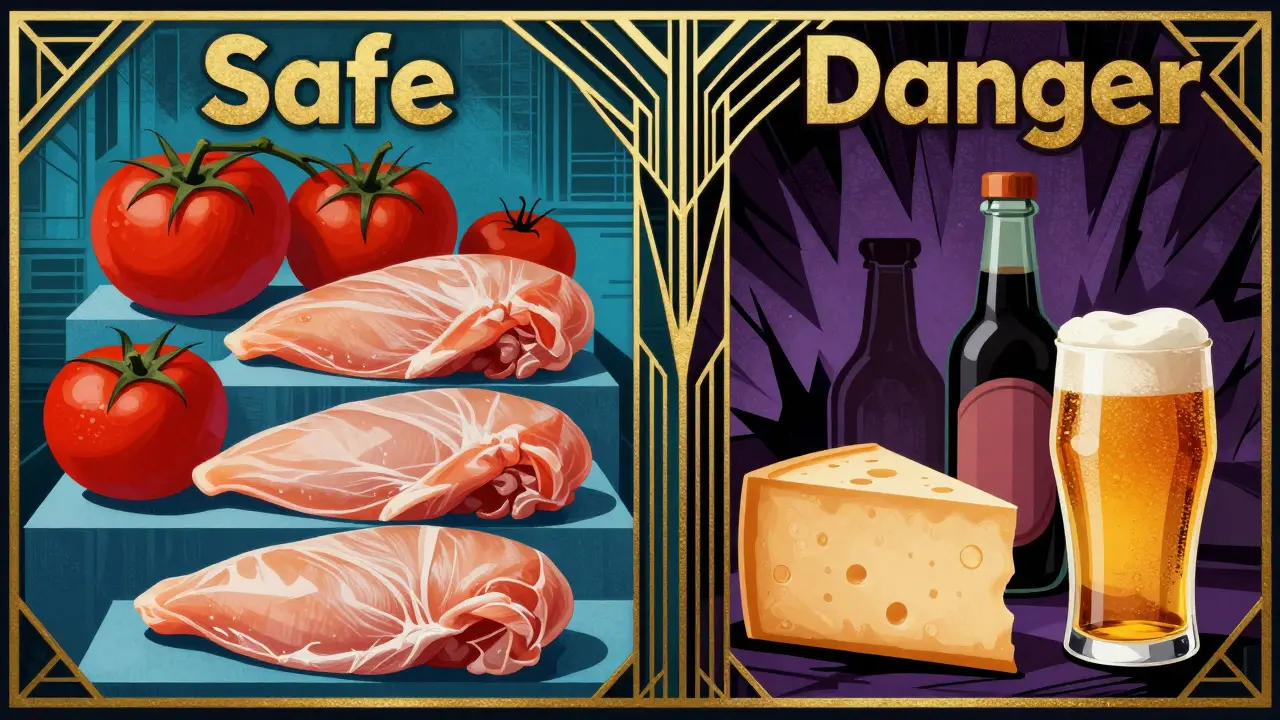
| Food Item | Tyramine Content | Safety Status |
|---|---|---|
| Fresh Mozzarella / Cottage Cheese | < 1.5 mg | Safe |
| Cheddar (Commercial, Properly Stored) | 0.1 - 1.0 mg | Generally Safe |
| Aged Cheddar (>6 months) | > 20 mg | Avoid |
| Tap Beer | 5.2 - 18.7 mg | Limit Strictly |
| Soy Sauce | 10.5 - 118.4 mg | Avoid |
| Bananas (Pulp Only) | < 1.5 mg | Safe |
| Chicken Liver (Stored >48 hrs at 10°C) | 128.7 mg | Dangerous |
Notice the difference? A standard supermarket cheddar, kept cold, is now considered safe by most experts because modern refrigeration keeps tyramine levels low. However, that same cheese left out for two days becomes a hazard. Soy sauce is a major trap-it varies wildly, but often contains enough tyramine to trigger a reaction in one serving. Stick to fresh ingredients. If it smells sour, looks slimy, or has been sitting in your fridge for weeks, throw it out.
Which MAOIs Require Strict Diet Control?
Not all MAOIs are created equal. The strict dietary rules apply primarily to irreversible, non-selective MAO-A inhibitors. These include:
- Phenelzine (Nardil): Requires full dietary restrictions.
- Tranylcypromine (Parnate): Requires full dietary restrictions.
- Isocarboxazid (Marplan): Requires full dietary restrictions.
- Selegiline (Emsam) Patch: This is where it gets tricky. At doses below 6 mg/24 hours, the patch bypasses the gut and liver initially, so dietary restrictions are minimal. However, once you exceed 6 mg/24 hours, systemic absorption increases, and you must follow the full tyramine-restricted diet.
If you are taking oral selegiline or any other reversible MAOI inhibitor (like moclobemide, available outside the US), the risks are significantly lower because these drugs dissociate from the enzyme, allowing some tyramine metabolism to continue. Always confirm which type you are on with your prescriber.
Your Step-by-Step Safety Plan
Knowledge is power, but action saves lives. Here is how to structure your daily routine to stay safe while enjoying life.
- The 6-Milligram Rule: Aim to keep tyramine intake under 6 mg per meal. This is the threshold identified by ACI Health NSW as generally safe for most patients. One slice of commercial cheddar is fine. Five slices might not be.
- Fresh is Best: Prioritize foods consumed within 24 hours of preparation. Tyramine levels in meat increase exponentially after 48 hours, even in the fridge. Avoid leftovers during your first four weeks on the medication.
- Read Labels Like a Detective: Look for words like "fermented," "aged," "cured," "smoked," or "pickled." These processes create tyramine. Avoid dry sausages (salami, pepperoni), unpasteurized beers, and tap beers. Bottled beer is usually safer due to pasteurization, but check with your doctor.
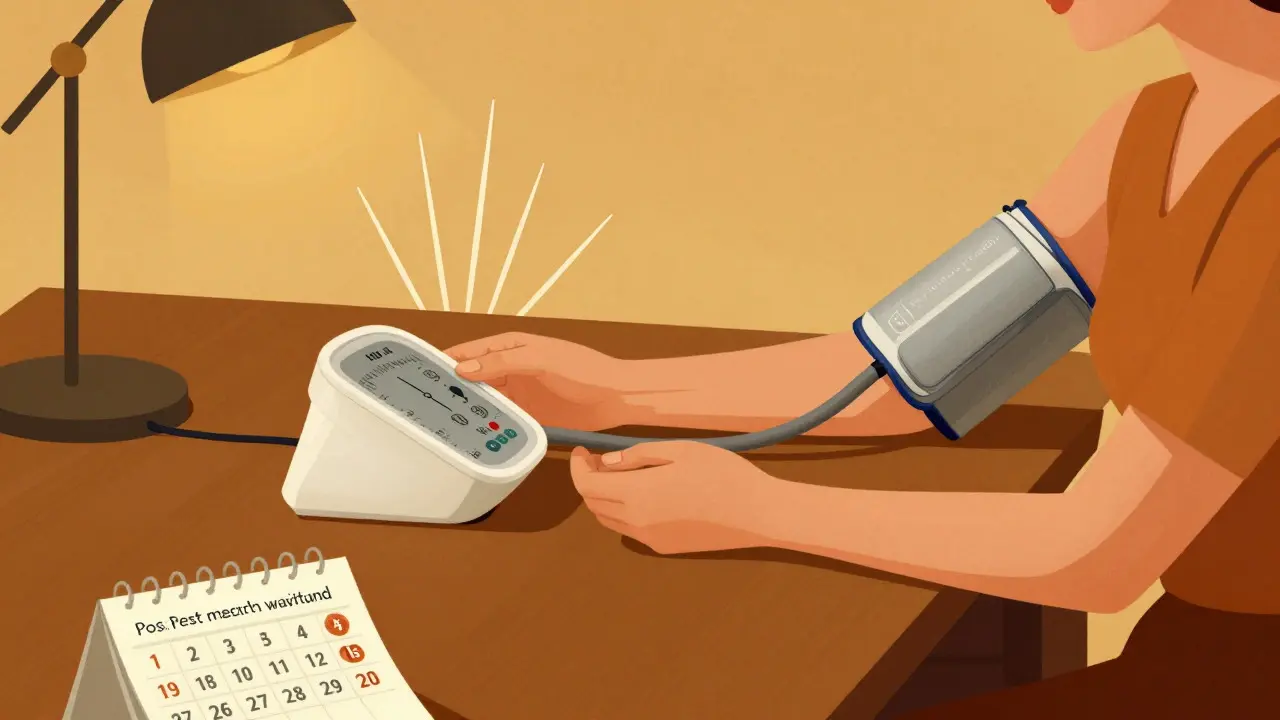
- Monitor Your Blood Pressure: Buy a home blood pressure monitor. Check your baseline when you feel calm. Then, check again two hours after eating any new or questionable food. If your systolic pressure (the top number) jumps above 180 mmHg, or if you get a severe headache, act immediately.
- Keep a Food Diary: For the first week, write down everything you eat and your blood pressure readings. This helps you identify personal sensitivities. Some people react to smaller amounts than others.
Emergency Protocol: What to Do If a Crisis Hits
Panic makes things worse. Have a plan before you need it. Carry an MAOI identification card is a medical alert card carried by patients on MAOIs to inform emergency responders of their medication and dietary restrictions. at all times. Emergency rooms need to know you are on an MAOI because standard treatments for high blood pressure might not work or could make things worse.
If you suspect a hypertensive crisis:
- Stop eating immediately.
- Check your blood pressure if possible.
- If systolic BP is >180 mmHg, take sublingual nifedipine (0.2-0.4 mg) if prescribed by your doctor for this purpose.
- Seek emergency medical attention. Tell them you are on an MAOI and suspect a tyramine interaction.
Do not wait to see if it passes. Hypertensive crises can lead to stroke or brain hemorrhage within minutes.
Recovering Enzyme Activity After Stopping MAOIs
The diet doesn’t end the moment you stop taking the pill. Because irreversible MAOIs permanently bind to the enzyme, your body has to build new enzymes from scratch. This takes time. According to Mayo Clinic guidelines, you must maintain dietary restrictions for 14 to 21 days after your last dose. During this window, your protection is fading, and you are still vulnerable to tyramine spikes. Mark this date clearly on your calendar.
Navigating Social Situations and Dining Out
Eating out can be stressful. Here’s how to handle it without isolation. Call ahead. Ask if they use soy sauce in marinades or serve aged cheeses. Stick to grilled fresh meats, fresh vegetables, and pasta with simple sauces. Avoid sushi unless you trust the restaurant’s cold chain management-improperly stored fish can contain up to 200 mg of tyramine per 100g. Wine is risky; red wine generally has higher tyramine than white, but both vary. If you drink, limit yourself to one small glass of young, pasteurized wine and monitor your pulse.
Remember, the goal isn’t perfection; it’s awareness. Most people on MAOIs live full, normal lives. They just pay closer attention to their food labels and their bodies. With the right knowledge, you can enjoy a rich diet while staying safe.
Can I eat bananas while on MAOIs?
Yes, you can. Modern studies show that banana pulp contains less than 1.5 mg of tyramine per 100g, which is well below the dangerous threshold. Just avoid overripe bananas with brown spots, as tyramine levels may rise slightly as they decay.
Is chocolate safe with MAOIs?
In moderation, yes. Up to 30 grams of chocolate is generally considered safe. Dark chocolate has slightly more tyramine than milk chocolate, so stick to small portions. Avoid large bars or chocolate-covered aged nuts.
How long do I need to follow the MAOI diet after stopping medication?
You must follow the diet for 14 to 21 days after your last dose. Irreversible MAOIs require your body to regenerate monoamine oxidase enzymes, a process that takes about two to three weeks.
What are the symptoms of a hypertensive crisis?
Symptoms include a severe, throbbing headache (often at the back of the head), stiff neck, nausea, vomiting, sweating, palpitations, anxiety, and dilated pupils. Blood pressure typically exceeds 180/120 mmHg.
Does the Emsam patch require dietary restrictions?
It depends on the dose. Doses up to 6 mg/24 hour have minimal dietary restrictions because they primarily affect MAO-B in the brain. Doses above 6 mg/24 hour require full tyramine-restricted diet adherence due to increased systemic absorption.
Can I drink alcohol while on MAOIs?
Alcohol should be limited strictly. Tap beer and unpasteurized beer are high-risk due to tyramine. Bottled beer and wine carry moderate risk. Monitor your blood pressure closely if you consume alcohol, and never mix it with other sedatives.