
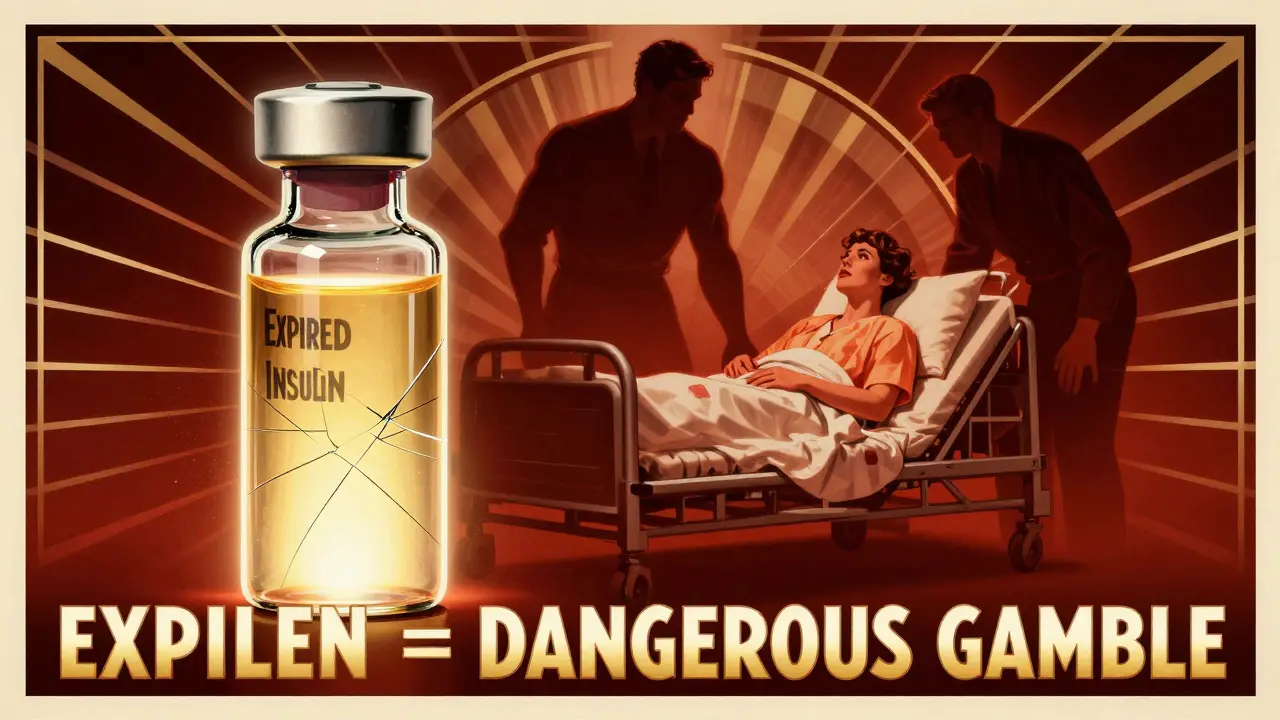
Expiration dates on medicine aren't just there to look official. They’re a hard stop - the last day the manufacturer guarantees the drug will work as it should and won’t harm you. The FDA made this requirement law back in 1979, and every bottle, box, or inhaler you buy has to carry one. But here’s the thing most people don’t realize: expiration doesn’t mean "poison after this date." It means "we can’t promise it still works." And for some medications, that’s a dangerous gray area. Using them past their date isn’t just a gamble - it could cost you your health.
Insulin: A Life-Saving Drug That Loses Its Power
If you rely on insulin to control your blood sugar, never use it after the expiration date. Insulin doesn’t just weaken over time - it breaks down into clumps that your body can’t absorb properly. Research from the Journal of Diabetes Science and Technology in 2021 showed that expired insulin can lose up to 35% of its effectiveness. That means your blood sugar could spike without warning. And if you’re using an insulin pen or vial that’s been opened? Even if it’s still within the printed expiration, most insulin starts degrading after 28 days. Store it in the fridge unopened, but once you start using it, keep it at room temperature and replace it on schedule. Waiting until you feel sick to get a new one? That’s how emergencies happen.
Nitroglycerin: When Seconds Count, Potency Can’t Be Compromised
Nitroglycerin tablets are used to relieve chest pain during a heart attack. These pills are extremely sensitive to air, heat, and moisture. Once the bottle is opened, they begin to lose strength - fast. Studies from University Hospitals Cleveland Medical Center in 2023 found that within just six months past expiration, nitroglycerin can lose 40 to 60% of its potency. If you’re having chest pain and your nitroglycerin doesn’t work, you might delay calling 911. That delay can be fatal. Keep nitroglycerin in its original glass bottle, tightly closed, and away from light. Replace it every 3 to 6 months after opening, even if the date on the bottle hasn’t passed. Don’t wait for it to look different. It won’t.
Liquid Antibiotics: More Than Just Ineffective - They Can Be Dangerous
Amoxicillin suspension, azithromycin liquid, and other liquid antibiotics are common prescriptions for kids and adults. But once they expire, two things go wrong: they lose their ability to kill bacteria, and they can grow harmful germs. The FDA reviewed infection cases in 2019 and found that 12% of failed treatments were linked to expired liquid antibiotics. Why? The preservatives in these suspensions break down. Bacteria like Pseudomonas or Staphylococcus can multiply inside the bottle. Swallowing that? You’re not just treating an infection - you’re introducing a new one. And if the infection doesn’t fully clear because the antibiotic is weak, you risk creating antibiotic-resistant superbugs. Always finish your full course - and never keep leftover liquid antibiotics for "next time."
Tetracycline: The One That Turns Toxic
Most expired drugs just stop working. Tetracycline is the exception. When this antibiotic breaks down, it turns into compounds that can damage your kidneys. The FDA first warned about this in 1963 - and the risk hasn’t changed. Even if the pills look fine, if they’re past their expiration date, don’t take them. The toxic byproducts aren’t visible. They don’t change color or smell. But they can cause renal tubular damage - a serious condition that affects how your kidneys filter waste. This isn’t a myth. It’s a documented, decades-old danger. If you have tetracycline in your medicine cabinet, toss it on time.
Epinephrine Auto-Injectors (EpiPens): A Lifeline That Can Fail
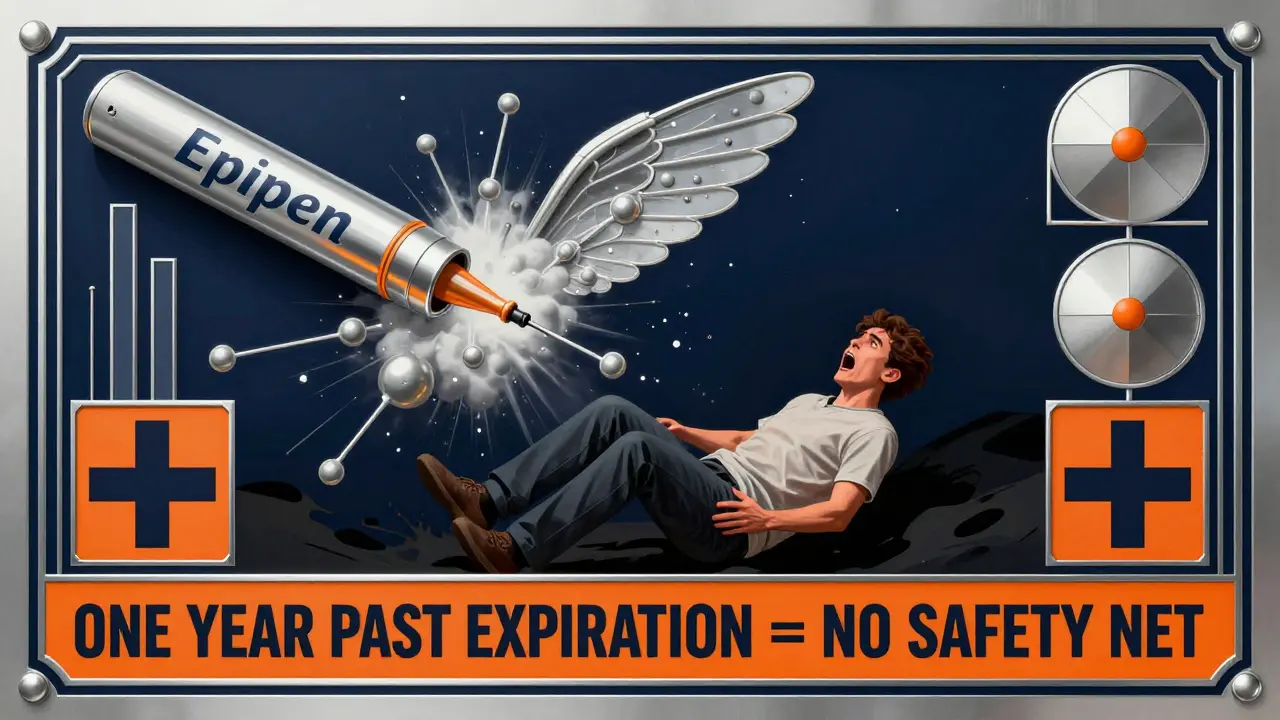
Epinephrine is your body’s emergency response to anaphylaxis - a life-threatening allergic reaction. If you’re allergic to nuts, bee stings, or certain medications, your EpiPen might save your life. But here’s the hard truth: epinephrine degrades over time. Mylan Pharmaceuticals’ own stability data shows it loses about 15% of its potency each year after expiration. That means an EpiPen that expired a year ago might only have 85% of the dose you need. In a real emergency, that’s not enough. Swedish Health Services reported cases where people used expired pens and still ended up in the hospital because the drug didn’t work. Don’t rely on it. Replace it on the date printed on the device. If you’re worried about cost, ask your pharmacy about patient assistance programs. Your life isn’t worth the risk.
Rescue Inhalers: When Your Airway Closes, You Need Full Strength
Albuterol inhalers are used to stop asthma attacks. But the active ingredient breaks down, especially if the inhaler is old or stored in a hot bathroom. University Hospitals research in 2023 showed that six months past expiration, these inhalers can lose 25 to 30% of their bronchodilator effect. That might sound small - until you’re gasping for air and the inhaler doesn’t open your airways. People who rely on these devices often delay seeking emergency care because they think, "I’ll just use my inhaler." If it’s expired, it might not help at all. Always check the expiration date. Replace your inhaler before it runs out - even if you don’t use it often. And never leave it in your car or near a window.
Eye and Ear Drops: A Direct Path to Infection
Eye drops and ear drops contain preservatives to keep bacteria out. Once they expire, those preservatives stop working. That’s when bacteria like Pseudomonas can grow inside the bottle. Cleveland Clinic’s ophthalmology team documented 17 cases of corneal ulcers - serious eye infections - between 2020 and 2022 that were directly tied to expired eye drops. One patient lost vision in one eye. Ear drops can cause otitis externa - "swimmer’s ear" - that turns into a deep, painful infection. These aren’t rare accidents. They’re preventable. If your eye or ear drop looks cloudy, smells odd, or has particles in it, throw it away. Even if it’s just one day past the date, don’t risk it.
Thyroid Medication: Tiny Dose, Big Consequences
Levothyroxine, used to treat hypothyroidism, needs to be precise. Too little, and your metabolism slows. Too much, and your heart races. The American Thyroid Association found that even a 10% drop in potency - which happens with expired pills - causes thyroid dysfunction in 68% of patients with existing thyroid conditions. That means fatigue, weight gain, depression, or heart palpitations. You won’t know it’s the medication until your symptoms get bad. And by then, you might need a hospital visit to fix it. Thyroid meds should be replaced on schedule. Don’t try to stretch them. Store them in a cool, dry place - not the bathroom.
Storage Matters More Than You Think
Even if a medication hasn’t expired, where you store it can ruin it. A 2023 Cleveland Clinic survey found that 61% of patients keep their medicine in the bathroom - the worst place possible. Heat and humidity from showers and sinks break down pills and liquids much faster. Medications stored in a bathroom cabinet degrade 2.3 times faster than those kept in a bedroom drawer. Keep pills in a cool, dry place - like a kitchen cabinet away from the stove. Or better yet, a locked box in a closet. Never leave them in a hot car. Never store them in a humid basement. Your medicine’s shelf life depends on more than just the date on the label.
What About All Those Studies Saying Most Drugs Are Fine?
You’ve probably heard about the FDA’s 2020 study that found 90% of drugs were still effective 15 years past expiration. That’s true - but it’s misleading. That study tested solid pills - like aspirin, ibuprofen, or antihistamines - stored in perfect, climate-controlled labs. It didn’t test insulin, epinephrine, or eye drops. Those are the ones you shouldn’t use. The government’s Shelf Life Extension Program (SLEP) has similar results - but again, it’s for stockpiled military meds, not what you have at home. Your medicine was stored in a bathroom. You opened the bottle. You left it in the sun. Don’t assume those studies apply to you. They don’t.
What Should You Do Instead?
- Check expiration dates every time you refill a prescription.
- Replace insulin, epinephrine, nitroglycerin, and liquid antibiotics on schedule - no exceptions.
- Store all medications in a cool, dry place - not the bathroom.
- Dispose of expired meds properly. Use a drug take-back program. The DEA collects over 900,000 pounds of unused meds each year.
- If a pill looks cracked, smells strange, or a liquid is cloudy - throw it out. No matter the date.
There’s no shame in replacing medicine. There’s only danger in waiting. Your body doesn’t know what the label says. It only knows what’s in the pill - and if it’s weak, broken, or contaminated, it won’t help you. It might hurt you.
Can I still use an expired painkiller like ibuprofen?
For most solid pills like ibuprofen, acetaminophen, or antihistamines, using them a few months past expiration is unlikely to cause harm - but they may not work as well. If the pill is discolored, cracked, or smells odd, don’t take it. But if it looks normal, it’s probably safe. Still, don’t rely on it for serious pain. Replace it.
Why do some medications expire so soon after opening?
Some medicines, like nitroglycerin tablets or liquid antibiotics, are unstable once exposed to air, light, or moisture. The manufacturer’s expiration date is based on the sealed package. Once you open it, the environment starts breaking it down. That’s why nitroglycerin bottles say "discard after 3 months" even if the date is longer. It’s not a mistake - it’s science.
Is it safe to flush expired medications down the toilet?
Only if the label says so - or if it’s a controlled substance like opioids. Otherwise, flushing harms the environment. The FDA recommends drug take-back programs for 99% of medications. These programs safely destroy drugs without polluting water. If you can’t find a take-back location, mix pills with coffee grounds or cat litter in a sealed bag before throwing them in the trash.
What if I can’t afford to replace my expired medication?
Talk to your pharmacist. Many pharmacies offer low-cost generic versions. Some drugmakers have patient assistance programs that give free or discounted meds to those who qualify. Never skip a life-saving drug because you can’t afford it - ask for help. Your health isn’t optional.
Can I tell if a medicine is expired just by looking at it?
Sometimes - but not always. A cloudy eye drop, a cracked pill, or a strange smell are clear signs. But many expired drugs look perfectly normal. That’s why you can’t rely on appearance. Always trust the date on the label - especially for insulin, epinephrine, or antibiotics. If the date has passed, don’t risk it.
Dean Jones
March 2, 2026 AT 13:04Look, I get that expiration dates are a thing, but let’s be real-most of this is corporate fear-mongering wrapped in FDA jargon. I’ve got a 7-year-old bottle of ibuprofen that still tastes like chalk and works just fine. The science says most solid drugs stay potent for years. The problem isn’t the pills-it’s that companies want you to buy new ones every 12 months. If your insulin or EpiPen is expired, yeah, ditch it. But your aspirin? It’s not going to turn into a poison pill. Stop feeding the pharmaceutical machine.
Richard Elric5111
March 3, 2026 AT 10:24While the pragmatic perspective offered above is not without merit, it fundamentally misconstrues the epistemological basis of pharmaceutical regulation. The FDA’s expiration protocols are not rooted in commercial opportunism, but in the rigorous application of stability testing under controlled conditions. To extrapolate the behavior of solid-state analgesics to life-critical biologics such as insulin or epinephrine is not merely fallacious-it is a violation of the principle of non-identicality in chemical degradation pathways. One cannot generalize across pharmacokinetic domains without risking catastrophic clinical outcomes. The distinction between pharmacodynamic stability and pharmacotechnical integrity must be maintained with intellectual rigor.
Gretchen Rivas
March 4, 2026 AT 09:11My grandma used to say, ‘If it looks weird, don’t take it.’ She never read a single study, but she lived to 92. I keep my meds in a drawer, not the bathroom, and I replace insulin and EpiPens on the dot. No drama. Just common sense.
Betsy Silverman
March 5, 2026 AT 10:07I’m a nurse in a rural clinic, and I see this every week. People come in with expired insulin because they can’t afford a new one. Or they’re using a 3-year-old EpiPen because they lost their insurance. The science here is rock solid-but the system is broken. We need better access, not more fear. If we made life-saving meds affordable, people wouldn’t have to gamble with expired ones. The real danger isn’t the pill-it’s the price tag.
Ivan Viktor
March 5, 2026 AT 12:19So let me get this straight. I can’t use my 2-year-old allergy meds, but I can drink expired milk? That’s the logic? I’ve got a whole cabinet of stuff I’m too lazy to replace. Guess I’ll just keep my fingers crossed.
Zacharia Reda
March 6, 2026 AT 22:32Wait-you’re telling me my 6-month-old albuterol inhaler might not work if I leave it in my car? And I thought the problem was my asthma. Classic. I’ve been storing mine next to my coffee maker. Thanks for the wake-up call. I’ll replace it… probably next month. Still, if I’m gonna die, I want it to be from a perfectly stored, FDA-approved inhaler.
Jeff Card
March 7, 2026 AT 06:50I’ve been on thyroid meds for 12 years. I used to stretch my refills because I didn’t have insurance. One year, I got really tired, gained 15 pounds, and felt like I was moving through molasses. Went to the doctor-turns out my pills had expired 8 months ago. No one told me. I felt stupid. But honestly? I think a lot of people don’t know this stuff. Maybe we need more clear labels. Or a text reminder when meds expire.
Matt Alexander
March 7, 2026 AT 18:39Simple rule: If it’s liquid, injectable, or life-saving-don’t use it past the date. If it’s a pill like ibuprofen and it looks fine? Probably okay. But if you’re in pain and it doesn’t help, don’t keep taking more. Just go get a new one. Easy.
Stephen Vassilev
March 9, 2026 AT 01:03Have you considered that the FDA, in collusion with Big Pharma, deliberately shortens expiration dates to maximize profits? The Shelf Life Extension Program proves that drugs remain stable for decades. Yet, they force consumers to replace them annually. This is not science-it’s economic engineering. And the bathroom storage myth? A distraction. The real issue is corporate greed disguised as public safety. Wake up. The data is in the public domain. They don’t want you to see it.
Mike Dubes
March 10, 2026 AT 19:28Man, I just learned my EpiPen expires in 6 months. I’ve had it for 2 years. I’m gonna be honest-I didn’t even know they had dates. I thought they lasted forever. I’m gonna head to the pharmacy tomorrow. Also, I’ve been keeping my pills in the bathroom… oof. Guess I’m moving them. Thanks for the reality check. I’d rather be safe than sorry.
tatiana verdesoto
March 10, 2026 AT 20:54My aunt used to keep her insulin in the glove compartment of her car. She said, ‘It’s fine, honey, I’ve been doing it for years.’ She’s gone now. I don’t say this to scare anyone. I say it because I miss her. Please, don’t wait until it’s too late to care about this stuff.
Siri Elena
March 11, 2026 AT 03:51Oh, so now we’re supposed to trust a government agency that told us hydroxychloroquine worked for COVID? And you want me to believe their expiration dates? Please. The only thing these guidelines protect is the profit margin of manufacturers. I’ll take my chances with my 5-year-old tetracycline. It’s probably more potent than your trust in regulatory bodies.
Divya Mallick
March 12, 2026 AT 08:13As an Indian citizen, I find this Western obsession with expiration dates absurd. In our villages, we use medicines for decades. My grandmother used the same amoxicillin bottle for 10 years. She never got sick. Why do you Americans overthink everything? Your pills are overpackaged, overpriced, and overregulated. Maybe the problem isn’t the medicine-it’s your fear culture.
Pankaj Gupta
March 13, 2026 AT 20:10While cultural practices vary, the biochemical instability of pharmaceutical compounds is universal. The degradation kinetics of insulin, nitroglycerin, and epinephrine are empirically validated across global studies, regardless of geography. To dismiss evidence-based guidelines based on anecdotal experience is to conflate tradition with therapeutic efficacy. The molecular integrity of active pharmaceutical ingredients does not respond to cultural relativism.