
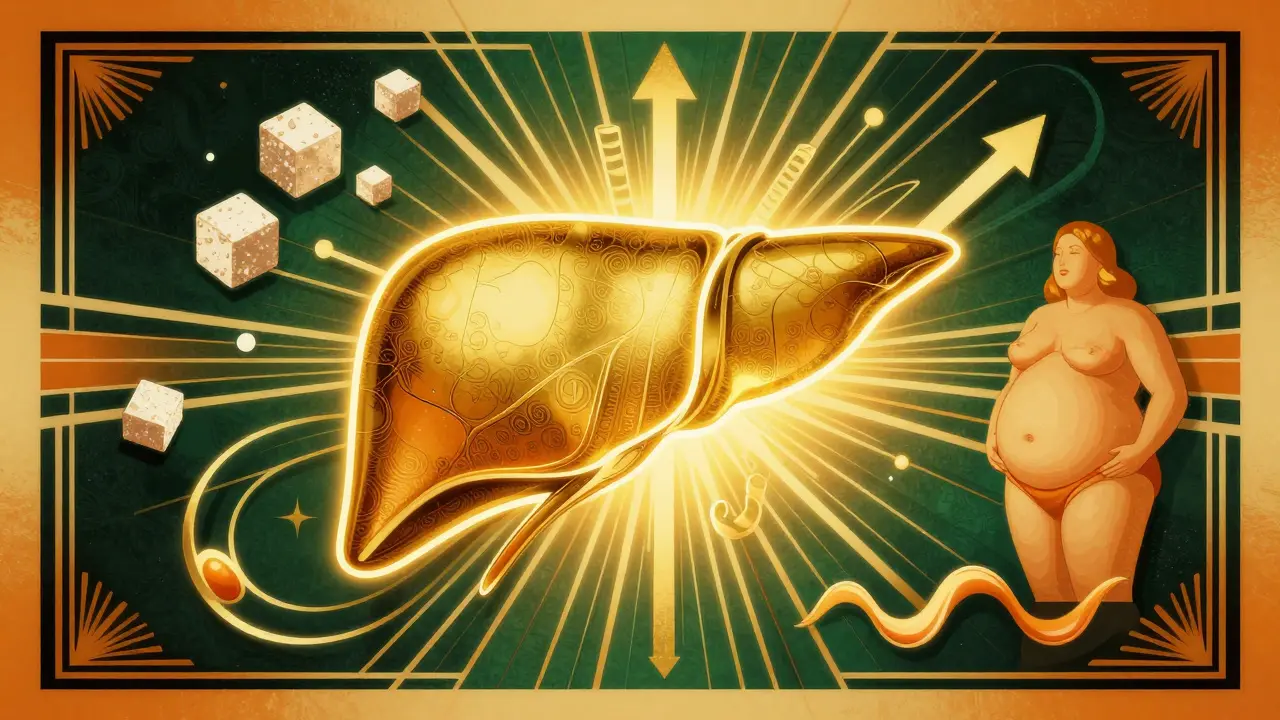
More than one in four adults worldwide has fat building up in their liver - and they don’t drink alcohol. This isn’t rare anymore. It’s called nonalcoholic fatty liver disease, but since June 2023, doctors now call it metabolic dysfunction-associated steatotic liver disease, or MASLD. The name change isn’t just for show. It tells us the real problem isn’t what’s missing (alcohol), but what’s there: metabolic chaos. Insulin resistance, belly fat, high blood sugar, and high triglycerides are the hidden drivers. Left unchecked, this quiet condition can lead to liver scarring, cirrhosis, and even liver cancer.
What’s Really Going On in Your Liver?
Your liver is your body’s chemical factory. It processes food, cleans toxins, and stores energy. When you eat more calories than you burn - especially from sugar and refined carbs - your liver turns the extra into fat. Normally, it sends that fat out. But if your metabolism is stuck, the fat piles up. When more than 5% of liver cells are filled with fat, that’s MASLD.
At first, you won’t feel anything. No pain. No jaundice. No warning signs. That’s why it sneaks up. Blood tests might show slightly elevated liver enzymes - ALT above 30 U/L in women, above 40 U/L in men - but many doctors dismiss it as "benign" or "stress-related." A 2023 survey by the American Liver Foundation found 68% of patients were initially told their liver numbers weren’t a concern. By the time symptoms show - fatigue, right-side discomfort, or worse, yellow skin or swollen belly - the damage is often advanced.
Who’s at Risk?
You don’t have to be overweight to have MASLD, but it’s far more common if you are. About 70% of people with type 2 diabetes have it. Nearly 90% of those with insulin resistance do. Over half of people with high blood pressure or high triglycerides are also affected. In the U.S., it hits 45% of Hispanic adults, 24% of non-Hispanic whites, and 20% of non-Hispanic Black adults, according to national health surveys.
It’s not just adults. Kids are getting it too. In obese children, the rate jumps to 70%. A waist size over 40 inches in men or 35 inches in women is a red flag. Even people with normal weight but high visceral fat - the kind that wraps around organs - can develop MASLD. This is called "lean MASLD," and it’s growing fast. Researchers are still figuring out why, but genetics, gut bacteria, and chronic inflammation play roles.
How Bad Can It Get?
MASLD isn’t one thing. It’s a spectrum. Most people have simple fatty liver - steatosis. That’s reversible. But in 20-30% of cases, it turns into steatohepatitis - now called MASH. That means fat + inflammation + liver cell damage. That’s when scarring starts.
Over 10 years, 15-25% of MASH patients develop cirrhosis. Once that happens, the liver can’t heal itself. It stiffens. Blood backs up. Fluid builds up in the belly. Toxins affect the brain. Liver failure follows. In 2024, MASLD was responsible for 24% of all liver transplants in the U.S. - up from just 5% in 2000. And it’s not just the liver. MASLD is tied to heart disease, kidney disease, and even Alzheimer’s risk. It’s a whole-body condition dressed up as a liver problem.
What’s Changed in Diagnosis?
Before 2023, doctors diagnosed NAFLD by ruling out alcohol use. Now, MASLD requires at least one metabolic risk factor: obesity, type 2 diabetes, high blood pressure, high triglycerides, or low HDL cholesterol. The new criteria catch more people - but also miss some. Dr. Stephen Harrison warns that 20% of at-risk patients don’t fit the classic metabolic profile. They’re still at risk.
Getting a definitive diagnosis used to mean a liver biopsy - invasive, expensive, with a tiny risk of complications. Now, non-invasive tools are catching up. FibroScan, which measures liver stiffness, is recommended by the American Association for the Study of Liver Diseases. Blood tests like the Enhanced Liver Fibrosis panel are being validated to spot advanced scarring with 89% accuracy. Still, many insurance plans won’t cover these tests. Patients often wait years for answers.
Can You Reverse It?
Yes - if you catch it early. Simple fatty liver can disappear. The data is clear: losing 5-7% of your body weight reverses fat buildup in 81% of cases. Lose 10%, and you have a 45% chance of clearing the inflammation and damage of MASH. That’s not theory. It’s from biopsies - the gold standard.
One Reddit user, u/HealthyLiverJourney, shared after 12 months of daily walks and 8% weight loss: his FibroScan score dropped from 9.8 kPa (advanced fibrosis) to 5.2 kPa (normal). That’s not luck. That’s science.
The key isn’t extreme diets or miracle supplements. It’s consistency. The NIDDK’s DRINA protocol shows that losing 7% of body weight through:
- 150 minutes of moderate exercise per week (like brisk walking)
- A 500-calorie daily deficit (cutting out sugary drinks and snacks)
reduces liver fat by 30% in just six months. That’s measurable on MRI scans. No drugs needed.
What Should You Actually Eat?
The Mediterranean diet is the most proven. It’s not a fad. It’s real food: vegetables, fruits, beans, nuts, olive oil, fish, and whole grains. It’s low in added sugar and refined carbs. Studies show 76% of people following it for six months improved their liver health.
Avoid these:
- High-fructose corn syrup (found in soda, candy, processed snacks)
- White bread, pasta, rice
- Fried foods and trans fats
- Alcohol - even small amounts can worsen liver inflammation
Don’t fall for "liver cleanse" teas or supplements. None have been proven. Some, like green tea extract in high doses, can actually harm the liver. Stick to food first. If you need a supplement, talk to your doctor about vitamin E (only for non-diabetic MASH patients) or omega-3s.
Exercise: More Than Just Weight Loss
You don’t need to run marathons. Just move. Aim for 10,000 steps a day. That’s about 5 miles. Walking after meals helps lower blood sugar spikes - which directly reduces fat storage in the liver.
Strength training twice a week helps too. Muscle burns more calories at rest. It improves insulin sensitivity. One study showed combining walking with resistance training reduced liver fat more than either alone.
But here’s the catch: 41% of people quit structured exercise within three months because they’re tired. That’s normal. Fatigue is a symptom of MASLD. Start small. Walk 10 minutes after dinner. Build up. Consistency beats intensity every time.

What About New Drugs?
In March 2024, the FDA approved resmetirom - the first drug specifically for MASH. It targets liver metabolism and reduced fibrosis progression by 24% in trials. But it’s not a magic bullet. It’s for people with advanced disease, and it’s expensive. Insurance coverage is still rolling out. It doesn’t replace lifestyle change - it supports it.
Other drugs are in trials. But none are approved yet. And none work without weight loss. The bottom line: medication is coming, but your daily choices still matter most.
How to Stay on Track
Changing habits is hard. Here’s what works:
- Track your weight weekly - not daily. Weight fluctuates. Trends matter.
- Get liver enzymes checked every 3-6 months if you’re at risk.
- Use a food app like MyFitnessPal for a month to see where hidden sugars are.
- Find an accountability partner - someone who’s also trying to improve their health.
- Ask your doctor about a FibroScan if you have risk factors. Don’t wait for symptoms.
Workplace wellness programs are helping. IBM cut NAFLD rates by 37% in three years by offering nutrition coaching, gym access, and metabolic health screenings. You don’t need a corporate program to do the same. Start with your kitchen. Start with your steps.
The Bigger Picture
MASLD is a symptom of a broken food system. Ultra-processed foods, sugary drinks, sedentary jobs, and chronic stress are the real causes. The number of people with obesity in the U.S. is projected to hit 50% by 2030. That means MASLD could affect one in three adults globally by 2040.
But here’s the hopeful part: this disease is preventable. Unlike genetic liver diseases, MASLD doesn’t come from bad luck. It comes from choices - and those choices can be reversed. The liver is one of the few organs that can regenerate. If you act early, it will heal.
You don’t need to be perfect. Just better than yesterday. Cut out one soda. Walk 15 minutes after dinner. Swap white rice for brown. These aren’t big changes. But over time, they change your liver. And your life.
Can you have fatty liver without being overweight?
Yes. About 10-20% of people with MASLD have a normal BMI. This is called "lean MASLD." It’s often linked to insulin resistance, poor diet, genetics, or gut health issues. Even if you’re thin, high waist circumference, high triglycerides, or type 2 diabetes can signal fat buildup in the liver.
Is alcohol allowed if you have MASLD?
The American Association for the Study of Liver Diseases recommends complete abstinence. Even small amounts of alcohol can increase inflammation and speed up liver damage. While some European guidelines allow up to 30 grams per day (about two drinks), the safest approach is no alcohol at all - especially if you already have inflammation or scarring.
Can MASLD lead to liver cancer?
Yes. If MASLD progresses to cirrhosis, the risk of hepatocellular carcinoma (liver cancer) increases significantly. About 1 in 5 people with cirrhosis from MASLD will develop liver cancer over time. That’s why early detection and reversing the disease before scarring sets in is critical.
How long does it take to reverse fatty liver?
With consistent lifestyle changes, you can see measurable improvements in as little as 6 weeks. Liver fat drops by 30% in 6 months with 7% weight loss. Inflammation and fibrosis take longer - often 12 to 24 months - but they can improve. The key is sticking with it. Reversal is possible, but only if you keep going.
Should I get tested if I have prediabetes?
Absolutely. If you have prediabetes, your chance of having MASLD is over 70%. Get your liver enzymes checked. Ask about a FibroScan or a non-invasive blood test like ELF. Early detection gives you the best shot at reversing it before it becomes serious.
Are there any supplements that help?
Vitamin E (800 IU/day) has shown benefit in non-diabetic patients with MASH, but only under medical supervision. Omega-3 fatty acids may help lower liver fat and triglycerides. Coffee (2-3 cups daily) is linked to lower fibrosis risk. But no supplement replaces weight loss, diet, and exercise. Avoid unregulated liver "detox" products - they’re not proven and can be dangerous.
Next Steps
If you’re at risk - overweight, diabetic, high blood pressure, high triglycerides - start now. Don’t wait for symptoms. Get your ALT and AST levels checked. Measure your waist. Start walking. Cut out sugary drinks. Talk to your doctor about a FibroScan. You don’t need a perfect plan. Just a plan.
If you’ve already been diagnosed, don’t panic. This isn’t a death sentence. It’s a wake-up call. The liver is resilient. With the right changes, you can turn it around. The data is clear. The tools are available. What’s left is your choice.
Kayleigh Campbell
December 15, 2025 AT 23:08So let me get this straight - we’ve renamed a disease to sound more scientific, but the solution is still ‘eat less sugar and walk more’? 🤦♀️
Meanwhile, Big Pharma’s already got a $100K/year drug ready to sell us while our food system keeps dumping high-fructose corn syrup into everything from baby food to ‘healthy’ protein bars.
It’s not a liver problem. It’s a corporate profit problem dressed up as a medical one.
They’ll call it MASLD, then sell you a scan, then a pill, then a subscription to a ‘liver wellness’ app.
Meanwhile, the real fix - banning soda in schools, taxing processed food, and making vegetables cheaper than chips - is treated like communism.
Don’t get me wrong, I’m walking 10K steps a day and ditching soda. But I’m not stupid enough to think that’s the whole story.
This isn’t about willpower. It’s about a system designed to make us sick so they can sell us the cure.
And yeah, I’ve seen the data. I’ve read the studies. I just don’t believe any of it will change until the money stops flowing the wrong way.
My liver’s fine for now. But my trust in the system? Gone.
Billy Poling
December 16, 2025 AT 12:49While I appreciate the comprehensive overview of metabolic dysfunction-associated steatotic liver disease (MASLD), I must respectfully submit that the emphasis on lifestyle modification, while clinically sound, overlooks the profound socioeconomic determinants that render such recommendations inaccessible to a significant proportion of the population.
For instance, the recommendation to engage in 150 minutes of moderate exercise per week presupposes not only the availability of safe outdoor spaces and leisure time, but also the absence of multiple jobs, caregiving responsibilities, or chronic fatigue - all of which are disproportionately prevalent among lower-income demographics.
Furthermore, the assertion that a 5–7% weight loss will reverse hepatic steatosis assumes a baseline metabolic efficiency that is not universally present; genetic polymorphisms, endocrine disruptors, and microbiome dysbiosis are underrepresented in mainstream clinical guidance.
It is also noteworthy that the FDA-approved resmetirom, while promising, remains cost-prohibitive and is not yet covered by Medicaid in many states, effectively creating a two-tiered system of care.
The notion that ‘your choices matter most’ inadvertently blames the victim for systemic failures, and while personal accountability is not irrelevant, it must be contextualized within structural inequities that dictate access to healthy food, healthcare, and education.
Until public policy aligns with medical science - through subsidies for whole foods, urban planning that promotes walkability, and universal access to non-invasive diagnostics - we are merely rearranging deck chairs on the Titanic.
I urge clinicians and policymakers to move beyond individualized interventions and confront the root causes: industrial agriculture, food deserts, and the commodification of health itself.
Colleen Bigelow
December 16, 2025 AT 20:40They’re lying to us again.
They renamed it to hide the truth - this isn’t about sugar or fat.
It’s about the government letting GMO corn syrup flood our food supply and then blaming YOU for getting sick.
They knew this was coming. They knew processed food would wreck our livers.
They’ve been doing it since the 80s.
And now they want you to pay $500 for a FibroScan so they can sell you a pill made in China.
Wake up. This is a cover-up.
The real cure? Stop eating anything with a barcode.
And don’t trust any doctor who doesn’t say ‘organic vegetables and raw milk’ first.
They’re paid by Big Pharma. I know because my cousin works at the CDC.
And no, I’m not crazy - I’ve seen the documents.
Elizabeth Bauman
December 18, 2025 AT 04:53Okay, but let’s be real - if you’re eating a Twinkie every day and calling it ‘stress eating,’ no amount of walking is gonna fix your liver.
And yes, I said it - you’re not ‘too busy,’ you’re just addicted to sugar.
It’s not your fault the system’s broken, but it’s YOUR responsibility to eat better.
My mom had MASLD and reversed it by ditching soda, eating eggs for breakfast, and walking after dinner.
No supplements. No magic. Just food that doesn’t come in a bag.
And if you think ‘lean MASLD’ means you’re off the hook - buddy, I’ve seen skinny people with 50-inch waists.
Your liver doesn’t care how you look. It only cares what you put in it.
So stop blaming the system and start blaming your fridge.
And yes, I’m being aggressive - because this is life or death.
And I’m tired of people acting like it’s just a ‘liver thing’.
It’s a YOU thing.
Dylan Smith
December 19, 2025 AT 20:29no follow up no scan no nothing
then I found out my triglycerides were 500
and my ALT was 120
and I was 140 lbs
so yeah I'm lean MASLD
and now I'm doing the walk after dinner thing
and cutting out juice
and honestly it's not that hard
it's just boring
and nobody talks about how lonely it feels to be the only one not eating pizza at work
but my liver feels better
so I'm sticking with it
Mike Smith
December 20, 2025 AT 15:03Thank you for sharing such a thorough and evidence-based overview of MASLD. The shift in nomenclature from NAFLD to MASLD represents a critical evolution in our understanding of metabolic health as a systemic issue, rather than a liver-specific pathology.
It is encouraging to see the emphasis on non-invasive diagnostics such as FibroScan and ELF testing, which significantly reduce barriers to early detection.
Furthermore, the data supporting lifestyle intervention - particularly the 7% weight loss threshold and the efficacy of the Mediterranean diet - is not only robust but reproducible across diverse populations.
For those feeling overwhelmed, I encourage you to begin with one sustainable change: replace one sugary beverage with water daily. Track your progress weekly, not daily. Celebrate small wins.
Remember: the liver regenerates. Every healthy choice is a brick in the foundation of recovery.
You are not alone. Progress, not perfection, is the goal.
And if you need accountability, find a friend, join a group, or reach out to your primary care provider - we are here to support you.
Ron Williams
December 21, 2025 AT 12:18As someone who grew up in a household where dinner was fried chicken and soda, I didn’t even know this was a thing until my cousin got diagnosed at 32.
She was 5’4”, 120 lbs, and had a 38-inch waist.
Turns out, her dad had cirrhosis and never knew why.
Now she’s doing the walk after dinner thing, eats beans and greens every day, and her FibroScan dropped from 11 to 6.
It’s not glamorous.
It’s not fast.
But it’s real.
And honestly? It’s made her less tired, less irritable, and more present with her kids.
That’s the thing nobody talks about - this isn’t just about avoiding cancer.
It’s about getting your life back.
So if you’re reading this and you’re tired all the time - maybe it’s not just ‘aging.’
Maybe it’s your liver asking for help.
And it’s not asking for much.
Just a little better today than yesterday.
Kitty Price
December 23, 2025 AT 02:07Just started walking after dinner and swapped soda for sparkling water 😌
My liver enzymes dropped 30% in 3 months 🥹
Turns out my body doesn’t hate me - it just hated high fructose corn syrup 💔
Also, I’m not ‘lean’ but I’m not obese either - turns out my belly fat was the real villain 🤫
Who knew?!