
Diarrhea is one of those things that hits fast and hits hard. One minute you’re fine, the next you’re racing to the bathroom. For most people, it passes in a day or two. But when it doesn’t, and you’re stuck at home with cramps and no clean clothes, that’s when OTC treatments like Imodium and Pepto-Bismol come into play. These aren’t magic pills-they’re tools. And like any tool, they work best when used the right way.
What You’re Actually Treating
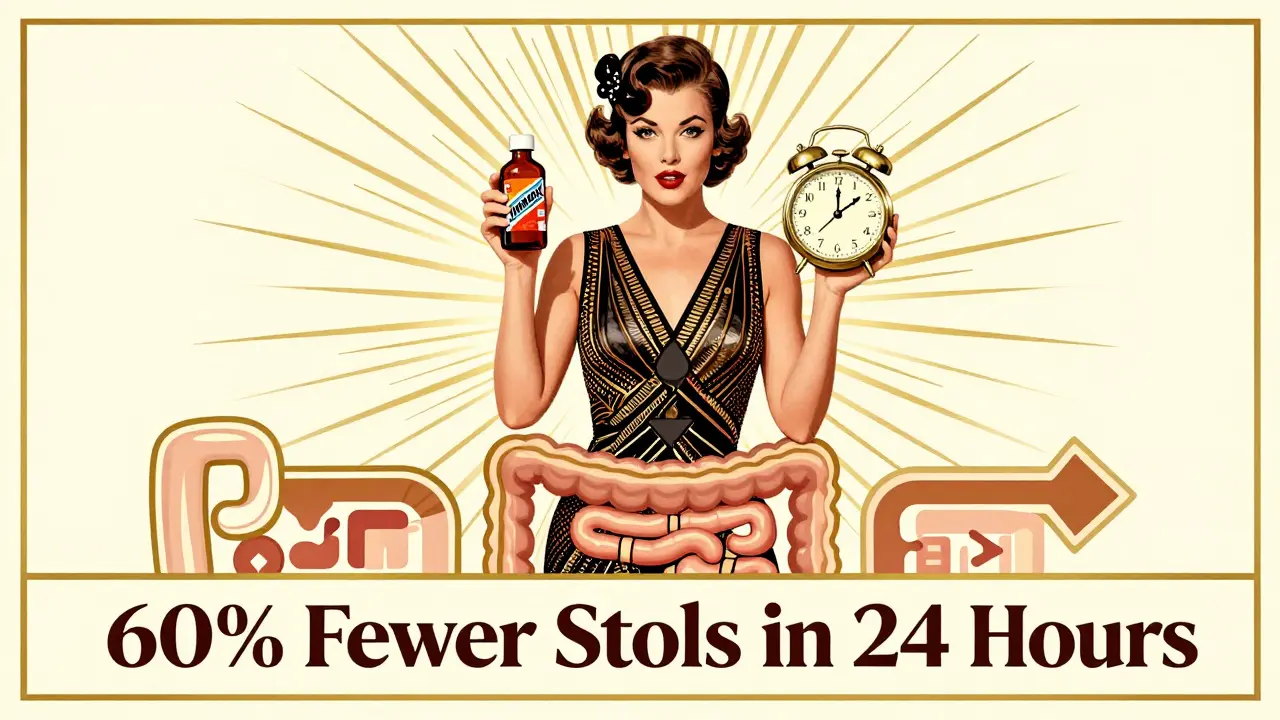
Diarrhea isn’t a disease. It’s your body’s way of flushing out something harmful-bacteria, virus, toxin, or even a bad taco. The goal isn’t to stop it completely. It’s to give your body a little breathing room so you can recover without being chained to the toilet. That’s where loperamide and bismuth subsalicylate come in.Loperamide, sold as Imodium, slows down your gut. It doesn’t kill germs. It just makes your intestines take their time. A single 4mg dose after the first loose stool can cut stool frequency by over 60% in 24 hours. That’s not just convenience-it’s real relief.
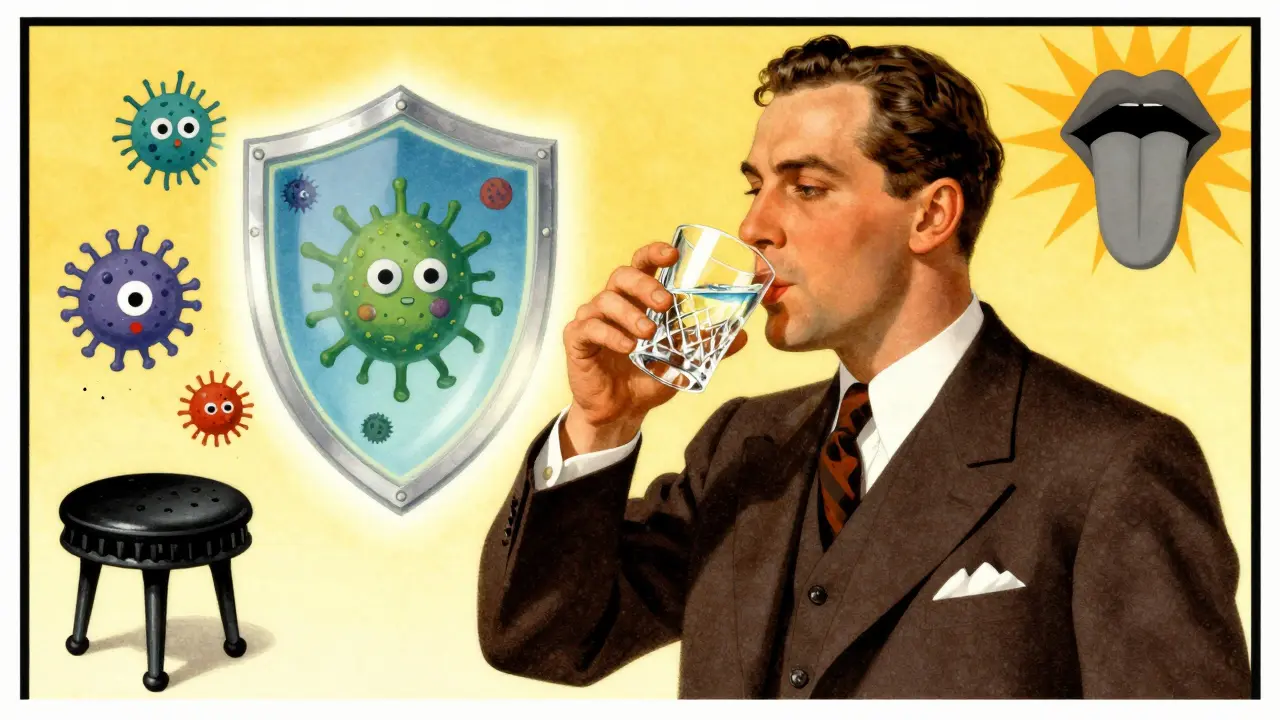
Bismuth subsalicylate, the active ingredient in Pepto-Bismol and Kaopectate, works differently. It coats your gut, reduces inflammation, and even kills some bacteria like E. coli and Campylobacter. It’s why travelers swear by it. But it also turns your stool black and your tongue gray. That’s normal. It’s not blood. It’s bismuth.
How to Use Them Correctly
Using these wrong can make things worse. Here’s the simple, safe way:- For loperamide (Imodium): Take 4mg after the first loose stool. Then take 2mg after each new loose stool. Never go over 8mg in 24 hours. That’s four 2mg caplets. Or two 4mg caplets. Or one 4mg caplet and two 2mg caplets. Mix and match-but don’t exceed the limit.
- For bismuth subsalicylate (Pepto-Bismol): Take 30mL of liquid (one dose) or two chewable tablets after each loose stool. Maximum 8 doses in 24 hours. That’s 2,096mg total. Stick to the bottle instructions.
Both work within 30 to 60 minutes. If you don’t feel any change after four hours, don’t take more. You’re not dealing with a slow-acting problem-you’re dealing with a body that needs rest, not more chemicals.
When They Don’t Work (And Why You Should Stop)
These meds are for mild, short-term diarrhea. If you have any of these, stop taking them and call a doctor:- Bloody or black stools-This isn’t bismuth. This is infection, inflammation, or worse. Loperamide can trap harmful bacteria inside you.
- Fever above 100.4°F (38°C)-A fever means your immune system is fighting something serious. Slowing your gut down could let it get worse.
- Diarrhea lasting more than 48 hours-If it hasn’t improved by now, you need to know why. It could be parasites, C. diff, or something else that needs testing.
- Severe abdominal pain-Not cramps. Real pain. Like you’re being stabbed. That’s not just diarrhea. That’s an emergency.
- Signs of dehydration-Dark urine, dizziness, dry mouth, no tears when crying (in kids), or not peeing for 8+ hours. You can’t hydrate with pills. You need fluids. And sometimes IV fluids.
The NHS and Mayo Clinic both say: If you have fever or bloody stool, don’t use anti-diarrheals. Period. The FDA has issued warnings because people have died from taking too much loperamide. Not because they had diarrhea. Because they took 50, 100, even 200mg a day trying to self-treat opioid withdrawal. That’s not diarrhea treatment. That’s cardiac suicide.
Who Should Avoid These Completely
Not everyone can use these safely:- Children under 12-Imodium caplets are only approved for 12+. Liquid is for 6+. Pepto-Bismol is for 12+. Never give adult doses to kids. There were 127 serious adverse events reported to the FDA between 2010 and 2020 just from loperamide misuse in kids.
- Pregnant or breastfeeding women-Talk to your doctor first. Bismuth subsalicylate contains salicylate, which is related to aspirin. Loperamide crosses the placenta. Both need medical clearance.
- People with liver disease-Your body can’t break down loperamide properly. It builds up. Risk of heart rhythm problems goes up.
- Anyone on certain heart meds-Loperamide can interact with drugs like quinidine, fluconazole, or certain antidepressants. Check with a pharmacist before combining.
What to Do Instead
Medication isn’t the only tool. Sometimes, the best thing you can do is nothing at all-except hydrate.The WHO recommends oral rehydration solution (ORS): 75mmol/L sodium, 75mmol/L glucose. You can buy it at pharmacies, or make your own: 6 tsp sugar + 1/2 tsp salt in 1 liter of clean water. Sip it slowly. Don’t chug. Don’t wait until you’re dizzy.
Food matters too. Skip dairy, greasy stuff, caffeine, and high-fiber foods like beans or bran. Stick to the BRAT diet: bananas, rice, applesauce, toast. Simple carbs. Easy to digest. Helps your gut heal.
Rest. Seriously. Your body is working hard. Don’t push yourself to work, run errands, or go out. Stay home. Sleep. Drink. Wait.

Why People Get It Wrong
I’ve seen it too many times. Someone takes one Imodium caplet. Feels better. Takes another. Then another. By the third day, they’re on 12mg. They think they’re being smart. They’re not. They’re risking constipation, bowel obstruction, or even a heart attack.Amazon reviews show 32% of Imodium users report rebound constipation. Reddit threads are full of stories about people who took 100mg of loperamide to “calm nerves” or “get through a long flight.” One user wrote: “Took 6 caplets in 4 hours-ended up in the ER with severe constipation.” That’s not a joke. That’s a real hospital visit.
And then there’s the myth: “If a little helps, a lot will help more.” That’s how overdoses happen. Loperamide doesn’t get stronger with more. It gets dangerous.
What’s New in 2026
The FDA still limits loperamide to 8mg/day without a prescription. But in Europe, the limit is 4mg/day. Why? Because they’ve seen more heart issues. The American Gastroenterological Association now says: Don’t routinely give anti-diarrheals in ERs. Rehydration is better. Always.There’s a new drug called racecadotril-approved in Europe and Canada, not yet in the U.S.-that reduces diarrhea duration by a full day without slowing the gut. But it’s not available over the counter. Not yet.
Meanwhile, traveler’s diarrhea is still common. About 40% of people who visit high-risk countries get sick. Bismuth subsalicylate cuts your risk by 65% if taken before and during travel. But it’s not a vaccine. It’s a shield. And it still needs to be used right.
Final Rule
If you’re not sure, don’t guess. Diarrhea is usually harmless. But it can be a warning sign. If it lasts more than two days. If you’re dehydrated. If you have fever or blood. Go to a doctor. Not the pharmacy shelf.OTC treatments are great. But they’re not a substitute for medical judgment. Your body is telling you something. Listen to it. And when it screams, don’t silence it with a pill.
Can I take Imodium and Pepto-Bismol together?
No. Combining them increases the risk of side effects without adding benefit. Imodium slows your gut. Pepto-Bismol coats it and fights bacteria. Using both doesn’t make you better faster-it just raises your chance of constipation, nausea, or salicylate toxicity. Stick to one.
Is it safe to use OTC diarrhea meds for kids?
Only if the product is labeled for children and you follow the dose exactly. Imodium liquid is approved for kids 6+, caplets for 12+. Pepto-Bismol is for 12+. Never give adult doses. Children are more at risk for paralytic ileus-a dangerous bowel stoppage-from loperamide. If a child has diarrhea with fever or blood, see a doctor immediately.
Why does Pepto-Bismol turn my stool black?
It’s normal. Bismuth reacts with sulfur in your gut to form bismuth sulfide, a black compound. It’s not blood. It’s harmless. Your stool will return to normal within a day or two after stopping the medicine. The same thing can happen to your tongue-it’s temporary and doesn’t mean anything serious.
Can I use these if I have IBS?
Loperamide can help with IBS-related diarrhea, but only if it’s occasional. If you have frequent diarrhea or constipation, you need a long-term plan, not a quick fix. Talk to your doctor about managing IBS with diet, stress control, or prescription meds. Don’t rely on OTC pills daily.
What’s the difference between viral and bacterial diarrhea?
Viral diarrhea (like norovirus) usually comes with nausea, vomiting, and low-grade fever. It clears on its own in 1-3 days. Bacterial diarrhea (like from undercooked meat) often causes higher fever, bloody stools, and more severe cramps. Bismuth subsalicylate helps with bacterial causes. Loperamide helps with both, but shouldn’t be used if you suspect bacteria-especially with fever or blood.
How do I know if I’m dehydrated?
Signs include: dark yellow or little urine, dry mouth, dizziness when standing, sunken eyes (in kids), no tears when crying, and skin that doesn’t bounce back when pinched. If you have two or more of these, you need fluids-preferably oral rehydration solution. If you’re too dizzy to drink, or your heart is racing, go to urgent care.
Can I take OTC diarrhea meds if I’m on antibiotics?
Sometimes, yes. Antibiotics can cause diarrhea. But if it’s severe, watery, or has blood, it could be C. diff-a dangerous infection. Don’t take loperamide. Call your doctor. If it’s mild, you can use bismuth subsalicylate cautiously. But hydration is still your best tool.
Ken Cooper
February 9, 2026 AT 02:03Man, I took Imodium on a road trip once and thought "a little helps, a lot helps more"-ended up stuck on the side of I-80 for 3 hours. Not fun. Don’t be me. Just… don’t.
Sam Dickison
February 9, 2026 AT 13:45From a clinical gastroenterology standpoint, loperamide’s mu-opioid receptor agonism in the enteric nervous system is the key mechanism-peripheral action, minimal CNS penetration at therapeutic doses. But yeah, abuse potential is real. The FDA’s 2016 safety alert wasn’t a suggestion.
Tom Forwood
February 11, 2026 AT 02:38Pepto turns your poop black? Bro, that’s just your gut doing the goth aesthetic. I’ve been using it for years-no issues. Just don’t drink it like a protein shake. I once saw a guy chug half a bottle before a flight. He looked like a ghost by the time we landed. Not cool.
John McDonald
February 12, 2026 AT 02:08Hydration is everything. Seriously. I used to think meds fixed diarrhea. Then I got sick in Thailand and just sipped ORS for 36 hours. No pills. Just water, salt, sugar. And guess what? I felt better than any Imodium could’ve done. Your body’s smarter than you think.
Jacob den Hollander
February 13, 2026 AT 07:19I’m a nurse, and I’ve seen so many people take 12mg of loperamide because they "just needed to get through work." One guy came in with a bowel obstruction. Another had QT prolongation. It’s not a snack. It’s a drug. Please, just… read the label. And if you’re pregnant? Call your doc. Don’t risk it.
Andrew Jackson
February 14, 2026 AT 04:38It’s pathetic. Americans treat medicine like candy. You think a pill fixes everything? You think science is a vending machine? In Europe, they limit it to 4mg. Because they’re not fools. We’re becoming a nation of self-diagnosed zombies. Stop. Just stop.
John Sonnenberg
February 14, 2026 AT 12:33So I took Pepto-Bismol and my tongue turned gray. I thought I was dying. Called 911. Paramedics showed up. I was like, "It’s the medicine!" They laughed. Then they gave me water. I’m still traumatized. Don’t be me.
Kathryn Lenn
February 14, 2026 AT 23:32Of course the FDA limits it. Big Pharma doesn’t want you to know that ORS costs 99 cents and works better. They sell you $12 bottles of Imodium so you’ll keep buying. Wake up. The system’s rigged.
Jonah Mann
February 16, 2026 AT 16:04For real-ORS is a game-changer. I make mine: 1 tsp salt, 8 tsp sugar, 1L water. Tastes like sad soda, but it works. I’ve used it for kids, for myself, even after a night of bad tacos. No side effects. Just… better. Try it. Seriously.
THANGAVEL PARASAKTHI
February 18, 2026 AT 10:02Bro I’m from India, we use bismuth subsalicylate like water here. My grandma swears by it. But yes, black stool? Totally normal. We call it "bismuth magic." Just don’t panic. And for kids? Always check the bottle. No guessing. Ever.
Chelsea Deflyss
February 19, 2026 AT 06:58Wow. Someone actually wrote a textbook on diarrhea. Congrats. Now can we talk about how 80% of these "experts" never even had food poisoning? Just saying.