
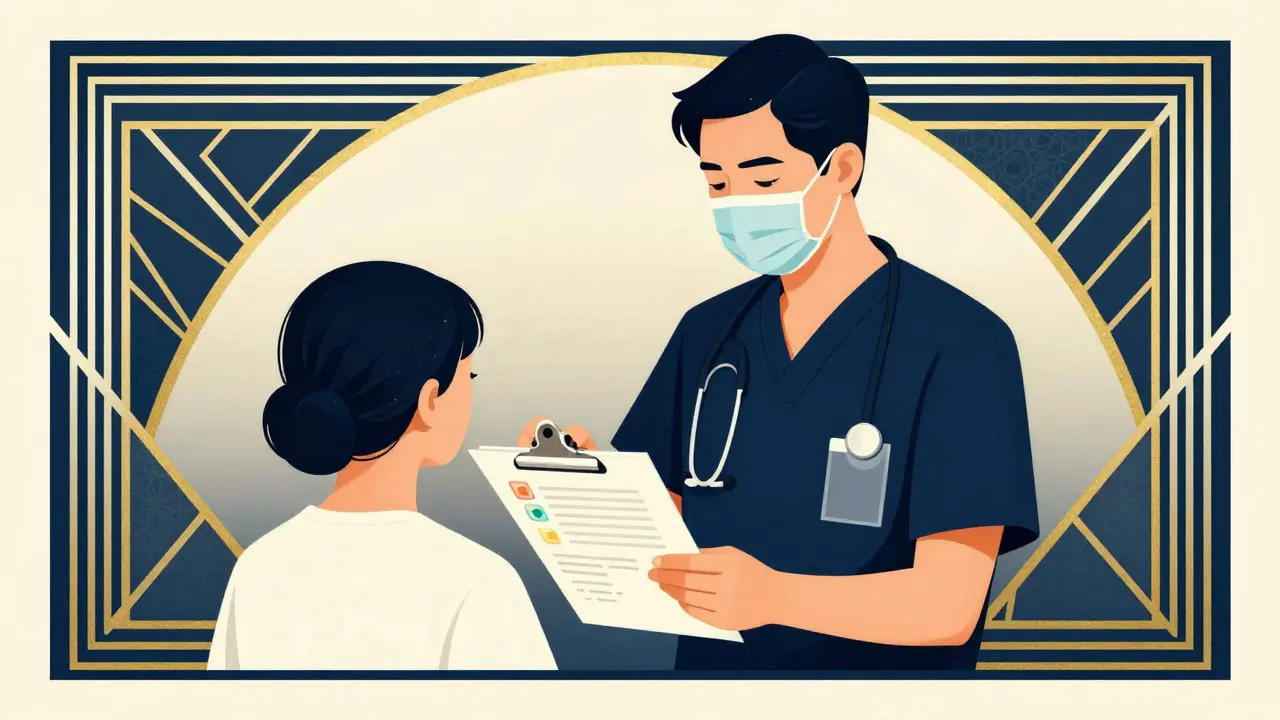
The real struggle in medication dispensing errors is that they rarely happen because one person is lazy. Instead, they happen because the system is broken. Whether it's a confusing label, a rushed nurse, or an automated cabinet that's too easy to override, the environment often sets the stage for a mistake. The NPSGs aim to fix these systemic gaps by focusing on how medicines are ordered, dispensed, and monitored.
The Core Pillars of Medication Safety
While the NPSGs cover everything from surgery mistakes to infection control, the medication-specific goals are where pharmacy practice lives and breathes. One of the most critical areas is correct patient identification. It sounds simple, but misidentifying a patient is a root cause of thousands of adverse events. The current standard requires two identifiers before any medication is dispensed or administered. If you're just using a room number, you're gambling with a patient's life.
Then there is the issue of labeling. Under NPSG.03.04.01, all medications and containers-especially in perioperative settings-must be labeled with the drug name, strength, and concentration. To ensure readability, these labels must use at least a 10-point font. It's a small detail, but in a high-stress environment like an operating room, a tiny, blurry label can lead to the wrong drug being injected into a patient's vein.
Another heavy hitter is the management of High-Alert Medications, which are drugs that carry a significant risk of causing serious harm when used incorrectly. Think of anticoagulants or insulin. For instance, NPSG.03.05.01 specifically targets anticoagulant therapy. Hospitals are now required to have standardized monitoring for the International Normalized Ratio (INR) and strict documentation of therapeutic ranges. The goal is a 95% compliance rate, measured every quarter, to keep patients from suffering internal bleeds or strokes.
Beyond the Basics: The Role of Technology
We can't rely on human memory alone. That's why Barcode Medication Administration (BCMA) has become the gold standard. By scanning a patient's wristband and then the medication, the system verifies the "Five Rights": right patient, right drug, right dose, right route, and right time. While critics from the Institute for Healthcare Improvement (IHI) point out that 83% of errors still happen even when nurses follow these five rights, BCMA significantly slashes "wrong-drug" errors. In some cases, it has reduced these errors by as much as 86%.
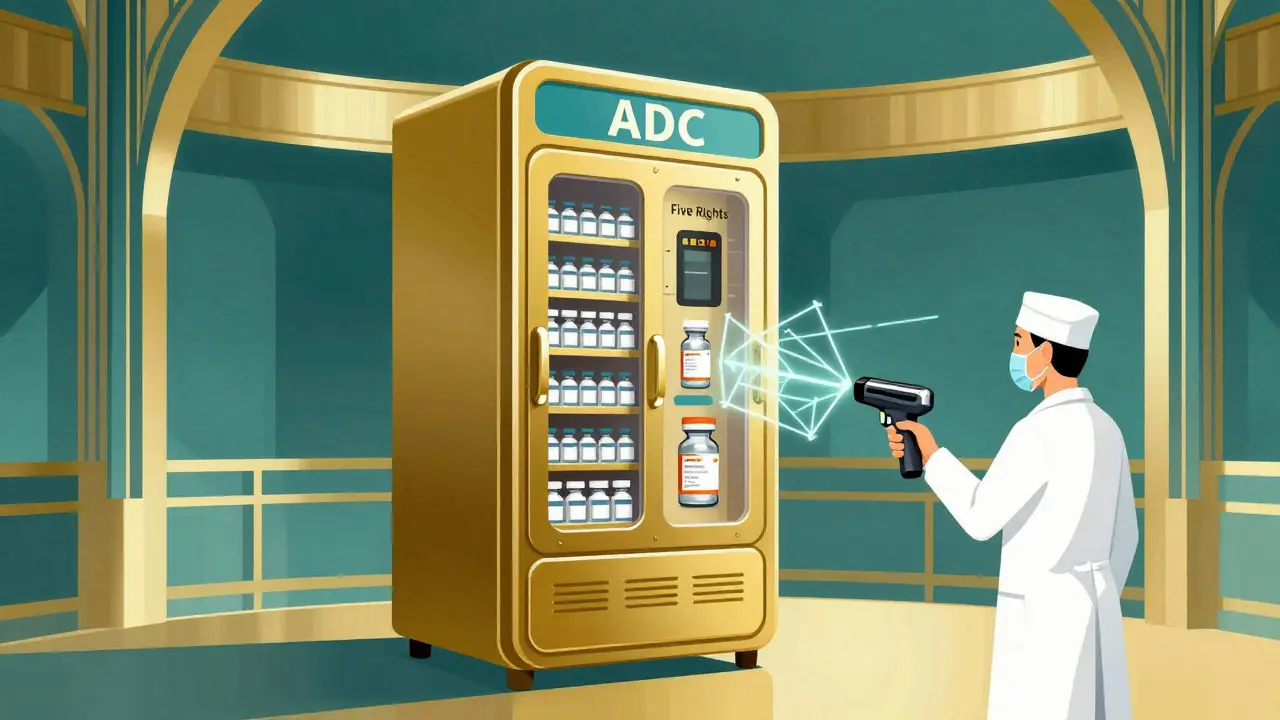
However, technology introduces its own risks. Take Automated Dispensing Cabinets (ADCs), those electronic lockers that hold meds on hospital floors. When a doctor needs a drug *now* (a "stat" order), pharmacists often allow "overrides" to get the drug quickly. The problem? When override rates climb above 5%, medication errors spike. In fact, facilities with high override rates see 3.7 times more errors. It's a classic trade-off between speed and safety.
| Framework | Nature | Primary Focus | Adoption Rate |
|---|---|---|---|
| NPSGs (Joint Commission) | Mandatory (for accreditation) | Standardized minimum safety goals | ~96% of U.S. Hospitals |
| ISMP Best Practices | Voluntary Consensus | High-risk scenario interventions | ~68% of Large Systems |
| Five Rights Model | Traditional Protocol | Individual clinician verification | Ubiquitous (but criticized) |
Dealing with High-Risk Scenarios
Not all medications are created equal. Some drugs are so dangerous that they require their own set of rules. The Institute for Safe Medication Practices (ISMP) identifies specific high-risk scenarios that need immediate intervention. A chilling example is injectable promethazine; between 2006 and 2018, improper administration led to 37 documented amputations due to severe tissue injury. When a drug can cause a limb to be lost, a simple checklist isn't enough-you need hard stops in the system.
Pediatric care is another area where the stakes are higher. Children aren't just small adults; their dosing is weight-based, and a decimal point in the wrong place can be fatal. Medication error rates in neonatal and intensive care units are often three times higher than in adult units. To counter this, the Pediatric Medication Safety Model mandates weight-based dosing protocols and mandatory double-checks for all high-alert meds. When the Children's Hospital of Philadelphia implemented these rules, they saw a 91% drop in dosing errors.
Building a Culture of Safety
If a pharmacist catches an error, do they report it, or do they hide it to avoid trouble? That answer defines a hospital's "safety culture." The Model Strategic Plan for Medication Safety argues that we need a leadership-driven culture where error detection is celebrated, not punished. This involves moving away from a "blame and shame" mentality toward a "root cause analysis" approach.
This shift also means changing how we pick drugs. Instead of choosing a medication because it's the cheapest option for the hospital, a safety-first formulary chooses drugs based on their risk profile. If a cheaper drug is more likely to be confused with another (a "look-alike, sound-alike" or LASA drug), the safer, more expensive option is the right choice for the patient.
We're also seeing a move toward involving the patients themselves. According to the World Health Organization (WHO), facilities that actively engage patients and their families in the medication process report 42% fewer errors. When a patient knows their medication and speaks up when a pill looks different, they become the final, most important safety check in the chain.
The Road Ahead: AI and Future Trends
Looking toward 2026, the focus is shifting from reacting to errors to predicting them. We're seeing the rise of AI-powered clinical decision support. For example, pilot programs at Mayo Clinic have shown a 47% reduction in potential adverse drug events by using AI to flag problematic prescriptions before they ever reach the pharmacy. Instead of a human remembering to check a patient's kidney function against a drug's dose, the AI does it instantly and blocks the order if it's unsafe.
Moreover, the 2025 updates to the NPSGs are tackling a hidden danger: mislabeled specimens. While not a dispensing error per se, mislabeled tubes contribute to 160,000 adverse events yearly. The new rule requires bedside labeling, meaning the label is applied right there in front of the patient with two-identifier verification. It's a simple process change that closes a dangerous gap in the care cycle.
What are the most common causes of dispensing errors?
Dispensing errors are usually caused by a mix of system failures and human factors. Common culprits include look-alike/sound-alike (LASA) drug names, illegible handwritten prescriptions, distractions during the filling process, and the improper use of automated dispensing cabinet overrides. Systemic issues, such as staffing shortages that lead to clinician burnout and rushed workflows, also play a major role.
How does the "Five Rights" approach fail?
The Five Rights (Right Patient, Drug, Dose, Route, and Time) provide a great mental checklist, but they rely entirely on human vigilance. Research from the IHI shows that 83% of errors occur even when these are checked because humans can experience "confirmation bias," where they see what they expect to see rather than what is actually there. This is why technology like barcode scanning is necessary to augment human checks.
What is a "high-alert medication"?
High-alert medications are drugs that bear a heightened risk of causing significant patient harm when used in error. While they aren't necessarily more prone to errors than other drugs, the *consequences* of an error are much more severe. Examples include insulin, anticoagulants (like heparin), opioids, and concentrated electrolytes.
Why is the 5% ADC override threshold important?
Automated Dispensing Cabinets (ADCs) are designed to ensure a pharmacist reviews an order before a nurse pulls the medication. An "override" bypasses this check. When overrides exceed 5% of all transactions, it indicates that the system is being ignored for convenience or due to poor workflow, which correlates with a 3.7x increase in medication errors.
How can patients help reduce medication errors?
Patients can act as a final safety barrier by asking questions. They should confirm the name and purpose of the medication, check if the pill looks the same as it did previously, and double-check that their name is correctly spelled on the label. Facilities with strong patient engagement programs see a 42% reduction in errors.
Next Steps for Pharmacy Leaders
If you're managing a pharmacy or a clinical unit, the first step is a gap analysis. Use the ECRI Institute's self-assessment worksheets to see where you stand against ISMP best practices. If you score below 85%, you have a significant risk window.
Focus your immediate efforts on three areas: First, audit your ADC override rates. If you're over 5%, investigate why. Are the "stat" meds not stocked correctly? Is the pharmacy response time too slow? Second, implement a mandatory double-check for all pediatric weight-based doses. Third, shift your reporting culture. Encourage staff to report "near misses"-the errors that almost happened-because these are the best indicators of where your system is about to fail.
Aaron McGrath
April 19, 2026 AT 20:25Absolute madness that we're still relying on the Five Rights when the data clearly shows a massive failure rate. We need a full-scale pivot to hard-stop BCMA across every single ward, no exceptions. If the ADC override rates are spiking, it's a failure of the supply chain logistics, not just a "trade-off." Get the pharmacy throughput optimized or the system is just a fancy locker that kills people. We need aggressive implementation of AI-driven clinical decision support now, not in 2026!
dallia alaba
April 21, 2026 AT 13:12The point about look-alike sound-alike (LASA) drugs is so critical. In my experience, simply utilizing Tall Man lettering on labels can significantly reduce those split-second mistakes during a rush. It's also worth mentioning that some facilities have started using different colored caps or bins for high-alert meds to add that extra layer of visual cues before the drug even reaches the patient.
Brigid Prosser
April 23, 2026 AT 07:01Absolute cracker of a point about the systemic failures. It's a total nightmare when the brass just blames a nurse for a slip-up without looking at the chaotic environment they're working in. We need to stop the finger-pointing and start fixing the actual mess. If the labels are tiny and blurry, that's a failure of the procurement, not the person holding the syringe. Let's get some real grit into these safety cultures!
Lesley Wimbush
April 25, 2026 AT 06:31Honestly, the idea that patients can help reduce errors is just adorable. As if the average person, terrified and drugged up in a hospital bed, has the cognitive capacity to audit a pharmaceutical professional's work. It's a quaint notion, but let's be real, most people just want to be told they're okay and go back to sleep. I'm sure some high-society types do it, but for the masses? Please.
Tanya Rogers
April 25, 2026 AT 17:12One must wonder if the obsession with quantification-such as the 5% override threshold-is merely a superficial attempt to impose order upon the inherent chaos of biological vulnerability. The reliance on technology like BCMA is a symptom of a deeper epistemic crisis in medicine, where the clinician's intuition is discarded in favor of a digital checklist. It is a sterile solution to a visceral problem.
julya tassi
April 26, 2026 AT 22:05This is so eye-opening! 😮 I had no idea that mislabeled specimens caused so many issues. It makes total sense that bedside labeling would fix that. ❤️
Olushola Adedoyin
April 27, 2026 AT 00:47Wait, "The Joint Commission"? You mean the people who get paid to tell you how to do your job? I bet these "guidelines" are just a way to track every single move a doctor makes. And these AI systems? They aren't just "flagging" mistakes, they're collecting data on every single patient to feed into some giant corporate machine. Don't trust the black box!
William Young
April 28, 2026 AT 00:40I agree that a reporting culture is the most vital part of this. When people feel safe reporting near-misses, the whole team learns together. It takes the pressure off the individual and puts the focus on the system.
Wendy Ajurín
April 29, 2026 AT 01:24The implementation of weight-based dosing protocols in pediatric units is an essential safeguard. Given the narrow therapeutic index of many neonatal medications, the 91% drop in errors at the Children's Hospital of Philadelphia demonstrates the efficacy of standardized double-checks.
Aman Tomar
April 30, 2026 AT 17:43Oh my god, 37 amputations from one drug?? That is just horribul! I cannot imagine the pain of the families. We must do evrything to stop this. Is there any way to ban that specific drug entirely if it is so dangerus?
Truman Media
April 30, 2026 AT 21:04It is truly heartwarming to see technology helping to save lives. 🌟 A little bit of kindness and a lot of care go a long way in healing. May we all work together for a safer world for every patient. 🙏
Cynthia Didion
May 2, 2026 AT 20:00US standards are the only ones that matter. Best in the world. Period.
Venkatesh Venky
May 3, 2026 AT 20:20The shift toward AI-powered decision support is a great move. Using a cloud-based API to cross-reference kidney function in real-time will definitely lower the AUC of errors. Let's keep pushing for this digital transformation!
Bob Collins
May 3, 2026 AT 22:19Fair point on the overrides. It's basically a shortcut that eventually leads to a cliff. Better to take the extra thirty seconds to do it right than to spend a career dealing with the fallout of a mistake.