
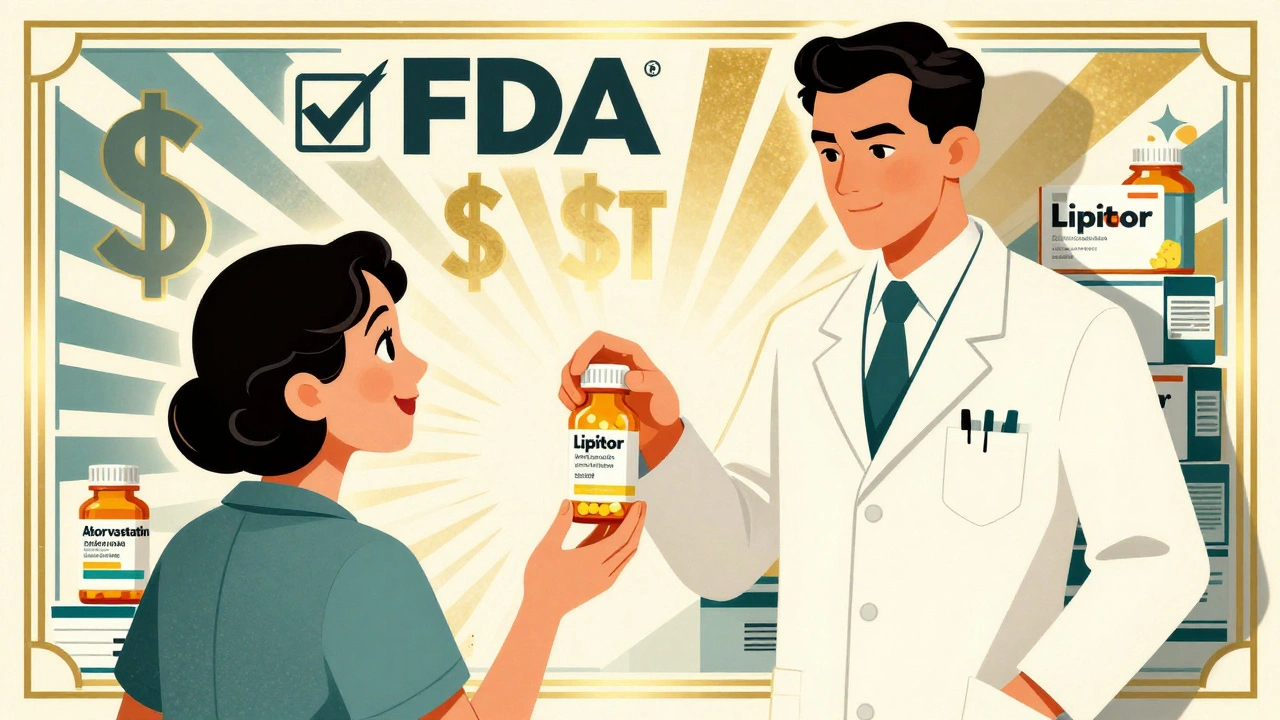
Every year, over 4 billion prescriptions are filled in the U.S. And in nearly 9 out of 10 of those, you get a generic drug instead of the brand-name one you were prescribed. But here’s the thing: in 43 states, your pharmacist doesn’t need to ask you before making that switch. They just assume you’re okay with it. That’s called presumed consent.
What Presumed Consent Actually Means
Presumed consent isn’t a loophole-it’s the law. In most states, if your doctor prescribes, say, Lipitor for cholesterol, and a generic version of atorvastatin is available and approved by the FDA, the pharmacist can give you the cheaper version without calling you first. They don’t need your signature, verbal approval, or even a nod. They just do it. And legally, they’re allowed to.
This system started in the 1980s after the Hatch-Waxman Act made it easier for generic drugs to get approved. The goal? Save money. And it worked. Today, generics make up 90% of all prescriptions but only 15% of total drug spending. Over the last decade, this practice has saved the U.S. healthcare system about $1.68 trillion.
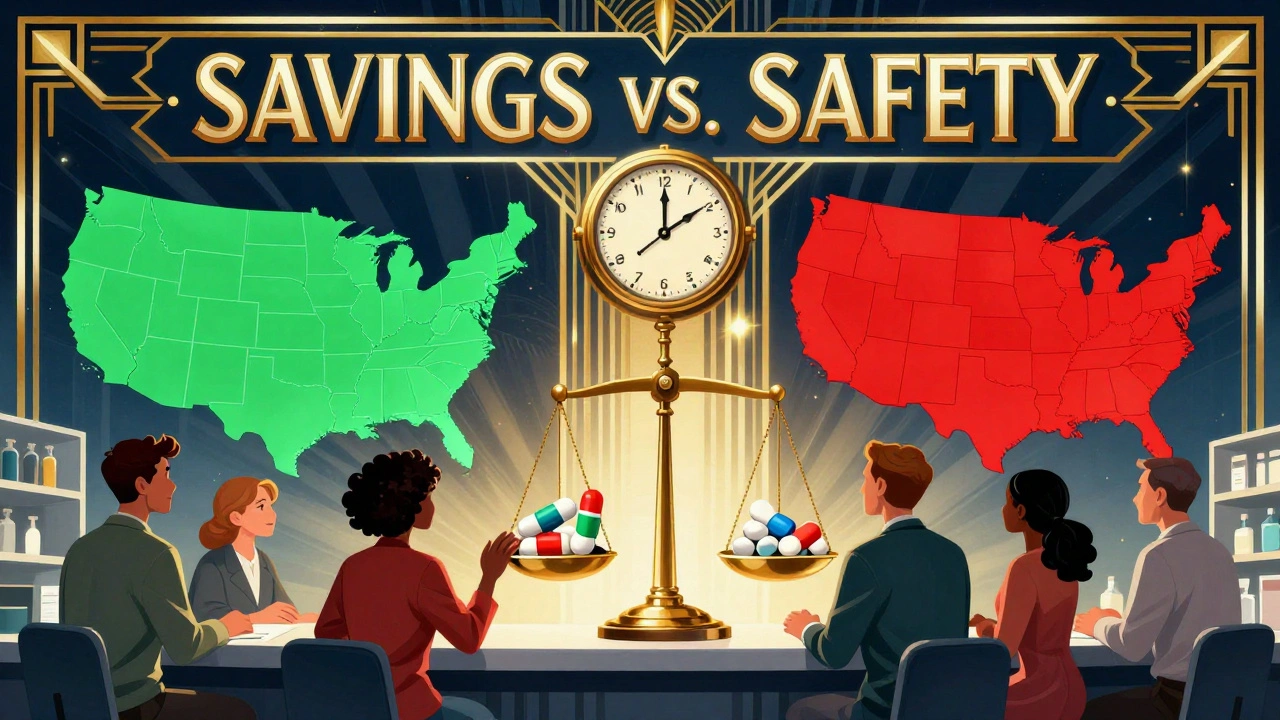
But here’s where it gets messy: not all states treat it the same way. In 19 states, pharmacists are required to substitute generics if they’re available. In 31, they can choose to. And in 7 states plus Washington, D.C., they must ask you first. The rest? They assume you’re fine with it.
Why It Works (Most of the Time)
The FDA doesn’t just let any pill be sold as a generic. Every generic drug must pass strict tests to prove it’s therapeutically equivalent to the brand name. That means it has the same active ingredient, dose, strength, and how it works in your body. These are rated in the FDA’s Orange Book as “A” products-meaning they’re interchangeable.
For most people, this works perfectly. A 2021 study found that 92.3% of prescriptions in presumed consent states were filled with generics, compared to 87.1% in states that require explicit consent. That’s not just numbers-it’s real savings. A patient on a $120 brand-name medication might pay $15 for the generic. For seniors on Medicare Part D, that’s an average of $627 saved per year.
Pharmacists save time too. A 2022 study showed that presumed consent cuts prescription processing time by about 1.7 minutes per script. Multiply that across millions of prescriptions, and you’re looking at nearly $3 billion saved in labor costs annually.
Most patients never even notice. On Drugs.com, 68% of comments about generic substitution were positive: “Saved me $45 this month,” one user wrote. Another said, “I didn’t even know it was generic until I checked the bottle.”
When It Doesn’t Work
But not all drugs are created equal. For medications with a narrow therapeutic index-where tiny differences in blood levels can cause big problems-presumed consent gets risky.
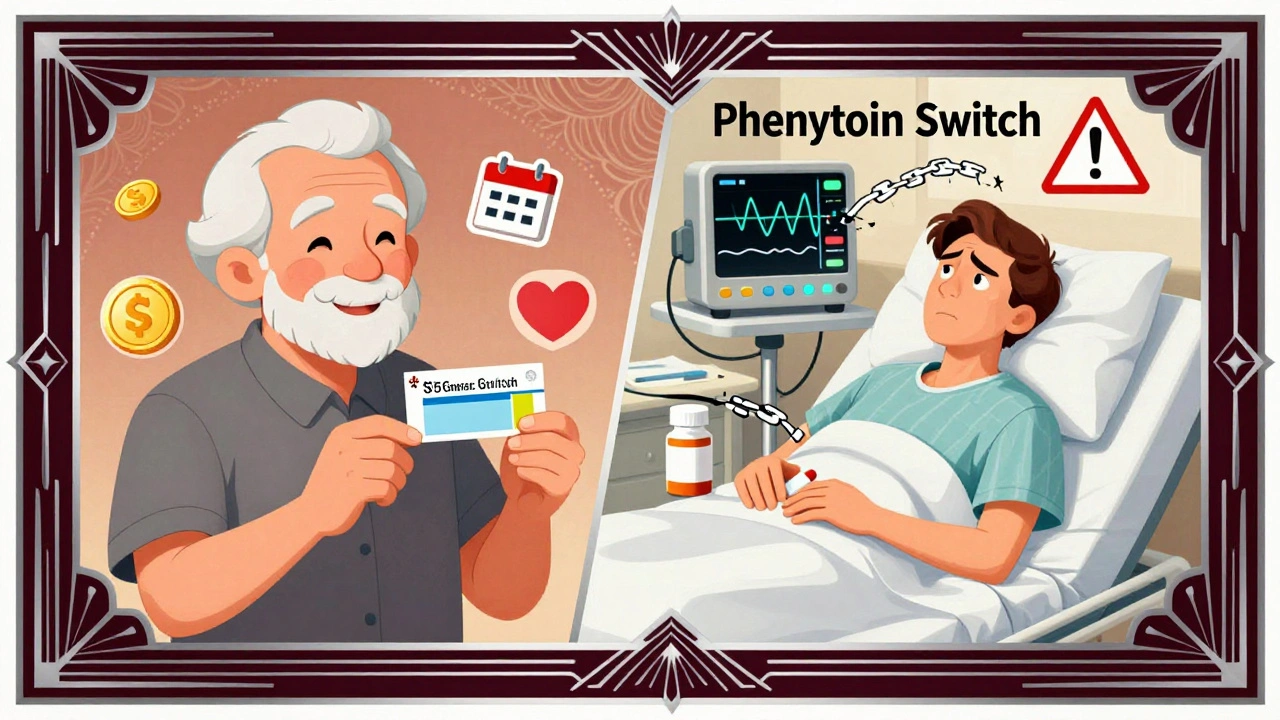
Think seizure meds like phenytoin, blood thinners like warfarin, or thyroid drugs like levothyroxine. Even small variations in how a generic is absorbed can lead to breakthrough seizures, dangerous clots, or extreme fatigue. Between 2018 and 2022, the American Epilepsy Society documented 178 cases of seizures linked to generic substitution. In response, 15 states now require explicit consent before switching these drugs.
One patient in Tennessee wrote on Drugs.com: “My seizure meds stopped working after they switched me to a generic. I ended up in the ER. I didn’t know they could do that without asking.”
Even the FDA acknowledges that while generics are safe for most people, bioequivalence testing doesn’t capture every possible variation in how a drug behaves in real life. The American College of Clinical Pharmacy says: “Presumed consent is fine for most drugs-but not for these.”
The Biosimilar Problem
Now imagine switching from Humira to a biosimilar-a cheaper version of a biologic drug made from living cells. These aren’t simple chemical copies like traditional generics. They’re complex, and small changes can affect how they work.
Only 46 states allow automatic substitution of interchangeable biosimilars. Four states-North Carolina, Oklahoma, Pennsylvania, and Texas-ban it entirely. In New York and California, new laws now require pharmacists to notify patients in writing when a biosimilar is substituted. And in many places, the electronic systems pharmacies use don’t even flag these restrictions properly.
That’s why some pharmacists say they’re stuck between a rock and a hard place: follow the law, or risk a patient’s health.
What Pharmacists Are Required to Do
Even in presumed consent states, pharmacists aren’t free to do whatever they want. They must:
- Check the FDA’s Orange Book to confirm the generic is rated “A”
- Know their state’s list of restricted drugs (like antiepileptics, anticoagulants, or immunosuppressants)
- Provide post-substitution notice-either on the bottle, in a handout, or electronically
- Document the substitution in the pharmacy’s records
In 31 states, that notification is mandatory. In others, it’s just recommended. And if a patient asks why they got a different pill? The pharmacist has to explain it-no matter the state.
But here’s the catch: 38% of pharmacists in presumed consent states say patients get upset after finding out they were switched. “I’ve had people yell at me because they thought I was cutting corners,” one pharmacist told a pharmacy forum. “But I didn’t choose the generic-the system did.”
What You Can Do
Just because the law allows substitution doesn’t mean you have to accept it without question.
- Ask: When you pick up your prescription, ask, “Is this the brand or the generic?” Don’t wait until you get home.
- Check the label: Generic names are often printed in smaller text. Look for the manufacturer’s name-it’s usually not Pfizer or Merck.
- Speak up: If you’re on a narrow therapeutic index drug, tell your doctor and pharmacist: “I do not want this switched.” They’re legally required to honor that.
- Know your state: Some states have online tools where you can look up substitution rules. The National Association of Boards of Pharmacy has a free guide.
And if you feel something’s off after a switch-fatigue, dizziness, seizures, mood changes-don’t ignore it. Call your doctor. Bring the pill bottle. Say, “I think the generic isn’t working.”
The Future of Presumed Consent
The system isn’t going away. It saves too much money. But it’s changing.
By 2025, 12 more states are expected to update their laws to include clearer rules for biosimilars. New York now requires electronic logs of every substitution. California’s new law demands written notice for biologic switches. And the Uniform Law Commission is pushing a “Model State Substitution Act” that would standardize rules across the country.
One idea gaining traction? A tiered system: presumed consent for most drugs, but explicit consent only for high-risk ones. That way, you keep the savings-and protect the people who need it most.
For now, the system works well for most people. But if you’re on a drug where even a small change could hurt you, don’t assume anything. Ask. Know your rights. And don’t let convenience override your safety.
Can my pharmacist switch my medication without telling me?
In 43 states and Washington, D.C., yes-pharmacists can switch your brand-name drug for a generic without asking, under presumed consent laws. But they must notify you after the fact, usually on the prescription label or with a printed notice. In 7 states and D.C., they must get your permission first.
Are generic drugs really the same as brand-name ones?
For most drugs, yes. The FDA requires generics to have the same active ingredient, strength, dosage form, and route of administration as the brand name. They must also be bioequivalent-meaning they work the same way in your body. But for drugs with a narrow therapeutic index (like seizure or blood thinner medications), even small differences can matter. That’s why some states restrict substitution for these.
How do I know if I’ve been switched to a generic?
Check the pill bottle or box. The generic name (like “atorvastatin”) will be printed, not the brand name (“Lipitor”). The manufacturer will be a company like Teva, Mylan, or Sandoz-not the original drugmaker. You can also ask the pharmacist directly when you pick it up.
Can I refuse a generic substitution?
Yes. You can tell your pharmacist, “I don’t want a generic.” They’re legally required to honor that request. If you’re on a high-risk medication, ask your doctor to write “Dispense as Written” or “Do Not Substitute” on the prescription. That legally blocks the pharmacist from switching it.
Why do some states require consent and others don’t?
It’s a mix of politics, cost concerns, and patient safety debates. States with higher healthcare costs or more uninsured residents tend to push for presumed consent to save money. States with stronger patient advocacy groups or higher rates of chronic conditions (like epilepsy) often require explicit consent to reduce risks. There’s no national standard-yet.
What should I do if I feel worse after a generic switch?
Don’t ignore it. Contact your doctor immediately. Bring the pill bottle with you. Mention the switch and when your symptoms started. Many adverse reactions are preventable if caught early. You can also report the issue to your state pharmacy board or the FDA’s MedWatch program.
Ben Greening
December 10, 2025 AT 03:27Interesting breakdown. The FDA’s Orange Book ratings are a solid baseline, but real-world pharmacokinetics aren’t always captured in controlled bioequivalence trials. I’ve seen patients on levothyroxine fluctuate wildly after a generic switch-TSH levels jumping 30% in two weeks. Documentation matters, but so does clinical judgment.
Jack Appleby
December 11, 2025 AT 21:29Let’s be brutally honest: the presumption of consent is a neoliberal sleight-of-hand dressed up as cost-efficiency. You’re not saving money-you’re externalizing risk onto vulnerable populations who can’t advocate for themselves. The FDA’s ‘A’ rating is a statistical mirage. Bioequivalence is measured in group means, not individual physiology. One man’s ‘therapeutic equivalence’ is another’s seizure trigger. And don’t get me started on biosimilars-those aren’t generics, they’re biological approximations with unpredictable immunogenic profiles. This isn’t pharmacy-it’s pharmaceutical roulette.
Pharmacists aren’t villains; they’re cogs in a machine that commodifies human biology. The real scandal? The fact that we accept this as normal. We’ve normalized pharmacological coercion under the banner of ‘affordability.’ Where’s the autonomy? Where’s the informed consent? It’s buried under a pile of insurance forms and formulary restrictions.
And yet, the same people who scream about ‘government overreach’ when it comes to masks or vaccines are perfectly fine with pharmacists swapping their life-sustaining meds without a whisper. Cognitive dissonance isn’t a flaw-it’s the business model.
Michelle Edwards
December 12, 2025 AT 02:23Thank you for writing this. I’ve been on warfarin for 12 years, and I always ask for the brand. My INR was all over the place once they switched me without telling me. I didn’t realize until my next blood test. Now I have a note on my file, and I always check the bottle before leaving the pharmacy. You’re not being paranoid-you’re being smart. Keep speaking up.
Sarah Clifford
December 12, 2025 AT 02:29OMG I JUST FOUND OUT MY ANTIDEPRESSANT GOT SWITCHED AND I’VE BEEN FEELING LIKE A ZOMBIE FOR WEEKS. WHY DID NO ONE TELL ME???
Neelam Kumari
December 12, 2025 AT 16:01Of course they switch your meds-why waste time asking when you can just profit? The system doesn’t care if you’re stable, it only cares if you’re profitable. And you? You’re just a data point in a spreadsheet labeled 'Cost Savings.'
Meanwhile, the same corporations that profit from generics are the ones lobbying against transparency. Funny how that works, isn’t it?
Rebecca Dong
December 12, 2025 AT 22:44THIS IS A GOVERNMENT PLOT. THEY WANT US DEPRESSED AND CONFUSED SO WE DON’T ASK QUESTIONS ABOUT THE REAL ISSUES-LIKE WHY MEDICINES COST $1000 A MONTH IN THE FIRST PLACE. THEY SWITCH THE PILLS TO MAKE US THINK IT’S OUR FAULT WE’RE SICKER. THE PHARMACIES ARE IN ON IT. I SAW A VIDEO ON TIKTOK-THEY’RE USING MICROCHIPS IN THE PACKAGING NOW. I’M NOT KIDDING.
Regan Mears
December 13, 2025 AT 00:26I’ve been a pharmacist for 18 years, and I’ve seen both sides. Most patients never notice the switch-and for good reason: it works. But I’ve also had patients come in crying because their seizure meds stopped working after a swap. I always ask now-even in presumed consent states. It takes 15 seconds. And if they say no? I honor it. No argument. No paperwork. Just respect. The system isn’t broken-it’s being misused. We can do better.
Queenie Chan
December 14, 2025 AT 17:50It’s fascinating how we’ve engineered a system where efficiency is prioritized over agency, and yet we still call it ‘patient-centered care.’ The irony is almost poetic. Presumed consent assumes that cost savings are universally desirable-but what if the patient’s lived experience contradicts that assumption? A 15% price drop means nothing if the patient’s quality of life plummets. And yet, the data doesn’t capture that. The Orange Book doesn’t measure anxiety. It doesn’t track sleep disturbances or brain fog. It measures AUC and Cmax. But humans aren’t lab rats. We’re messy, variable, and deeply individual. Maybe the real innovation isn’t in generics-it’s in asking.
Stephanie Maillet
December 15, 2025 AT 13:03There’s a philosophical tension here between utilitarianism and individual autonomy that mirrors the broader healthcare dilemma. If we maximize aggregate benefit-$1.68 trillion saved-do we sacrifice the minority who suffer? And who decides who that minority is? Is it the pharmacist? The insurer? The state legislature? Or is it the patient themselves? The current system outsources moral responsibility to bureaucracy. But ethics can’t be automated. Consent isn’t a checkbox-it’s a conversation. And if we’ve forgotten how to have them, then no amount of cost savings justifies the erosion of trust.
Raj Rsvpraj
December 16, 2025 AT 05:03India has a similar system-and it works brilliantly! We don’t waste time asking patients for permission; we give them life-saving generics at 1/10th the price. Why are Americans so entitled? You get a pill, you’re alive-shut up and be grateful. Your country spends more on healthcare than any other-yet you whine about a generic switch? Pathetic. Learn from us: efficiency, not ego, saves lives.