
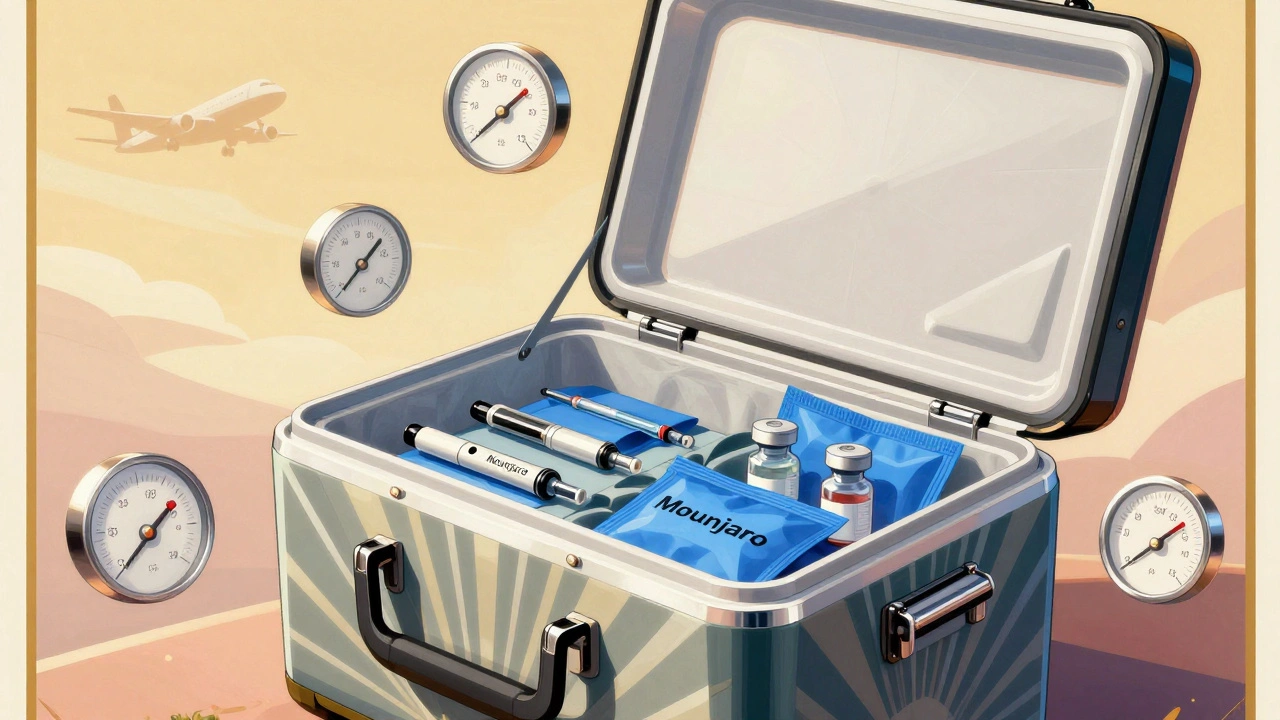
Carrying refrigerated medications while traveling isn’t just about packing a cooler. It’s about keeping your treatment alive. If you’re managing insulin, Mounjaro, biologics, vaccines, or hormone therapies, a temperature shift of just 2°F can reduce effectiveness by up to 15% per hour. That’s not a guess-it’s what the FDA says. And if your meds freeze or overheat? You’re not just wasting money. You’re risking your health.
What Medications Need Refrigeration?
About 25% of prescription drugs need to stay between 36°F and 46°F (2°C-8°C). That includes:
- Insulin (all types, including Lantus, Humalog, and NovoRapid)
- Biologics like Mounjaro (tirzepatide), Ozempic, and Wegovy
- Vaccines (including flu shots, shingles, and travel vaccines)
- Some antibiotics (like reconstituted penicillin or ceftriaxone)
- Hormone therapies (growth hormone, testosterone injections, etc.)
Don’t assume your meds are safe at room temperature. Mounjaro can handle up to 86°F for 21 days-but insulin? At 77°F, it loses 10% potency every day. That’s why you can’t just toss it in your purse and hope for the best.
How Cold Is Too Cold?
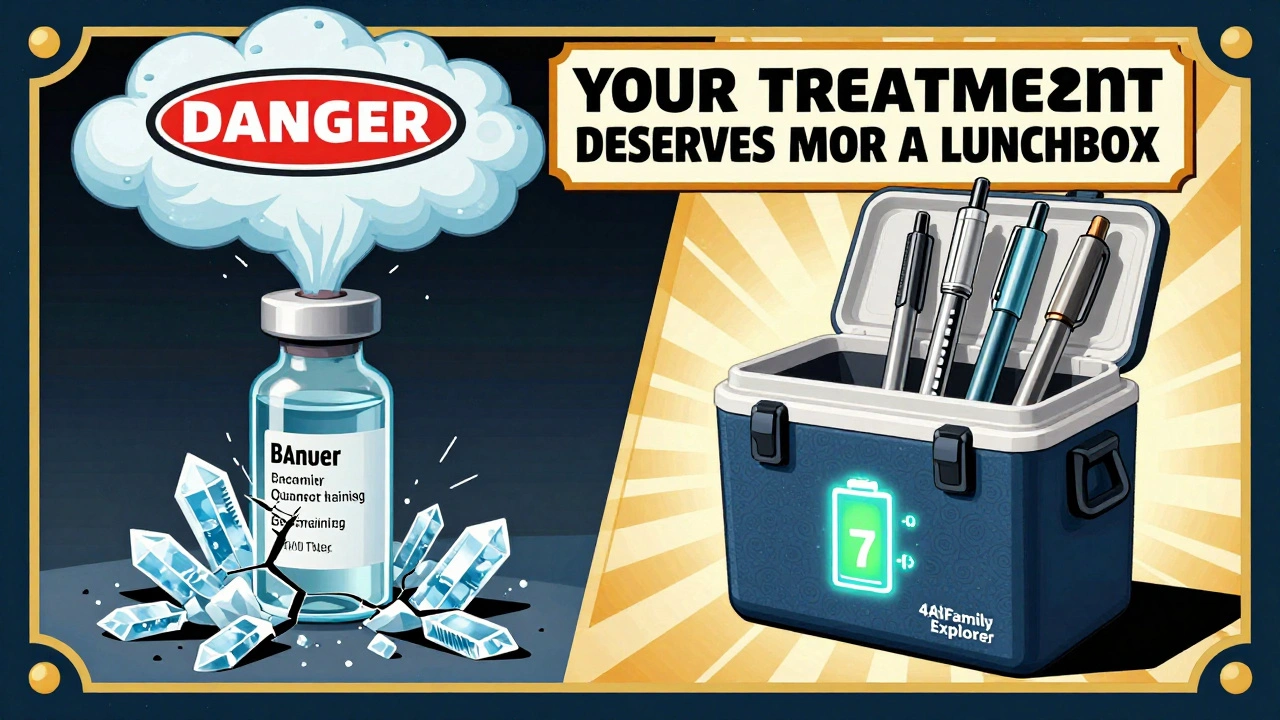
Freezing is just as dangerous as overheating. Dry ice? Don’t use it. It hits -109°F. Insulin freezes solid in minutes, turning into useless crystals. Even standard ice packs can cause this if they touch the vial or pen directly.
Most medical-grade coolers solve this with separate compartments. Your meds sit in a padded inner chamber. Cooling elements go in outer sleeves. This keeps things cold without freezing. FDA testing shows this design reduces freezing risk by 92% compared to regular coolers.
Three Main Cooling Options
You’ve got three real choices. Each has trade-offs.
1. Pre-Frozen Gel Packs (Budget-Friendly)
These come with your medication shipment-Novo Nordisk, Lilly, and others include them. They’re cheap, TSA-friendly, and work for short trips.
But here’s the catch: they last 12-24 hours max. In 90°F heat? That drops to 8-12 hours. And you have to freeze them 12-24 hours ahead. If you forget? You’re stuck.
Best for: Day trips, car rides, short flights. Not for multi-day international travel.
2. Battery-Powered Medical Coolers (Reliable)
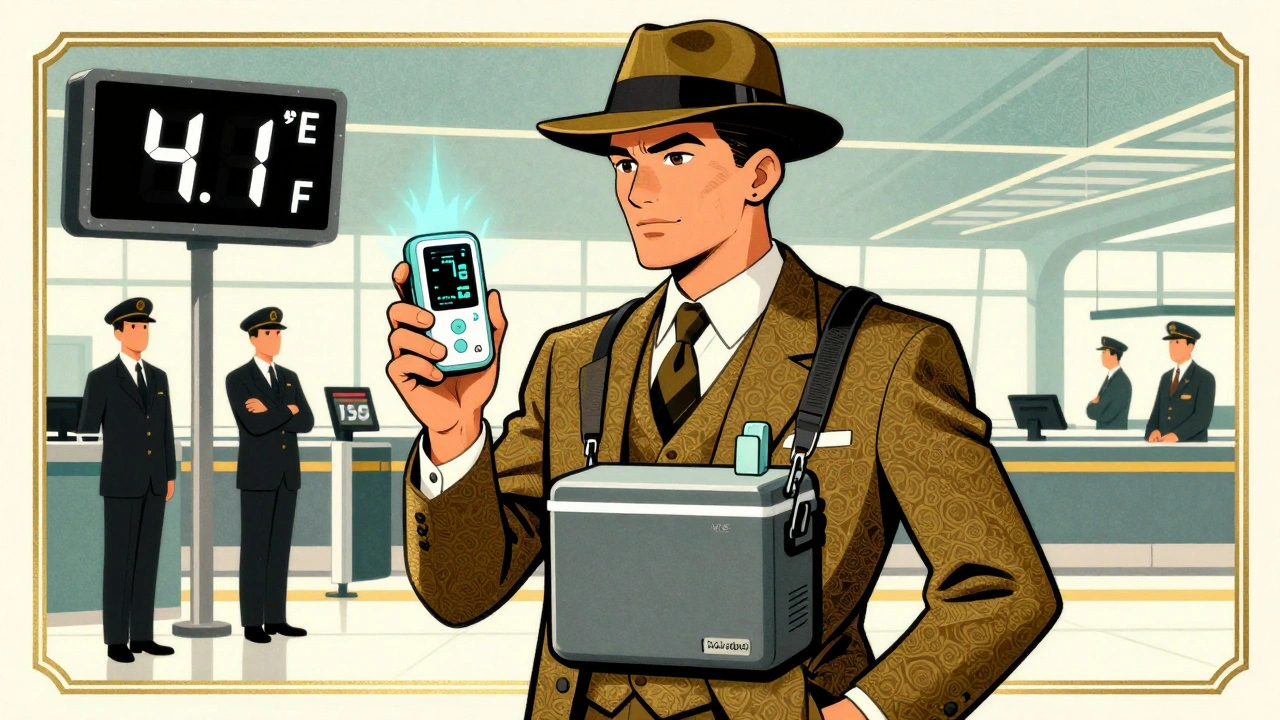
This is where the market has evolved. Devices like the 4AllFamily Explorer (released 2021, updated 2023) are built for real travel.
It uses a Biogel Freeze Pack + USB lid. At 104°F ambient heat, it keeps meds between 36°F and 45°F for 50 hours. Without power, the gel pack alone lasts 72 hours. It weighs just 1.2 pounds empty and holds up to 7 insulin pens.
Other options? The Armoa Portable Medical Fridge offers continuous cooling but weighs 6.2 pounds and needs 65W power. You’ll need a car charger or power bank. Not ideal for backpacking.
Best for: Multi-day trips, air travel, hot climates. Worth the $150 if you travel often.
3. Smart Temperature Monitors (Essential Backup)
A cooler isn’t enough if you don’t know what’s happening inside. That’s where tools like MedAngel ONE come in.
This small Bluetooth sensor clips inside your cooler. It sends real-time alerts to your phone if temps go outside 36°F-46°F. Accuracy? ±0.2°F. That’s lab-grade.
It doesn’t cool. It just tells you when something’s wrong. Use it with any cooler. It’s a safety net.
Best for: Everyone. Even if you use the best cooler, this is non-negotiable for critical meds.
What Works in Real Life?
Reddit users on r/diabetes tested everything. One traveler flew cross-country with a lunchbox cooler. After 32 hours, the temp hit 58°F. Their insulin was compromised.
Same trip, same route, with a 4AllFamily Explorer? 68 hours. Still at 41°F. No issues.
A parent took their child on a 10-day trip to Europe using a styrofoam cooler and four medical-grade ice packs. They rotated the packs every 12 hours-fresh ones from hotel ice machines. Temps stayed between 38°F and 44°F the whole time.
That’s the secret: refresh your cooling. Don’t just pack once. Plan to refill.
How to Prepare Before You Leave
Here’s what actually works:
- Freeze your gel packs 24 hours ahead. Use a freezer set to 0°F (-18°C). Half-frozen packs won’t cut it.
- Use waterproof bags. Put your meds in a sealed ziplock. Then put the ziplock in the cooler. This stops 98% of condensation damage.
- Request a mini-fridge at your hotel. 92% of major chains (Hilton, Marriott, Hyatt) will do it. But call ahead. Don’t assume.
- Check the hotel fridge. Many mini-fridges run at 50°F-too warm. Use a digital thermometer. If it’s above 46°F, ask for a new one or use your cooler.
- Carry documentation. Print the manufacturer’s temperature guidelines. Bring your prescription label. TSA reduces screening delays by 75% when you have this.
TSA Rules You Can’t Ignore
TSA lets you bring refrigerated meds through security-but only if you follow the rules:
- Declare them at the checkpoint.
- Place coolers in a separate bin for X-ray.
- Keep medications in original containers with labels.
- Don’t pack dry ice unless it’s labeled and approved (rarely needed).
You’re protected under the Americans with Disabilities Act. If they push back, calmly say: “These are medically necessary devices under ADA.” Most agents will help.
What to Avoid
These are common mistakes-and they ruin meds:
- Using regular coolers. No insulation, no temperature control. They’re designed for soda, not insulin.
- Leaving meds in a hot car. Even 20 minutes at 95°F can degrade potency.
- Assuming “room temperature” is safe. 77°F is not safe for insulin. Ever.
- Not bringing backups. Always carry an extra gel pack or two. Plan for delays.
Market Trends in 2025
The market for travel coolers is growing fast. 34.2 million Americans use refrigerated meds. Two-thirds travel at least once a year. That’s why companies are upgrading:
- The 4AllFamily Explorer 2.0 (released October 2023) now has Bluetooth alerts.
- MedAngel’s new CORE system (coming Q1 2024) promises 120 hours of cooling.
- Pharmaceutical companies like Eli Lilly and Novo Nordisk are now shipping travel kits with their meds.
- 41% of U.S. hospitals now provide these kits to patients-up from 12% in 2019.
But here’s the reality: no cooler lasts more than 48 hours in 104°F heat. If you’re traveling to the Middle East or South Asia in summer? You need a plan B. That means more frequent ice refills, or a backup device.
Final Checklist
Before you leave, run through this:
- ☑️ Know your meds’ exact temp range (check the package insert).
- ☑️ Freeze your cooling packs 24 hours ahead.
- ☑️ Use a medical-grade cooler (not a lunchbox).
- ☑️ Add a Bluetooth thermometer (MedAngel or similar).
- ☑️ Pack waterproof bags for each vial/pen.
- ☑️ Carry printed instructions and prescriptions.
- ☑️ Call your hotel to request a mini-fridge.
- ☑️ Bring one extra cooling pack as backup.
- ☑️ Never check your meds in luggage.
Traveling with refrigerated meds isn’t complicated. But it’s not casual either. Treat it like you’d treat your phone charger-because your treatment depends on it.
Can I use a regular cooler for insulin while traveling?
No. Regular coolers don’t maintain consistent temperatures between 36°F and 46°F. They often get too warm or freeze meds if ice packs touch them directly. Medical-grade coolers have insulated compartments that separate your meds from cooling elements-this is critical for safety and effectiveness.
How long does insulin last outside the fridge during travel?
Insulin can stay at room temperature (up to 86°F) for about 28 days after opening, but that’s not the same as safe travel. During travel, especially in heat, it degrades faster. At 77°F, insulin loses 10% potency per day. That’s why you need active cooling-even if the package says it’s stable at room temp.
Do I need to declare refrigerated meds at airport security?
Yes. Always declare refrigerated medications and cooling devices at TSA checkpoints. Place them in a separate bin for X-ray. Keep them in original containers with labels. You’re protected under the ADA, and having documentation reduces delays by up to 75%.
Can I use dry ice to keep my meds cold on a plane?
No. Dry ice reaches -109°F and will freeze your medication instantly, making it ineffective. It’s also restricted on flights unless properly labeled and approved-which most travelers can’t do. Stick to medical-grade gel packs or battery-powered coolers.
What’s the best portable cooler for insulin on long trips?
The 4AllFamily Explorer is the most tested and reliable option. It maintains 36°F-45°F for 50 hours in 104°F heat and lasts 72 hours without power. It’s TSA-friendly, weighs only 1.2 pounds, and holds up to 7 insulin pens. For longer trips, pair it with a MedAngel thermometer for real-time alerts.
Are hotel mini-fridges safe for storing insulin?
Not always. Many hotel mini-fridges run at 50°F or higher-too warm for insulin. Always check the temperature with a digital thermometer. If it’s above 46°F, ask for a replacement or keep your meds in your personal cooler. Never assume the hotel fridge is cold enough.
How do I know if my medication has gone bad?
Look for changes: insulin that looks cloudy, clumpy, or has particles. Biologics may appear discolored or contain sediment. If you’re unsure, don’t use it. Carry a backup dose. When in doubt, contact your pharmacy or doctor. Temperature exposure is often invisible-but the damage isn’t.
nithin Kuntumadugu
December 11, 2025 AT 18:38John Fred
December 13, 2025 AT 06:48Lauren Scrima
December 14, 2025 AT 07:53sharon soila
December 15, 2025 AT 04:03nina nakamura
December 17, 2025 AT 02:59Hamza Laassili
December 18, 2025 AT 01:45Constantine Vigderman
December 18, 2025 AT 22:21Cole Newman
December 18, 2025 AT 22:55Yatendra S
December 20, 2025 AT 05:28John Fred
December 20, 2025 AT 08:37