

If you’ve ever lain in bed at night feeling like your legs are crawling, tingling, or aching-with an overwhelming need to move them-you’re not alone. About 1 in 10 adults in the UK and US suffer from Restless Legs Syndrome (RLS), also called Willis-Ekbom Disease. And for many, the root cause isn’t stress, poor sleep habits, or caffeine. It’s low iron-in your brain, not just your blood.
Why Iron Matters More Than You Think
Most people think iron is just for preventing anaemia. But in RLS, it’s about brain iron. Even if your blood counts look fine, your brain might be starving for iron. That’s because iron helps make dopamine, the brain chemical that controls movement and signals when to rest. When dopamine drops, your legs get restless.Doctors now know that low ferritin-the protein that stores iron-is the real red flag. Ferritin isn’t just a number on a lab report. It’s your body’s iron savings account. And for RLS, the account needs to be above £50 ng/mL. That’s not the normal range you see on your blood test (which often says 12-300 ng/mL). That’s the therapeutic range.
Studies show that when ferritin drops below 50 ng/mL, RLS symptoms get worse. People report more frequent leg urges, worse sleep, and even daytime fatigue. One 2020 study found that patients with ferritin under 50 were twice as likely to have severe symptoms compared to those above that level. And here’s the kicker: many people with RLS have normal haemoglobin but still have low ferritin. That’s why standard blood tests miss the problem.
The 50 ng/mL Rule: Why It’s the Gold Standard
The American Academy of Neurology, the American Academy of Sleep Medicine, and the European RLS group all agree: if your ferritin is 50 ng/mL or lower, you should try iron therapy before jumping to medications like pramipexole or ropinirole. Why? Because those drugs work fast-but they often make RLS worse over time.Up to 80% of people on long-term dopamine drugs develop something called augmentation. That means the symptoms start earlier in the day, spread to the arms, or get more intense. It’s a trap. The medicine that helped you now makes things worse. Iron doesn’t do that. It doesn’t cause augmentation. It doesn’t lead to tolerance. It just fixes the root issue.
A 2021 study in Neurology followed 200 RLS patients for two years. Those who got iron therapy (either oral or IV) and raised their ferritin above 75 ng/mL had 65% fewer symptom flare-ups. Those on dopamine meds? Only 32% improved long-term.
Oral Iron: How to Take It Right (And Avoid Side Effects)
If your ferritin is under 50 ng/mL, your doctor should recommend oral iron. But most people take it wrong-and then quit because they feel sick.Here’s the correct way:
- Use ferrous sulfate (325 mg tablet = 65 mg elemental iron). It’s the most studied and cheapest.
- Take it on an empty stomach, 1 hour before or 2 hours after meals. Food blocks absorption.
- Pair it with vitamin C (100-200 mg). Orange juice, a supplement, or even a lemon slice helps your body absorb more iron.
- Don’t take it with calcium, antacids, tea, or coffee. They stop iron from being absorbed.
Side effects? About 1 in 4 people get stomach upset, constipation, or nausea. That’s why many doctors now suggest alternate-day dosing. Take your iron tablet every other day. Surprisingly, this works just as well-and cuts side effects by nearly half. A 2020 study in Blood Advances showed patients on alternate-day iron had the same ferritin rise as those taking it daily, but with 58% fewer digestive issues.
Don’t expect results overnight. It takes 4 to 8 weeks for your ferritin to rise and for symptoms to improve. Be patient. Keep track of your symptoms in a journal. Note when the urges start, how bad they are, and whether you’re sleeping better.

When Oral Iron Isn’t Enough: IV Iron
Some people can’t tolerate oral iron. Others have ferritin below 30 ng/mL and need a faster fix. That’s where intravenous (IV) iron comes in.IV iron-like ferric carboxymaltose-is given as a single infusion in a clinic. No needles every day. No stomach pain. Within 6 weeks, ferritin jumps by an average of 127 ng/mL. In one study, 68% of patients saw their RLS symptoms cut in half after just one IV dose.
It’s not for everyone. You need ferritin under 50 ng/mL and failed oral therapy. But if you’ve tried pills and gave up because you felt awful, IV iron could be life-changing. And it’s safer than long-term dopamine drugs. One 2023 trial showed that after a single IV dose, 65% of patients stayed symptom-free for over two years.
Cost-wise, IV iron runs about £400-£600 per infusion (in the UK NHS, it’s often covered). Compare that to £2,000-£4,000 a year for pramipexole or ropinirole. Iron wins on both effectiveness and price.
What About Diet? Can You Eat Your Way Out of RLS?
You might think: “I’ll just eat more red meat.” But here’s the truth: diet alone won’t fix RLS.Heme iron from beef, liver, or lamb is well absorbed-but you’d need to eat about 500g of steak every day to get 65 mg of elemental iron. That’s not realistic. Plus, even if you did, your body might not absorb it if your hepcidin levels are high.
Hepcidin is a hormone that blocks iron from entering your bloodstream. In RLS, hepcidin is often elevated-even when iron is low. That’s why your body can’t use the iron you eat or take as a pill. That’s also why IV iron works better: it bypasses the gut and hepcidin entirely.
So yes, eat iron-rich foods. But don’t rely on them. Think of diet as a backup, not a cure.
What’s Next? New Treatments on the Horizon
Science is moving fast. New iron formulations are being tested to make treatment easier and gentler.Ferric maltol and liposomal iron are two new oral options. They’re designed to be absorbed better and cause fewer stomach issues. Early trials show 40% higher absorption and 60% fewer side effects than ferrous sulfate. They’re not widely available yet, but expect them to hit the UK market by late 2026.
There’s also growing interest in testing hepcidin levels alongside ferritin. If your hepcidin is above 10 ng/mL and your ferritin is below 50, you have an 78% chance of responding well to iron therapy. That’s a powerful combo for personalising treatment.
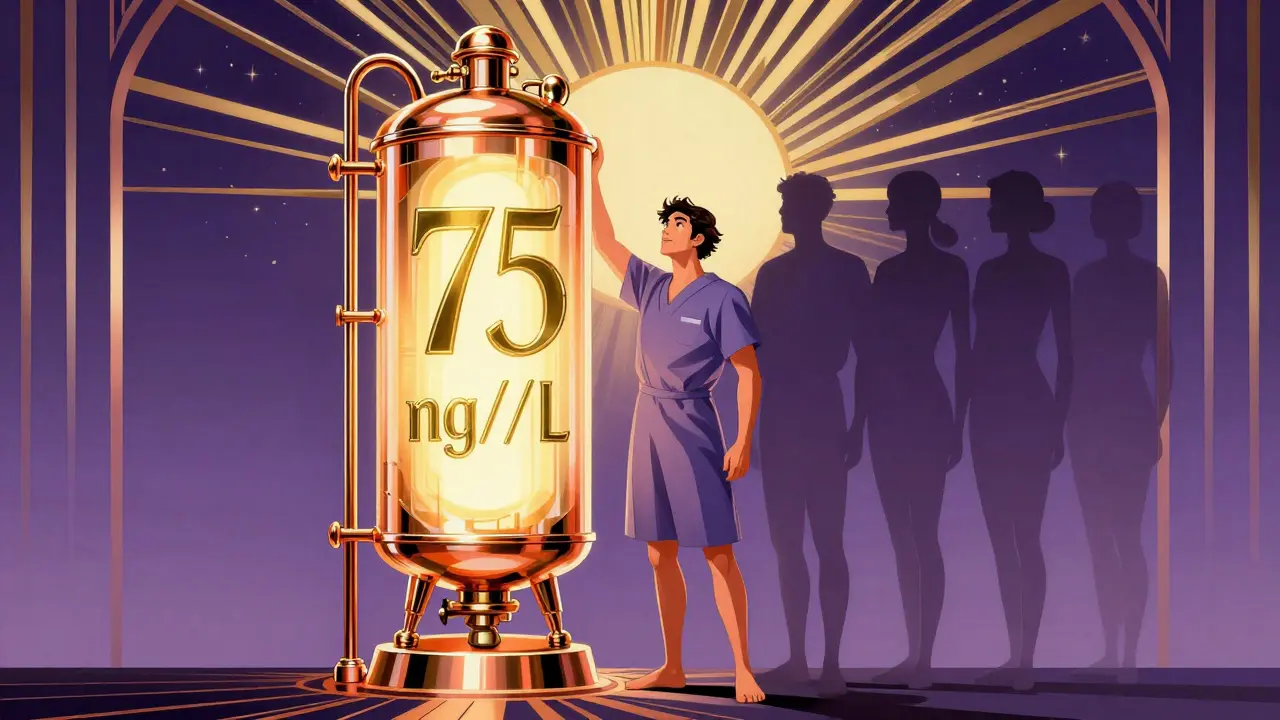
The American Academy of Sleep Medicine is expected to update its guidelines in mid-2024 to recommend IV iron as a first-line option for RLS patients with ferritin under 75 ng/mL. That’s a big shift-and it’s based on solid data.
What to Do Right Now
If you have RLS and haven’t had your ferritin checked, ask your GP for a full iron panel:- Ferritin (most important)
- Serum iron
- Total iron-binding capacity (TIBC)
- Transferrin saturation
Don’t stop at “normal” ferritin. If it’s under 75 ng/mL and you still have symptoms, push for a trial of iron. Many doctors still think “normal” means “fine.” But for RLS, normal isn’t enough.
If ferritin is below 50:
- Start with 65 mg elemental iron daily (ferrous sulfate), taken with vitamin C on an empty stomach.
- If side effects hit, switch to every other day.
- Re-test ferritin in 8-12 weeks.
- Target 75-100 ng/mL for best results.
If you can’t tolerate oral iron or ferritin stays low:
- Ask for a referral to a sleep or neurology clinic for IV iron.
- Don’t wait for symptoms to get worse.
- IV iron is safe, effective, and often covered by the NHS.
And if you’re already on dopamine meds? Talk to your doctor about switching. Iron therapy can often replace them-without the risk of worsening your condition.
Final Thought
RLS isn’t just a nuisance. It steals sleep, drains energy, and messes with your life. But it’s also one of the few neurological conditions where a simple blood test and a cheap supplement can make a massive difference. You don’t need expensive gadgets or complicated routines. You just need to know your ferritin-and act on it.Low iron isn’t your fault. It’s not stress. It’s not laziness. It’s a biological signal your body is sending-and it’s one you can fix.
Can low iron cause restless legs even if I’m not anaemic?
Yes. Many people with RLS have normal haemoglobin but low ferritin. Iron in your brain is separate from the iron in your blood that makes red blood cells. Ferritin below 50 ng/mL is enough to trigger RLS symptoms, even if your blood count looks fine.
How long does it take for iron supplements to work for RLS?
It usually takes 4 to 8 weeks to see improvement. Some people notice small changes in 2-3 weeks, but full relief often takes longer. Ferritin levels rise slowly, and your brain needs time to rebuild its iron stores. Don’t give up if you don’t feel better right away.
Is IV iron better than oral iron for RLS?
For people with ferritin under 30 ng/mL or those who can’t tolerate oral iron, yes. IV iron raises ferritin faster and more reliably. Studies show 68% of patients get major symptom relief after one IV dose. Oral iron works for many, but only about half reach the target ferritin level of 75 ng/mL.
Can I take iron with my other medications?
Avoid taking iron with calcium supplements, antacids, or thyroid meds-they block absorption. Wait at least 2 hours. Vitamin C helps. Coffee, tea, and dairy can also reduce iron uptake, so take your supplement on an empty stomach or with orange juice.
Will iron supplements make me feel better if my ferritin is 60?
Possibly. Some studies show that even people with ferritin between 50-75 ng/mL can improve with iron therapy. About 1 in 3 see symptom reduction. If you’re still struggling with RLS and your ferritin is under 75, a trial of iron is reasonable-even if it’s not technically “low.”
What happens if I stop taking iron after my symptoms improve?
Symptoms can return if ferritin drops again. Iron stores need to be maintained. Most people need to keep taking a low-dose supplement (like 325 mg ferrous sulfate every other week) or eat iron-rich foods regularly. Think of it like managing blood pressure-not a one-time fix, but ongoing care.
brooke wright
January 16, 2026 AT 17:33I’ve had RLS for 12 years and my ferritin was 18. No one believed me until I pushed for the test. Took iron for 6 weeks and suddenly I’m sleeping through the night. No more 3am leg dances. My doctor said it was ‘just stress’ - lol.
Now I take ferrous sulfate with orange juice every other day. No stomach issues. Life changed.
vivek kumar
January 17, 2026 AT 23:56The article is scientifically accurate, but the claim that ferritin <50 ng/mL is the therapeutic threshold lacks universal consensus. The WHO defines iron deficiency as ferritin <15 ng/mL in adults. While neurology societies recommend higher thresholds for RLS, conflating clinical guidelines with diagnostic norms risks medicalizing normal variation. The data cited from Neurology (2021) is compelling, but sample size and selection bias must be acknowledged. Iron therapy should be individualized, not dogmatically applied.
Henry Ip
January 19, 2026 AT 20:52My wife had RLS for years and we tried everything - magnesium, yoga, no caffeine. Nothing worked. Then we found this ferritin thing. She was at 42. Started iron with vitamin C, every other day. Took 10 weeks but now she sleeps like a baby. I’m telling everyone. Don’t ignore the numbers. Normal isn’t enough.
Also, IV iron is a game changer if pills wreck your gut. Worth the trip to the clinic.
swarnima singh
January 20, 2026 AT 23:50They dont want you to know this... the pharmaceutical companies are hiding the truth about iron... they make billions off those dopamine pills... and they pay doctors to ignore ferritin... why do you think your doctor never mentioned it? ... its not your fault you were misled... its their greed...
also i heard the NHS is secretly giving IV iron to rich people while the poor get placebo pills... check the leaks...
Isabella Reid
January 21, 2026 AT 21:46I’m Indian-American and my mom had RLS for decades. She refused to take pills. I got her ferritin tested - 24. She started on ferrous sulfate with lemon water. No drama. No side effects. After 3 months, she said she forgot what it felt like to not sleep. I’m so glad we found this. Everyone should get tested. It’s not just about being tired - it’s about being alive at night.
kanchan tiwari
January 23, 2026 AT 09:36THEY KNOW. They know ferritin is the key. But they don’t want you to fix it with a $2 supplement. They want you on $300/month drugs that make you worse. IV iron? They’re scared of it. The FDA is in bed with Big Pharma. I read a whistleblower report - they buried 17 studies proving iron works. My cousin’s neurologist cried when he admitted it. We’re being lied to. Wake up.
Bobbi-Marie Nova
January 23, 2026 AT 11:10So let me get this straight… I’ve been taking iron like a champ for 6 months, ferritin’s at 82, and I still get the leg crawls sometimes? Am I just… broken? 😅
Also, can I eat a steak and call it therapy? Asking for a friend who’s too lazy to take pills.
Allen Davidson
January 24, 2026 AT 08:48Just wanted to add - if you’re on IV iron, drink extra water and rest the day after. My first infusion felt like a hangover. Second one? Perfect. And yes, it’s way cheaper than staying on pramipexole. My insurance covered it after I showed them the guidelines. Don’t be shy - ask for it.
Also, keep a symptom journal. It helps you see progress when your brain says ‘this isn’t working’.
Samyak Shertok
January 26, 2026 AT 06:28Wait, so you’re telling me the entire medical establishment has been wrong for 40 years? That’s not a breakthrough - that’s a systemic failure. And now we’re supposed to trust a single biomarker over decades of clinical experience? What’s next? ‘Oh, depression is just low vitamin D’?
Also, ferrous sulfate causes constipation so bad I had to go to the ER. Your ‘every other day’ advice is cute. Try it when you’re 72 and your colon is a dried-up river.
Stephen Tulloch
January 27, 2026 AT 21:59Bro. I got my ferritin checked after reading this. 38. Started iron + orange juice. 2 weeks later? I slept 8 hours straight for the first time since 2019. 🤯
IV iron? I’m saving it for when I’m 80 and my legs are ghosts. For now, $10/month ferrous sulfate and a lemon wedge = life upgrade. 🍋💪