
When you take a generic drug, you expect the same safety and effectiveness as the brand-name version. But here’s the problem: if something goes wrong, the system for reporting serious side effects doesn’t treat generic drugs the same way - even though the rules say it should. The result? Dangerous gaps in our understanding of what these widely used medications can do.
What Counts as a Serious Adverse Event?
A serious adverse event (SAE) isn’t just a mild rash or a headache. The FDA defines it as any reaction that causes death, is life-threatening, leads to hospitalization, causes permanent disability, results in a birth defect, or needs medical intervention to prevent lasting harm. These rules apply equally to brand-name and generic drugs. If you take a generic version of metoprolol or simvastatin and end up in the ER because of an irregular heartbeat, that’s an SAE - and it must be reported.But here’s where things get messy. The same regulation that requires reporting doesn’t guarantee it happens. Generic drugs make up about 90% of all prescriptions filled in the U.S., yet they account for far less than 90% of serious adverse event reports. In fact, studies show brand-name drugs - even when they’re no longer the most commonly prescribed - still generate nearly 70% of all SAE reports. That’s not because they’re more dangerous. It’s because the system is broken.
Who’s Supposed to Report?
Manufacturers of generic drugs are legally required to report serious and unexpected adverse events to the FDA within 15 days of learning about them. They must keep records for 10 years. In Europe, the timeline is even tighter: fatal or life-threatening events must be reported within 7 days. The FDA collects these reports through MedWatch, its official safety monitoring system. Reports must include the active ingredient, the manufacturer’s name, the patient’s reaction, and when it started.But here’s the catch: most healthcare providers don’t know which company made the generic drug they’re treating. Pharmacies switch suppliers all the time. A patient might get levothyroxine from Teva one month and Amneal the next. The label rarely makes it obvious. So when a doctor sees a patient with a strange reaction, they often don’t know who to report it to - or even if they should report it at all.
The Reporting Gap: Brand vs. Generic
Data from the FDA’s Adverse Event Reporting System (FAERS) between 2004 and 2015 tells a clear story. For drugs like losartan and amlodipine, generic versions dominated the market - sometimes over 80% of prescriptions. But brand-name manufacturers still submitted the vast majority of serious adverse event reports. Even years after generics entered the market, the pattern didn’t change.Why? Brand-name companies have entire departments dedicated to safety monitoring. They track every report, investigate every complaint, and have systems in place to catch subtle patterns. Generic manufacturers? Many are small companies with limited resources. Some don’t even have a full-time pharmacovigilance staff. They rely on third-party contractors - and those contractors often don’t have the time or tools to dig deep into reports.
The result? A safety blind spot. If a generic version of a drug has a slightly different filler or coating that causes more side effects in certain patients, the system might never catch it. And that’s not theoretical. Doctors have reported clusters of reactions to specific generic versions of levothyroxine, warfarin, and seizure medications - but without clear manufacturer data, those signals get lost in the noise.
Why Healthcare Providers Struggle
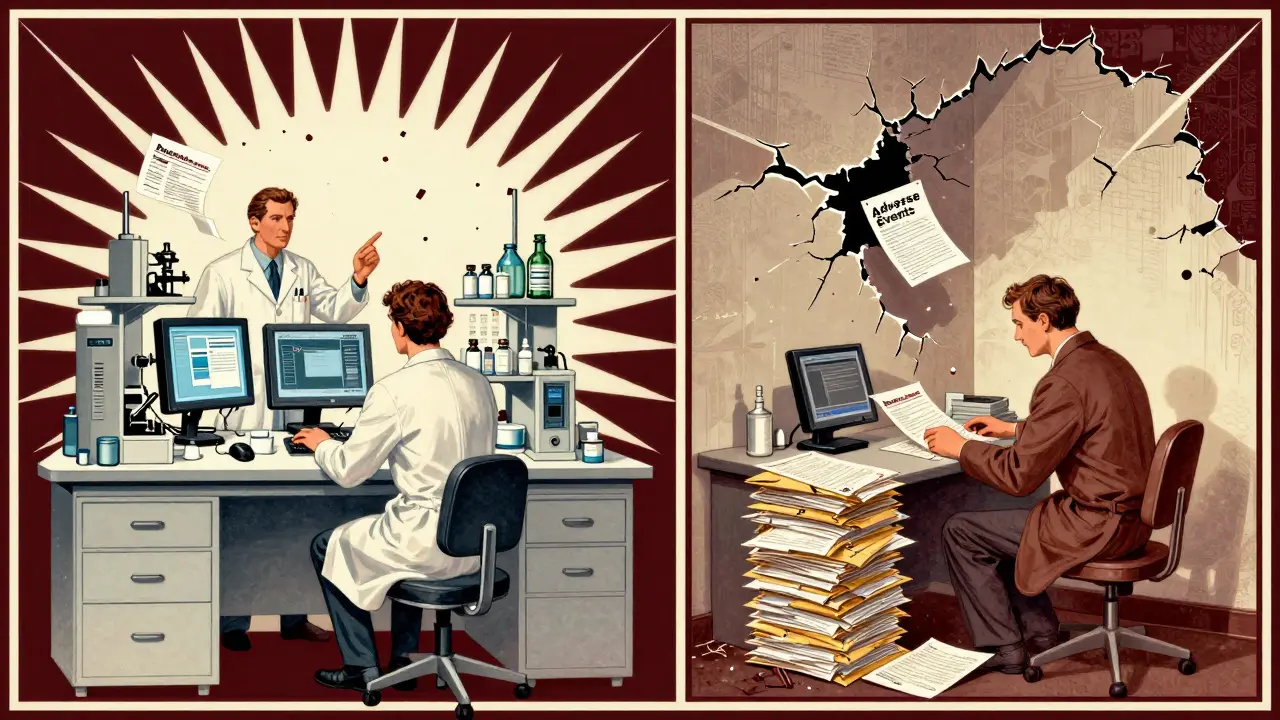
If you’re a nurse, pharmacist, or doctor trying to file a report, you’re already stretched thin. Filling out a MedWatch form for a brand-name drug takes 15 to 30 minutes. For a generic? It can take 45 minutes or more. Why? Because you have to track down the manufacturer.You have to check the pill bottle. Look for the small print. Search the National Drug Code (NDC) number in DailyMed. Call the pharmacy. Sometimes you give up. A 2019 FDA study found that 42% of healthcare providers abandoned generic drug reports simply because they couldn’t identify the manufacturer. For brand-name drugs? Only 9% gave up.
One family doctor in Ohio told me he once treated a patient who had a severe reaction to a generic version of levothyroxine. The patient didn’t know the manufacturer. The pharmacy didn’t keep records. The doctor ended up reporting it to the brand-name company - even though the patient never took that version. That’s not just inaccurate - it’s misleading. It makes it look like the brand drug is dangerous, when the real issue might be a specific generic manufacturer’s formulation.
What’s Being Done?
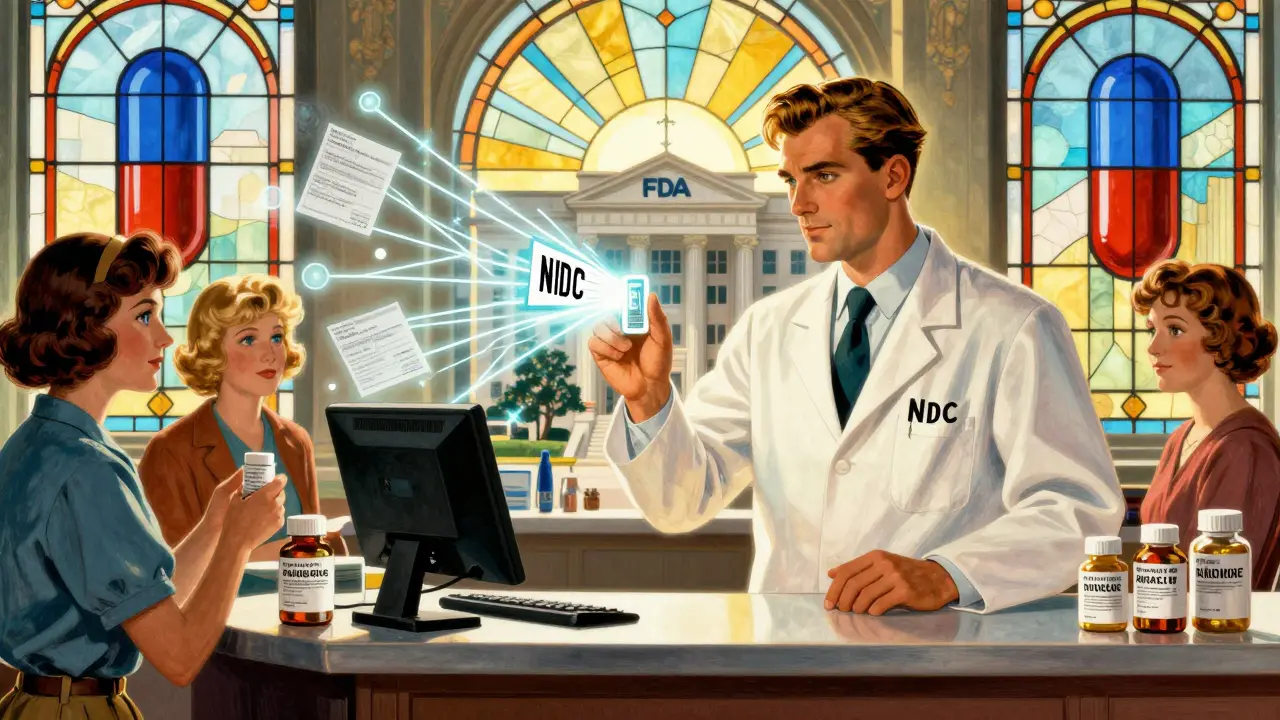
The FDA knows this is a problem. In 2023, they launched FAERS 2.0 - a new system that can link adverse events directly to NDC codes. That means, if a pharmacy scans the barcode when dispensing a drug, the system can automatically tie the report to the right manufacturer.They’re also testing a pilot program with major pharmacy chains to require manufacturer names on prescription labels. Right now, that information is often buried in tiny font. If it’s clearly printed - like the drug name and dosage - reporting becomes easier.
The European Medicines Agency is pushing similar changes. And the U.S. government is spending $15 million under GDUFA III to improve generic drug safety monitoring. Generic manufacturers are finally starting to invest more in pharmacovigilance. Spending in this area is projected to jump from $185 million in 2023 to over $320 million by 2027.
Some hospitals are already seeing results. One study found that when pharmacies started scanning medication barcodes at the point of administration, generic adverse event reporting improved by 63%. That’s not a small win. That’s a game-changer.
What You Can Do
If you’re a patient: Keep the pill bottle. Don’t throw it away after you start the prescription. The manufacturer name is on it. If you have a reaction, write down the name, the date, and what happened. Bring that to your doctor.If you’re a healthcare provider: Always check the label. Use DailyMed to look up NDC codes if you’re unsure. Don’t assume the brand name is the right one to report. And if you’re unsure - report it anyway. The FDA can still use the information, even if the manufacturer isn’t clear.
If you’re a pharmacist: Make sure the manufacturer name is visible on the label. Train your staff to scan barcodes. It’s not just about accuracy - it’s about safety.
The Bigger Picture
Generic drugs save the U.S. healthcare system over $300 billion a year. That’s huge. But saving money shouldn’t mean sacrificing safety. The system was built for a time when there were only a few generic manufacturers. Now there are over 200. And the smallest ones - the ones making 30% of all generics - file less than 5% of the reports.This isn’t about blame. It’s about fixing a system that’s outdated. We need better labeling. Better tracking. Better tools. And we need to stop assuming that because a drug is generic, it’s automatically safe - or that someone else is watching out for it.
The truth is, we’re all part of the safety net. Patients, providers, pharmacists, manufacturers - we all have a role. And until we fix the reporting gap, we’re flying blind on one of the most widely used parts of our medicine cabinet.
Do generic drugs have the same safety profile as brand-name drugs?
By law, generic drugs must contain the same active ingredient, strength, dosage form, and route of administration as the brand-name version. They’re required to be bioequivalent - meaning they work the same way in the body. But safety isn’t just about the active ingredient. Fillers, coatings, and manufacturing processes can differ. These differences can sometimes lead to different side effects in sensitive patients. That’s why accurate reporting of adverse events is critical - to catch these subtle but real differences.
Who is responsible for reporting serious adverse events from generic drugs?
The manufacturer of the generic drug is legally responsible for reporting serious and unexpected adverse events to the FDA within 15 days. However, healthcare providers and patients can also submit reports through MedWatch. Even if the manufacturer doesn’t report, your report still counts. The FDA uses all reports - from providers, patients, and manufacturers - to build a complete safety picture.
Why is it hard to know which generic manufacturer caused a reaction?
Pharmacies often switch between generic manufacturers to get the best price. A patient might get a different version each time they refill. The manufacturer name is rarely printed clearly on the label - sometimes it’s in tiny font or on the back. Many patients don’t know or remember which one they took. Without that information, it’s nearly impossible to link a reaction to the right company, which makes it hard to detect patterns or recall unsafe batches.
Can I report a serious side effect if I don’t know the manufacturer?
Yes. You can still file a report through MedWatch even if you don’t know the manufacturer. The FDA encourages reporting with as much detail as possible - including the drug name, dosage, when you took it, and what happened. If the manufacturer is unknown, mark it as "unknown" or "generic". Your report still adds valuable data to the system. It’s better to report with incomplete information than to skip it entirely.
What’s being done to fix the underreporting of generic drug side effects?
The FDA is rolling out FAERS 2.0, which links reports to National Drug Code (NDC) numbers - so when a pharmacy scans a barcode, the system knows exactly which manufacturer made the drug. They’re also testing a pilot program to require manufacturer names to be clearly printed on prescription labels. Hospitals using barcode scanning at the point of dispensing have seen a 63% increase in accurate reporting. These steps are small, but they’re the first real progress in years.
Are generic drugs less safe than brand-name drugs?
No - generic drugs are not inherently less safe. They undergo the same FDA approval process for quality and effectiveness. But because of underreporting and inconsistent monitoring, we don’t always have a full picture of their safety profile. That doesn’t mean they’re dangerous - it means we’re not seeing the full story. Better reporting systems will help us identify any real safety issues faster, without undermining confidence in generics as a whole.
Mike Berrange
January 17, 2026 AT 05:33So let me get this straight - we’re relying on small generic manufacturers with no pharmacovigilance team to report life-threatening reactions, but we expect them to compete on price? That’s not oversight, that’s negligence dressed up as capitalism. And don’t even get me started on how pharmacies swap generics like trading cards. I’ve had three different levothyroxine pills in six months. My TSH levels are a rollercoaster. No one’s accountable. No one’s watching. And the FDA just sits there with their FAERS 2.0 buzzwords like it’s a magic fix.
Meanwhile, the brand-name companies? They’ve got teams of PhDs analyzing every sneeze. But when the patent expires, they don’t care anymore - and neither does the system. This isn’t a glitch. It’s by design.
Someone’s making money off this. And it ain’t the patient.
Amy Vickberg
January 17, 2026 AT 06:52I’m a nurse in rural Ohio, and I see this every day. Patients come in with rashes, dizziness, heart palpitations - and they have no idea which generic they got because the label says ‘Levothyroxine 88 mcg’ and nothing else. We waste so much time calling pharmacies, checking NDCs, digging through receipts. Sometimes we just give up.
But I still file the report. Even if it’s messy. Even if the manufacturer is unknown. Because if enough of us do it, maybe they’ll finally listen. This isn’t about blaming generics - it’s about making the system work for the people who need it most. Thank you for writing this. It’s about time someone did.
Nishant Garg
January 18, 2026 AT 07:07In India, we have over 500 generic manufacturers - and yes, the quality varies wildly. Some are world-class, others are sketchy operations with labs that look like garages. But here’s the twist: our government mandates the manufacturer name in bold, 12-point font on every blister pack. No exceptions. No tiny print. And pharmacists? They’re trained to explain it to patients.
So when a patient has a reaction, we know exactly who made it. No guesswork. No dead ends. It’s not rocket science - it’s just basic accountability. Why can’t the U.S. do this? Is it because we’re too busy optimizing for profit margins instead of patient safety?
Also - I once had a bad reaction to a generic metformin. Turned out it was a batch from a small company using a different binder. The FDA never caught it. We found out because the pharmacist remembered the lot number. Imagine if that had been a heart attack instead of nausea.
Amy Ehinger
January 18, 2026 AT 11:54My grandma took a generic version of warfarin last year and ended up in the ER with internal bleeding. The pharmacy didn’t even tell her which company made it. She just said, ‘It’s the blue pill, right?’
I spent three days trying to track down the manufacturer. Called the pharmacy three times. Checked the bottle. Looked up the NDC. Finally found it on a receipt from six weeks ago. By then, the report window was closed.
It’s not that people don’t care. It’s that the system makes it impossible. I’m so tired of having to be a detective just to keep someone safe. Why does this have to be so hard?
Crystel Ann
January 20, 2026 AT 06:06My cousin is a pharmacist in Texas. She said they just started scanning barcodes at the point of dispensing - and suddenly, their adverse event reports went from 2-3 a month to 15. All because they could finally link the reaction to the right manufacturer.
It’s not that people weren’t reporting before. It’s that they were reporting into the void. Now, the data actually means something. That’s the real win here - not the fancy new software, but the fact that someone finally started listening.
Small change. Huge impact.
Niki Van den Bossche
January 20, 2026 AT 15:23Let’s be brutally honest - the entire pharmaceutical industrial complex is a performative farce. We’ve commodified medicine to the point where the active ingredient is the *only* thing that matters, and everything else - the excipients, the coating, the manufacturing environment - is treated as irrelevant noise.
But bioequivalence doesn’t mean biologically identical. It means statistically similar within a 20% margin. That’s not safety - that’s statistical gymnastics. And we’ve normalized it because we’re too lazy to pay for quality.
Generics aren’t the problem. Our collective moral surrender to corporate efficiency is. We traded transparency for a 90% discount and now we’re shocked when the system collapses under the weight of its own hypocrisy.
It’s not a regulatory failure. It’s a cultural one.
Gloria Montero Puertas
January 21, 2026 AT 05:32Ugh. Another ‘poor patient’ sob story. Let me guess - you’re the kind of person who thinks ‘natural remedies’ are better than FDA-approved meds? Or maybe you believe Big Pharma is hiding the truth? Let’s not pretend this is about safety - it’s about fear-mongering under the guise of ‘transparency.’
Generic drugs are safe. They’re tested. They’re approved. If you have a reaction, it’s probably because you’re allergic to something else - or you’re not taking it right. Stop blaming the system. Take responsibility.
And for the love of God, stop using ‘NDC code’ like it’s some sacred incantation. It’s a barcode. Not a conspiracy.
Tom Doan
January 22, 2026 AT 05:24So let me paraphrase: The FDA has a system that’s designed for 1998, but we’re now operating in a 2024 world with 200+ generic manufacturers and pharmacies switching suppliers daily - and somehow we’re surprised that reporting is broken?
That’s not a scandal. That’s basic systems failure. And yet, the response is ‘we’re spending $15 million on FAERS 2.0’ - as if a software upgrade will fix a structural flaw rooted in profit incentives, regulatory apathy, and provider burnout.
Meanwhile, the real solution - mandatory, legible manufacturer labeling - is treated like a luxury. This isn’t innovation. It’s triage with a PowerPoint.
And the fact that we’re still having this conversation in 2024? That’s the real tragedy.
Sohan Jindal
January 22, 2026 AT 20:40They let China make our pills. That’s why this is happening. No wonder the generics are dodgy. We outsourced our medicine to a country that doesn’t even have real doctors. Now we’re paying for it. Fix the problem - bring manufacturing back to America. No more foreign pills. No more ‘unknown manufacturer.’ Just American-made, FDA-approved, patriotic medicine. That’s the only way.