
Spicy Food & Medication Timing Calculator
Your Medication
Spicy Food Timing
Heartburn isn’t just a bad meal afterthought-it’s a daily struggle for millions. If you love chili, curry, or hot salsa but wake up with a burning throat, you’re not alone. And if you’re also taking aspirin, ibuprofen, or a stomach acid blocker like pantoprazole, the problem might be worse than you think. The truth? Spicy food doesn’t automatically cause heartburn for everyone. But when it teams up with certain medications, the risk spikes-and many people don’t even realize why.
Why Spicy Food Triggers Heartburn (Sometimes)
The culprit isn’t just heat. It’s capsaicin, the chemical in chili peppers that makes your mouth feel like it’s on fire. This same compound relaxes the lower esophageal sphincter (LES), the muscle that normally keeps stomach acid locked down. When it loosens, acid creeps up into your esophagus. Studies show this drop in LES pressure can be as high as 30-40% in sensitive people within 30 minutes of eating spicy food.
But here’s the twist: not everyone reacts the same. The NIH says there’s not enough evidence to say spicy food should be banned for all GERD patients. Some people can eat hot wings without a problem. Others get heartburn from a single jalapeño. That’s because sensitivity to capsaicin varies wildly-from 10 mg to over 100 mg per meal. Your body’s response isn’t about how spicy the food is-it’s about your personal threshold.
Medications That Make Heartburn Worse
It’s not just food. Many common pills make heartburn worse by either relaxing the LES or irritating the stomach lining. Aspirin and ibuprofen? They can cause erosive esophagitis in 15-30% of regular users. Beta blockers for high blood pressure? They raise GERD risk by 22%. Anticholinergics (used for motion sickness or overactive bladder) drop LES pressure by 25% in nearly 7 out of 10 people.
Even your heartburn meds can be undermined. Pantoprazole, a proton pump inhibitor (PPI), is designed to block stomach acid. But if you take it within two hours of eating spicy food, fatty meals, coffee, or chocolate, its absorption drops by 18-23%. That means less acid control, more burning. And if you’re taking antacids like Tums or Rolaids while also on antibiotics like tetracycline, the calcium and magnesium in the antacid can block up to 90% of the antibiotic’s effectiveness.
Timing Matters More Than You Think
It’s not just what you eat or take-it’s when. Taking pantoprazole right after dinner? You’re wasting half its power. The best time? 30 to 60 minutes before your first meal of the day. That’s when your stomach starts ramping up acid production, and the drug needs to be in place to stop it.
Antacids work fast but don’t last. They give relief in 2-5 minutes, but the effect fades in under an hour. That’s why so many people end up taking them repeatedly-only to feel worse later. The key? Don’t take antacids within one hour before or four hours after other medications. Otherwise, you risk blocking absorption of critical drugs like thyroid medicine, iron pills, or antibiotics.
What Actually Works: A Realistic Plan
Forget blanket rules. The most effective approach is personalized. Try this:
- Eliminate spicy foods, caffeine, alcohol, and chocolate for 3-7 days. Keep a simple log: what you ate, what you took, and when symptoms hit.
- After the break, reintroduce one trigger at a time. Try a mild salsa one day, then wait 24 hours. If you’re fine, try a hotter version the next week.
- Track your medication timing. Did you take pantoprazole with breakfast or after? Did you take ibuprofen right after lunch? Small changes in timing can make a big difference.
- Don’t lie down for at least 3 hours after eating. Elevate the head of your bed by 6-8 inches. These simple moves reduce nighttime reflux by 60%.
People who follow this kind of personalized plan see symptom improvement in 2 weeks. Those who rely only on pills? Only about half get lasting relief.
The Hidden Danger of Overusing Antacids
It’s tempting to pop a Tums after every spicy meal. But using antacids more than 2-3 times a week can cause problems. Aluminum-based ones can lead to electrolyte imbalances. Calcium-based ones can interfere with kidney function over time. And worst of all? They mask the real issue.
Heartburn that keeps coming back could be a sign of something deeper-a hiatal hernia, Barrett’s esophagus, or even early signs of esophageal damage. If you’re using antacids daily, you’re not treating the cause. You’re just hiding the warning signs.
New Options Are Changing the Game
In August 2023, the FDA approved a new drug called Vonoprazan (Voquezna). Unlike traditional PPIs, it works faster, lasts longer, and isn’t affected by your genes or what you eat. In trials, 89% of patients had their symptoms under control-even with spicy meals. This is a big deal. It means the future of GERD treatment may not be about avoiding food-but about better drugs that work no matter what you eat.
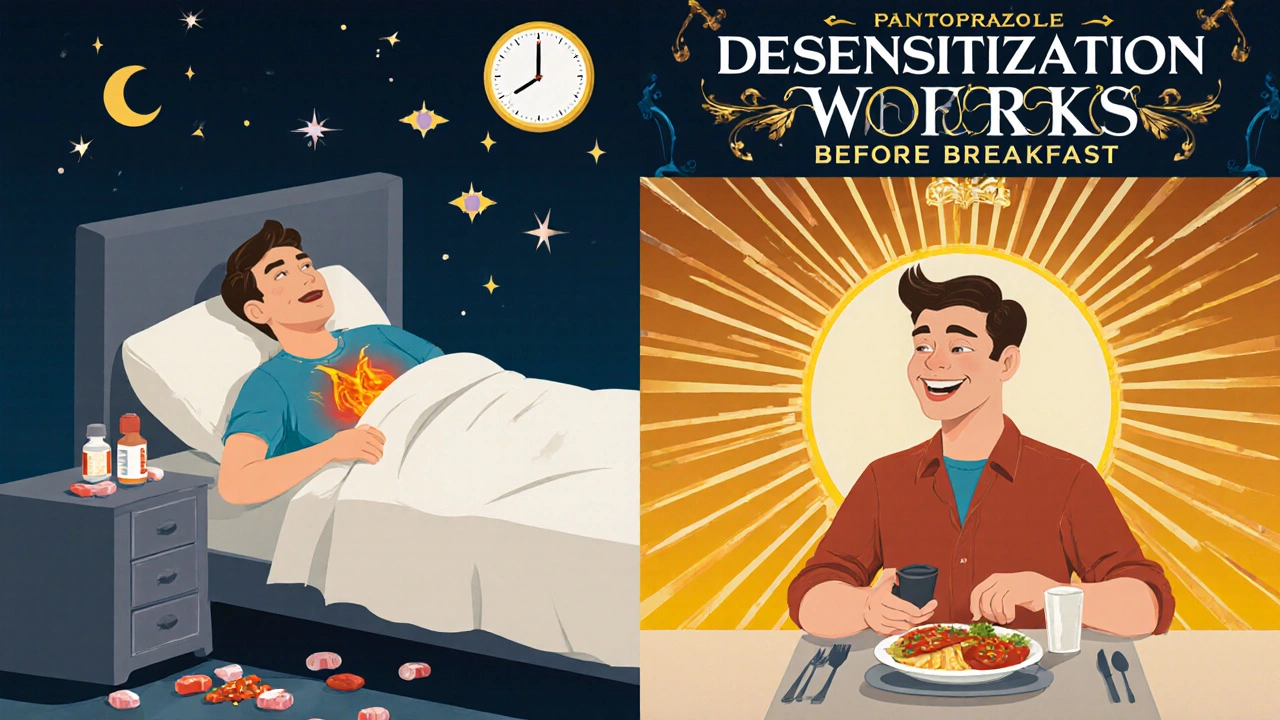
Even more promising? Research at Johns Hopkins showed that after 12 weeks of gradually increasing spice exposure, 65% of participants could tolerate hot foods again without symptoms. It’s called desensitization. Your body can adapt-if you give it time and control.
What to Do Right Now
If you’re stuck in a cycle of spicy food → heartburn → antacid → repeat, here’s your action list:
- Stop using antacids as a daily crutch. Use them only for emergencies.
- Take your PPI 30-60 minutes before breakfast, not after dinner.
- Avoid NSAIDs like ibuprofen if you have frequent heartburn. Try acetaminophen instead for pain.
- Keep a 7-day food and symptom log. Note timing, portion size, and medication.
- Try one mild spicy meal per week with antacid backup. See how your body responds.
- Don’t lie down after eating. Walk for 15 minutes instead.
The goal isn’t to give up spicy food forever. It’s to find your personal balance. Some people never need to cut it out. Others need to eat it smarter. Either way, you don’t have to live with burning chest pain every day.
When to See a Doctor
See a gastroenterologist if:
- Heartburn happens more than twice a week
- Antacids stop working
- You have trouble swallowing
- You lose weight without trying
- Your symptoms wake you up at night
These aren’t just “bad heartburn.” They could signal damage that needs medical attention.
Can spicy food really cause heartburn, or is it just a myth?
Spicy food doesn’t cause heartburn in everyone, but it does trigger symptoms in 65-75% of people with GERD. The active ingredient, capsaicin, relaxes the muscle that keeps stomach acid down. While the NIH says there’s not enough evidence to ban it for all patients, clinical experience shows most people with reflux get worse after eating spicy meals. It’s not a myth-it’s a personal trigger.
Does pantoprazole stop working if I eat spicy food?
Yes, it can. Eating spicy, fatty, or acidic foods within two hours of taking pantoprazole reduces how well your body absorbs it by 18-23%. That means less acid suppression and more heartburn. Take your pill 30-60 minutes before your first meal of the day, and avoid trigger foods for at least two hours after.
Are antacids safe to use every day?
No. Using antacids more than 2-3 times a week can cause electrolyte imbalances, kidney issues, or interfere with other medications. They’re meant for occasional relief, not daily management. If you need them often, you need a different plan-like adjusting your meds, diet, or timing.
Can I ever eat spicy food again if I have GERD?
Yes, many people can-after identifying their personal tolerance. Try a 3-7 day elimination, then slowly reintroduce mild spices. Track your symptoms. Some people find they can handle a little heat once their stomach lining heals and they’re on the right meds. Others need to avoid it long-term. It’s not all or nothing.
What’s the best way to track my heartburn triggers?
Keep a simple food and symptom diary for at least two weeks. Write down everything you eat and drink, the time, your medications, and whether you had heartburn (and how bad). After a few days, patterns will show up. Did heartburn always happen after curry? After taking ibuprofen? After lying down? That’s your personalized data.
Can changing when I take my pills help my heartburn?
Absolutely. Taking PPIs like pantoprazole after dinner instead of before breakfast cuts their effectiveness in half. Taking antacids right after antibiotics can block the drug’s absorption. Timing matters as much as what you take. Always check with your pharmacist or doctor about the best schedule for your meds.
Miriam Lohrum
November 16, 2025 AT 13:13It's wild how much our bodies differ. I can eat ghost pepper salsa with no issue, but my sister gets heartburn from a single jalapeño. It's not about the spice-it's about your gut's personal history. Capsaicin doesn't care about your willpower; it just does its job.
archana das
November 16, 2025 AT 15:09In India, we grow up with spice-it's not a challenge, it's comfort. But I learned the hard way that even curry can betray you if you take ibuprofen after dinner. Timing is everything. My mom always said, 'Eat, then rest. Never rush.' Turns out, she was a gastroenterologist in disguise.
Emma Dovener
November 17, 2025 AT 12:16People overlook how much medication timing matters. I used to take my pantoprazole after lunch because that’s when I felt worst. Turns out, I was sabotaging it. Switching to 45 minutes before breakfast cut my symptoms in half. Simple fix. No magic pills needed.
Sue Haskett
November 19, 2025 AT 07:26Let me just say-antacids are not a lifestyle choice. They are a Band-Aid on a broken leg. If you're popping Tums like candy, you're ignoring the real problem. And yes, calcium-based ones can mess with your kidneys over time. Please, for your own sake, track your intake. Write it down. Use an app. Do something. Your future self will thank you.
Jauregui Goudy
November 21, 2025 AT 00:11Okay, real talk: if you're still using antacids daily and thinking you're fine, you're lying to yourself. I used to be that guy-spicy tacos, ibuprofen, then Tums. Three times a day. Then I got an endoscopy. Turns out, my esophagus looked like a dried-up riverbed. I haven't had a single jalapeño since. And I'm not even mad. My body's thanking me.
Tom Shepherd
November 22, 2025 AT 21:19just tried the 7 day no spice thing and holy crap it worked. i didnt even realize how much i was relying on tums. also switched my ppi to before breakfast and wow. no more midnight burning. also i think i might have a hiatal hernia? my doc said maybe. still waiting for the appt
Rhiana Grob
November 23, 2025 AT 00:22This is one of the most thoughtful, evidence-based pieces on GERD I’ve read in years. Thank you for emphasizing personalization over dogma. Too many people are told to eliminate everything, then feel defeated. The desensitization approach is brilliant-and scientifically sound. I’ve shared this with my patients.
Frances Melendez
November 23, 2025 AT 12:59Of course you have heartburn. You’re eating junk food and popping pills like they’re M&Ms. You think your body is a vending machine? You feed it fire and expect it to be polite. No one’s forcing you to eat spicy food. Stop blaming your meds. You just don’t want to change.
Jonah Thunderbolt
November 25, 2025 AT 03:06Let’s be real-Vonoprazan is the future. PPIs are so 2010. I’ve been on it since August. I ate a whole plate of vindaloo last weekend. No burning. No Tums. Just pure, unapologetic spice. 🌶️🔥 The rest of you are still using medieval medicine. Wake up. Your gut deserves better.
Rebecca Price
November 26, 2025 AT 23:53Interesting how the same advice that works for GERD applies to so many chronic issues: track it, tweak timing, eliminate before reintroducing. I used this method for migraines, and it changed everything. Also, walking after meals? Genius. My grandma did that. Turns out, she was onto something. 🤷♀️
marie HUREL
November 27, 2025 AT 01:15I’ve been on pantoprazole for years. Never thought about timing. Just took it when I remembered. After reading this, I started taking it before breakfast and cut my antacid use by 80%. I didn’t even realize how much I was relying on them. Small change. Huge difference.
Leo Adi
November 27, 2025 AT 18:12Back home in Kerala, we eat spicy food with every meal. But we also eat yogurt after. Maybe that’s the secret. Not avoiding spice-balancing it. My uncle had GERD for 20 years. Started eating plain yogurt after every curry. No more burning. No pills. Just tradition.