

Peak Concentration Simulator
Simulation Controls
Results
Ever felt sick after taking a medication, only to be told by your doctor to "just split the dose"? It sounds like a simple fix. Take half now, half later. But here is the catch: there is a massive difference between splitting doses (changing how often you take medicine) and tablet splitting (physically cutting a pill in half). Confusing these two can turn a helpful strategy into a dangerous mistake.
If you are dealing with nausea, dizziness, or stomach upset from your meds, understanding this distinction could save you from an emergency room visit. We need to clear up the confusion around how drugs move through your body and why simply hacking a pill with a knife might actually make your side effects worse, not better.
The Difference Between Dose Splitting and Tablet Splitting
Let's get the definitions straight first because mixing them up is where most people go wrong. True dose splitting means taking the same total amount of medicine over 24 hours but breaking it into smaller, more frequent servings. For example, instead of taking 1000mg of metformin twice a day, you take 500mg four times a day. The goal here is to keep the level of drug in your blood steady, avoiding those high spikes that cause nausea or jitteriness.
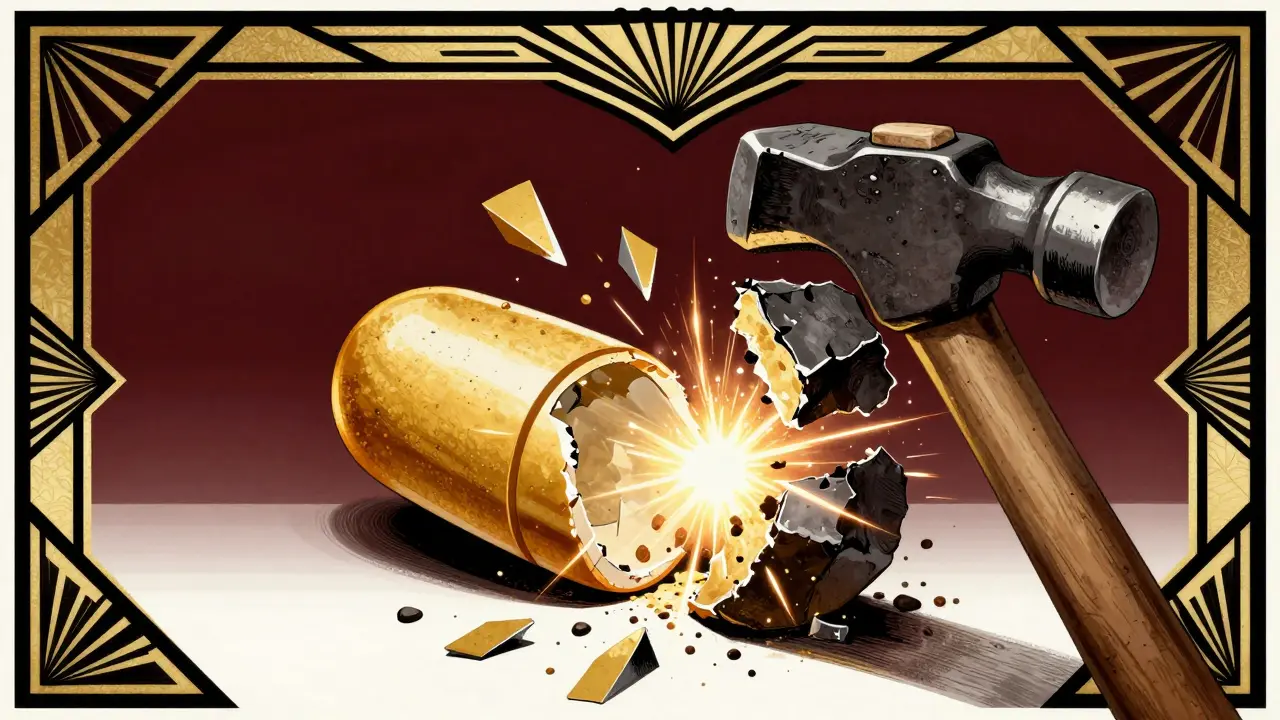
Tablet splitting, on the other hand, is the physical act of cutting a single pill. This is often done to save money-buying one large 80mg pill instead of two 40mg pills-or because a lower dose isn't available. While this sometimes works for immediate-release drugs, it is risky for many others. According to research published in the Journal of Managed Care & Pharmacy (2015), splitting enteric-coated or sustained-release tablets can disrupt their designed release mechanisms. This doesn't lower peaks; it creates unpredictable concentration spikes that increase the risk of side effects.
Think of it like drinking coffee. Dose splitting is like sipping a large cup slowly over an hour to avoid a caffeine crash. Tablet splitting is like trying to pour half a cup out of a sealed thermos without opening it properly-you might end up spilling it all at once or getting none at all.
Why Peak Concentrations Cause Side Effects
To understand why splitting helps, we have to look at pharmacokinetics. This is just a fancy word for what your body does to a drug. When you swallow a pill, it dissolves, enters your bloodstream, reaches a peak concentration (Cmax), and then gradually fades away as your liver and kidneys process it.
Many side effects are "concentration-dependent." This means they happen when the drug levels in your blood hit that sharp peak. If you take a full dose all at once, your body gets flooded. If you spread that same dose out, the peaks become smaller and flatter. You stay within the therapeutic window-the sweet spot where the drug works but doesn't hurt you.
This is especially critical for drugs with a narrow therapeutic index. These are medications where the difference between a helpful dose and a toxic dose is tiny. Drugs like warfarin (blood thinner) or digoxin (heart medication) fall into this category. For these, maintaining stable levels is non-negotiable. Fluctuations can lead to bleeding risks or heart rhythm issues. The Australian Prescriber (2015) notes that for these drugs, even small variations in dosing can have clinically significant consequences.
When Dose Splitting Actually Works
Not every drug benefits from being broken up. In fact, some get worse. So, how do you know if it’s safe for you? Here are the green lights:
- Short Half-Life: If a drug leaves your system quickly (less than 6 hours), splitting the dose helps maintain coverage without the rollercoaster effect. Immediate-release lisinopril for blood pressure is a good example. Taking 10mg twice daily instead of 20mg once daily can reduce peak concentrations by about 25%, potentially easing side effects like cough.
- Immediate-Release Formulations: These pills are designed to dissolve right away. They are generally safer to split physically if needed, provided they are scored (have a line down the middle).
- Gastrointestinal Sensitivity: Medications like metformin or NSAIDs (ibuprofen) often irritate the stomach. Spreading the dose out reduces the local irritation in the gut. A Reddit user reported reducing diarrhea incidence from 60% to 15% by splitting their metformin dose from twice-daily to four-times-daily.
However, you must check the specific drug. Some extended-release pills, like certain versions of bupropion or isosorbide monitrate, are engineered to be halved safely. But this is the exception, not the rule.
The Dangers of Physical Tablet Splitting
This is where things get tricky. Just because a pill has a score line doesn't mean it's safe to cut. Here is what can go wrong:
- Dosing Errors: Using a knife or scissors leads to huge variability. Studies show that without proper tools, 65% of patients produce splits with more than 15% dose variation. That means you might be taking way too much or way too little. A dedicated pill splitter reduces this error margin to 5-8%.
- Destroyed Coatings: Enteric coatings protect the drug from stomach acid or protect your stomach from the drug. Breaking this coating releases the entire dose at once. This can cause ulcers or rapid, dangerous absorption.
- Stability Issues: Once a tablet is split, the exposed surface area increases. Moisture and air can degrade the drug faster. The FDA recommends using split tablets within one week and storing them in their original container.
A stark example comes from an NIH case report (2023): a patient incorrectly split a 40mg lisinopril tablet, accidentally taking only 10mg. This led to a hypertensive emergency with systolic blood pressure exceeding 180 mmHg. On the flip side, splitting a controlled-release opioid can deliver the entire dose instantly, leading to overdose.
| Factor | Safe Approach (Dose Splitting) | Risky Approach (Improper Tablet Splitting) |
|---|---|---|
| Goal | Lower peak plasma concentration | Save money or fit pill size |
| Method | Take smaller amounts more frequently | Cut one large pill in half |
| Best For | Short half-life drugs, GI sensitivity | Scored, immediate-release, wide therapeutic index |
| Risk | Forgetfulness, complex schedule | Dosing errors, destroyed coatings, instability |
| Example | Metformin 500mg QID vs BID | Cutting extended-release tramadol |
Who Should Avoid Splitting Entirely?
Some medications are simply off-limits for any kind of splitting. The American Society of Health-System Pharmacists (ASHP) identified 11 classes of drugs where splitting is contraindicated regardless of formulation. These include:
- Immunosuppressants: Tiny changes in dose can lead to organ rejection or severe toxicity.
- Antiarrhythmics: Heart rhythm drugs require precise levels to prevent fatal arrhythmias.
- Chemotherapy Agents: Potency and safety margins are extremely tight.
- Extended-Release Opioids: Splitting can cause respiratory depression and death.
If you are elderly or taking multiple medications (polypharmacy), the risk goes up. Dr. Jerry Avorn from Harvard Medical School warns that tablet splitting creates substantial risks for this group due to cognitive load and potential for error. Always talk to your healthcare professional before making changes. The FDA emphasizes this point strongly.
Practical Steps for Safe Implementation
If your doctor approves splitting your dose, follow these steps to stay safe:
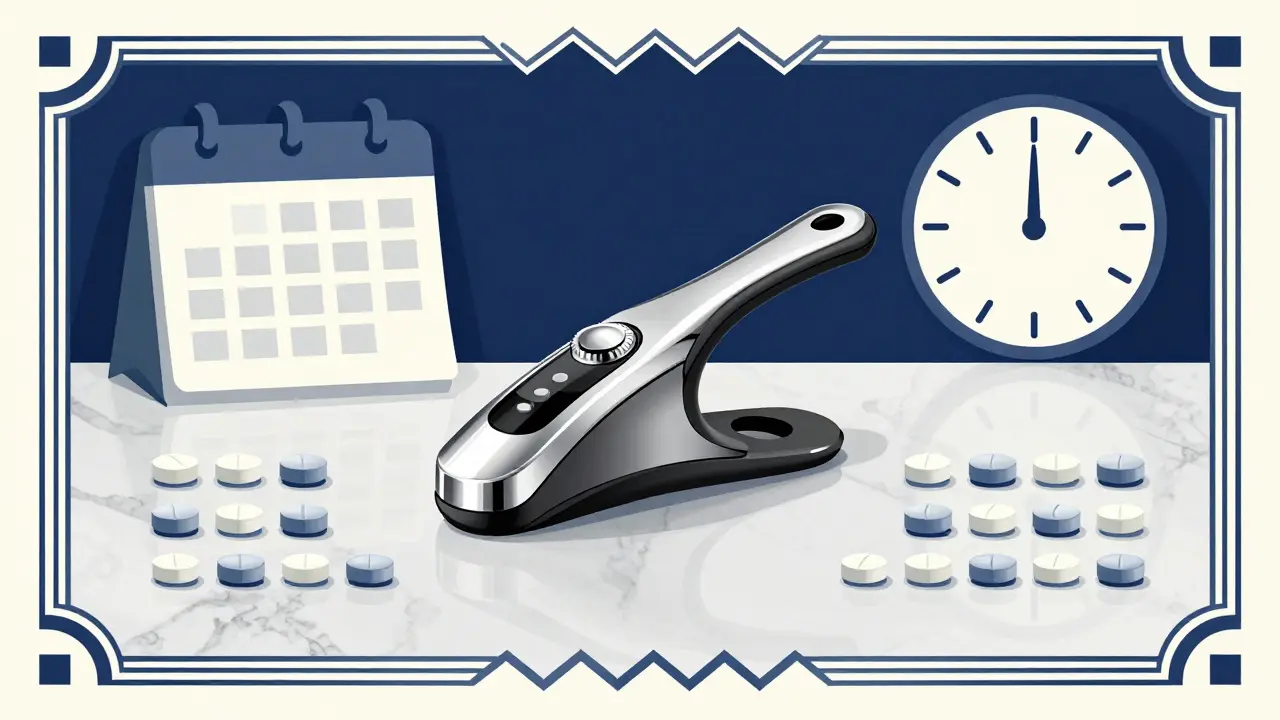
- Use a Pill Splitter: Do not use a kitchen knife. Buy a cheap plastic pill cutter. It ensures a cleaner break and more accurate halves.
- Check for Score Lines: Only split tablets that have a visible indentation. Unscrewd tablets can crumble or separate unevenly.
- Store Properly: Keep split halves in the original bottle or a labeled container. Use them within a week to prevent degradation.
- Monitor Closely: If you are splitting blood pressure or blood thinner meds, monitor your readings or INR levels closely for the first week. Look for signs of under-dosing (symptoms returning) or over-dosing (new side effects).
Remember, the goal is to improve your quality of life, not create new problems. If splitting causes more hassle than benefit, ask your doctor about alternative formulations. Pharmaceutical companies are increasingly releasing lower-dose options specifically to avoid the need for splitting.
Cost Savings vs. Safety Trade-offs
Money is a big reason people split pills. With prescription drug prices rising, saving $300 a year on statins by splitting 80mg tablets is tempting. However, calculate the cost of a mistake. An adverse event from inappropriate splitting can lead to hospital visits that cost far more than the savings. The JMCP analysis suggests that while appropriate splitting saves money, inappropriate splitting of narrow-therapeutic-index drugs like warfarin could increase adverse event risks by 15-20%. Always weigh the financial benefit against the clinical risk.
Can I split my extended-release pills to reduce side effects?
Generally, no. Extended-release (ER, XR, SR) pills are designed to release medication slowly over time. Cutting them destroys this mechanism, causing the entire dose to be released at once. This leads to higher peak concentrations and increased side effects, or even overdose. Exceptions exist for specific brands like some bupropion XL or isosorbide mononitrate ER, but you must verify with your pharmacist.
What is the best tool for splitting pills?
A dedicated pill splitter is the safest option. It reduces dosing variability to 5-8%. Using knives or scissors can result in up to 25% variability, meaning you might take significantly too much or too little of the drug. Ensure the splitter fits the size of your tablet.
How long can I store split pills?
The FDA recommends using split tablets within one week. Once the protective coating is broken, the drug is exposed to moisture and air, which can degrade its potency. Store them in the original container with the desiccant packet if possible, or in a tightly sealed, labeled container.
Does splitting doses work for anxiety medications?
It depends on the drug. For immediate-release benzodiazepines, splitting might help manage sedation peaks. However, for long-acting ones like clonazepam, splitting may not offer significant benefit due to their long half-life. Always consult your prescriber, as abrupt changes in dosing schedules can affect withdrawal risks.
Are scored tablets always safe to split?
No. A score line indicates the manufacturer tested the tablet for split accuracy, but it does not guarantee safety for all types. Never split enteric-coated, sustained-release, or narrow-therapeutic-index drugs even if they are scored. Check with your pharmacist to confirm if your specific medication is approved for splitting.