

For millions of people, statins are a daily pill that keeps heart attacks and strokes at bay. But for others, that same pill brings aching muscles, fatigue, and doubt. If you’ve been prescribed a statin-or are thinking about it-you’re probably weighing the science against how you feel. Is the benefit worth the risk? Let’s cut through the noise.
How Statins Actually Lower Cholesterol
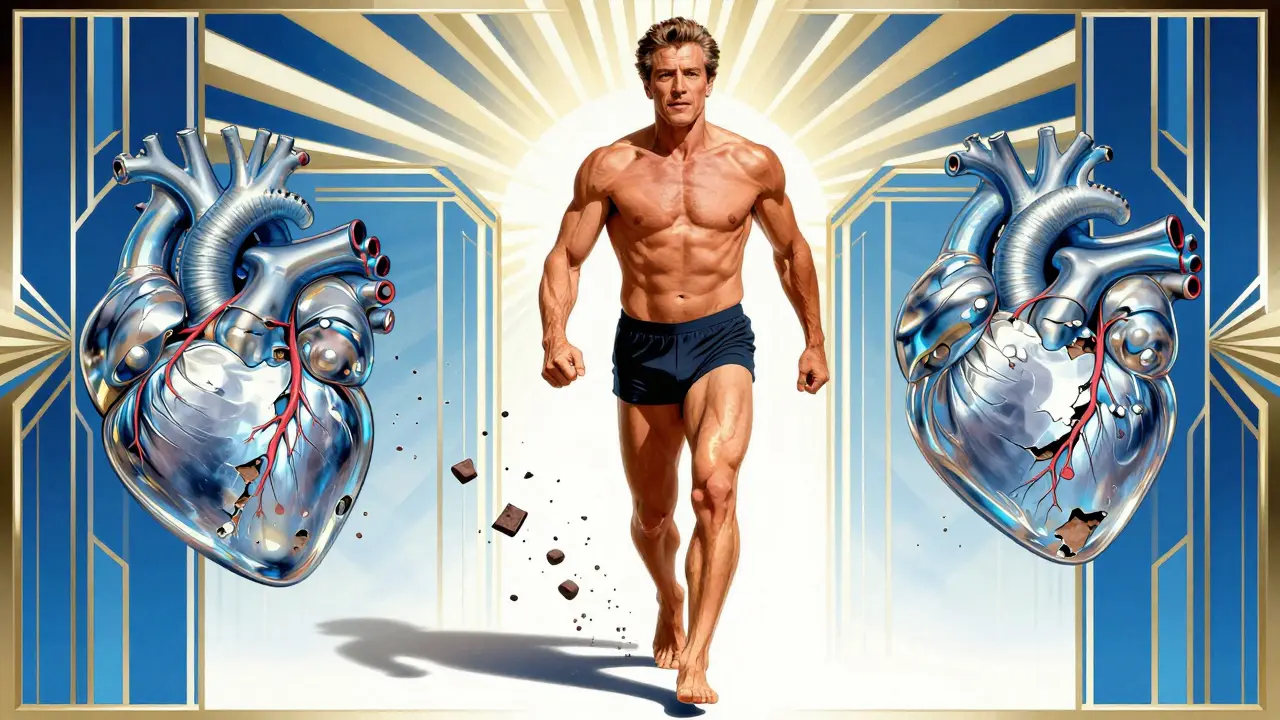
Statins don’t just "lower cholesterol" like a magic button. They work by blocking a specific enzyme in your liver called HMG-CoA reductase. This enzyme is the main factory for making cholesterol. When you shut it down, your liver makes less cholesterol. That’s the first step.Here’s the clever part: when your liver realizes it’s not making enough cholesterol, it starts pulling more LDL (the "bad" kind) out of your bloodstream to use as raw material. This drops your LDL levels fast. On average, statins reduce LDL by 1.8 mmol/L (about 70 mg/dL). That’s not a small change-it’s the difference between a high-risk heart profile and a much safer one.
Studies like the Scandinavian Simvastatin Survival Study and the Heart Protection Study showed that for every 1 mmol/L drop in LDL, your risk of a major heart event falls by about 22%. For someone with existing heart disease or diabetes, that could mean avoiding a heart attack over five years. High-intensity statins like atorvastatin 40-80 mg or rosuvastatin 20-40 mg can slash LDL by 50% or more. Even moderate doses, like simvastatin 20-40 mg, cut it by 35-45%.
It’s not just about LDL. Statins also slightly lower triglycerides and may nudge HDL (the "good" cholesterol) up a bit. But their real superpower? They stabilize plaque in your arteries. Plaque is that gunky buildup that can rupture and cause clots. Statins reduce inflammation in artery walls, lower levels of C-reactive protein, and make plaque less likely to break open. That’s why even people with normal cholesterol can benefit if they’re at high risk.
The Muscle Pain Problem
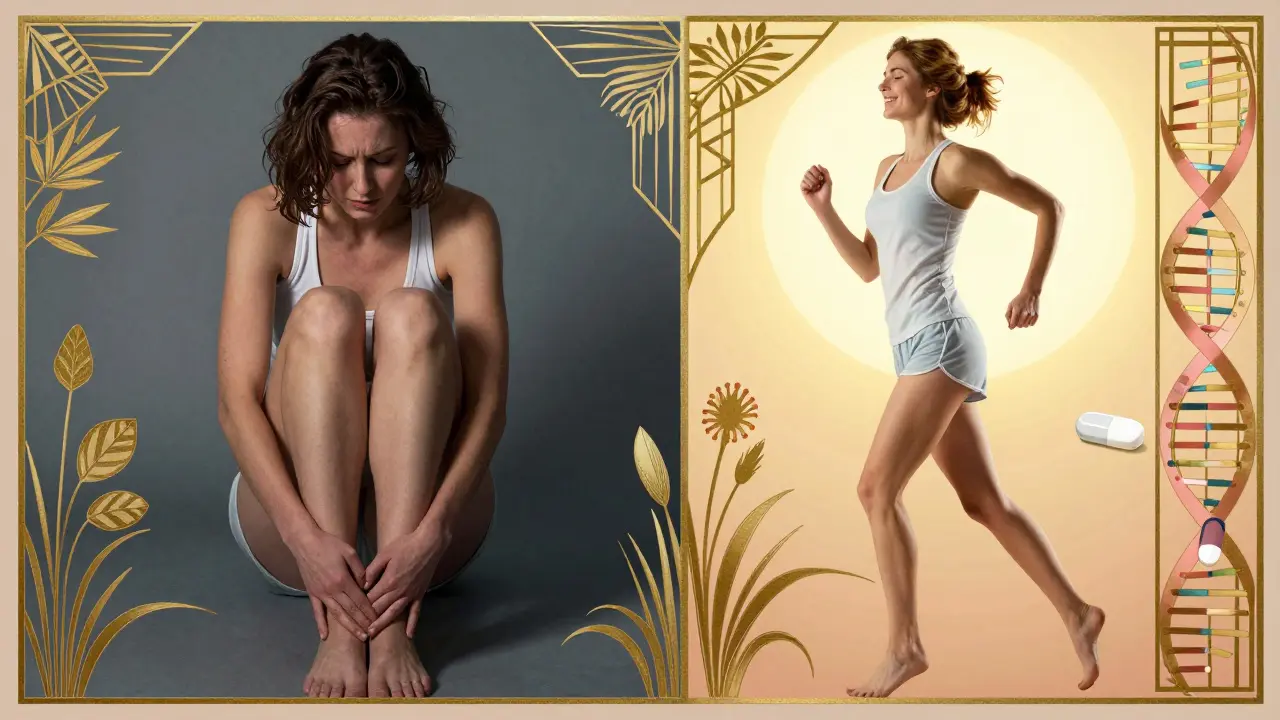
Now, the flip side: muscle pain. It’s the most common reason people stop taking statins. And it’s real-not just in your head.Between 5% and 29% of people on statins report muscle aches, weakness, or cramps. That’s not a tiny number. For some, it’s mild discomfort after a walk. For others, it’s legs so heavy they can’t climb stairs. In rare cases, it escalates to rhabdomyolysis-a serious breakdown of muscle tissue that can damage kidneys. But that happens in fewer than 1 in 1,000 people per year.
Why does this happen? Statins don’t just block cholesterol production. They also interfere with the production of coenzyme Q10, a compound your muscles need for energy. They also affect how certain proteins are processed in muscle cells. That’s why symptoms often show up after weeks or months-not right away.
Some people notice it on simvastatin. Others on rosuvastatin. Pravastatin and fluvastatin seem to cause fewer muscle issues. That’s not random. Different statins are processed differently in the body. Some are broken down by the liver’s CYP3A4 enzyme, which can be affected by other meds or even grapefruit juice. Others aren’t. That’s why switching statins often helps.
Who’s Most at Risk for Muscle Pain?
Not everyone gets muscle pain. But certain factors make it more likely:- You’re over 65
- You’re female
- You have a small body frame
- You take other meds like fibrates, certain antibiotics, or antifungals
- You have thyroid problems or vitamin D deficiency
- You drink alcohol regularly
- You have a genetic variant called SLCO1B1 that affects how your body handles simvastatin
It’s not about being weak or lazy. It’s biology. One study found that people with the SLCO1B1 gene variant are up to 4.5 times more likely to get muscle pain on simvastatin. That’s why some doctors now test for it-especially if you’ve had bad reactions before.
What to Do If You Have Muscle Pain
Don’t just quit. Talk to your doctor. Here’s what works:- Get a blood test. Check your creatine kinase (CK) levels. If they’re high, it’s a sign your muscles are breaking down. Normal CK doesn’t rule out discomfort, but it helps rule out danger.
- Try a different statin. Switching from simvastatin to pravastatin or fluvastatin often fixes the problem. Rosuvastatin can be easier on muscles than atorvastatin for some people.
- Lower the dose. Sometimes, 10 mg of atorvastatin gives you 80% of the benefit with 70% less risk of side effects.
- Take it every other day. For some, taking the statin every other day keeps LDL low enough while reducing muscle strain.
- Try coenzyme Q10. Some people swear by 100-200 mg daily. The science isn’t rock-solid, but it’s low-risk and might help.
- Check vitamin D. Low levels make muscle pain worse. Fix that first.
One patient I know-58, active, no heart disease-started on 20 mg simvastatin. Within three months, his thighs felt like concrete. He stopped. His LDL shot back up. He switched to 10 mg pravastatin. His muscles returned to normal. His LDL stayed at 2.1 mmol/L. He’s been on it for five years.
When Statins Are Worth It
Not everyone needs them. But if you fall into one of these groups, the benefits almost always outweigh the risks:- You’ve had a heart attack or stroke
- You have diabetes and are over 40
- Your 10-year risk of heart disease is 20% or higher (based on your age, blood pressure, cholesterol, smoking status)
- You have very high LDL (above 4.9 mmol/L) even without other risks
- You have a family history of early heart disease
For these people, statins aren’t optional. They’re life-preserving. The American Heart Association says that for every 1,000 high-risk patients on statins for five years, 20-30 heart attacks or strokes are prevented. That’s 20-30 people who don’t end up in the hospital, don’t lose mobility, don’t face long-term disability.
What About the Numbers?
Let’s be real. The fear of muscle pain makes people stop. But here’s what the data says:Out of 100 people on statins:
- 5-10 will have mild muscle aches
- 1-2 will have symptoms bad enough to stop the drug
- Less than 1 will develop serious muscle damage
- 2-3 will avoid a heart attack or stroke
That’s a 1 in 50 chance of avoiding a life-altering event. And a 1 in 50 chance of having side effects serious enough to quit. That’s not a gamble-it’s a calculated trade-off.
And here’s something most don’t tell you: many people who say they had "statin side effects" actually didn’t. In placebo-controlled trials, about 15% of people on sugar pills reported muscle pain. That’s right-some of the pain you blame on the drug might be from aging, inactivity, or just noticing your body more after starting a new pill.
What You Can Do Today
If you’re on a statin and feel fine-keep taking it. Don’t stop because of scary stories online.If you’re thinking about starting one, ask your doctor:
- "What’s my 10-year heart risk?"
- "Which statin do you recommend, and why?"
- "What should I watch for?"
- "Can we start low and adjust?"
If you’re already on one and have muscle pain:
- Don’t ignore it. Don’t power through.
- Don’t quit cold turkey.
- Do schedule a check-up. Get your CK and vitamin D tested.
- Ask about switching or lowering the dose.
Statins aren’t perfect. But they’re one of the most studied, most effective drugs ever made for preventing heart disease. The muscle pain is real-but it’s not inevitable. And for most people, it’s manageable.
What Comes Next
Researchers are working on new versions of statins that target blood vessels without hitting muscles. There’s also growing interest in genetic testing to predict who’s likely to have side effects. In the next five years, we may see personalized statin prescriptions based on your DNA, not just your cholesterol number.For now, the message is simple: don’t let fear stop you from protecting your heart. But don’t ignore your body, either. Work with your doctor. Test. Adjust. Find the right balance. Your arteries will thank you.
Do statins cause weight gain?
No, statins are not linked to weight gain. Some people report feeling more tired and moving less, which might lead to weight changes over time. But the drug itself doesn’t cause your body to store fat. If you’ve gained weight after starting statins, look at your diet, activity level, or other medications-not the statin.
Can I stop statins if my cholesterol is normal now?
Not without talking to your doctor. Statins work by keeping LDL low, not just lowering it once. If you stop, your liver will start making cholesterol again within days. Your levels will climb back to where they were-or worse. Stopping doesn’t "reset" your body. It undoes the protection.
Are natural alternatives like red yeast rice as effective as statins?
Red yeast rice contains a compound similar to lovastatin, the first statin. It can lower LDL by 20-30%, but it’s not regulated like prescription drugs. That means potency varies, and you can’t be sure what’s in each capsule. It also carries the same muscle pain risks as statins-without the safety monitoring. For high-risk patients, it’s not a safe substitute.
Why do some people say statins make them feel worse even if they don’t have muscle pain?
Some report brain fog, memory issues, or low energy. Studies haven’t proven this is caused by statins. In fact, most controlled trials show no difference in cognition between statin users and placebo groups. But if you feel it, talk to your doctor. It could be related to sleep, stress, or another condition. Sometimes switching statins helps-even if muscles are fine.
Is it safe to take statins with other medications?
It depends. Some drugs-like certain antibiotics (erythromycin), antifungals (ketoconazole), and grapefruit juice-can interfere with how your body breaks down statins, raising the risk of side effects. Always tell your doctor and pharmacist what you’re taking. Simvastatin and lovastatin are most affected. Atorvastatin and pravastatin are safer with other meds.
Trevor Whipple
January 13, 2026 AT 10:18statins are just big pharma’s way of makin’ us pay for bein’ lazy. i got my cholestrol down by eatin veggies and walkin my dog. no pill needed. also, grapefruit is evil, btw.
Lethabo Phalafala
January 14, 2026 AT 07:18I swear, my mom was on simvastatin for 2 years and her legs turned to jelly. She cried every time she tried to get out of bed. Then she switched to pravastatin and it was like a miracle-she started gardening again. Don’t let anyone tell you it’s all in your head. Your body talks. You just gotta listen.
Damario Brown
January 15, 2026 AT 17:02Let’s be real-this post is just a glorified ad for Big Pharma. The real issue? The CYP3A4 enzyme pathway is a fucking mess. Combine statins with azoles or macrolides? You’re playing Russian roulette with your myocytes. And don’t even get me started on the placebo-controlled trials where 15% of the sugar-pill group reported muscle pain. That’s not side effects-that’s the nocebo effect on steroids. Also, vitamin D deficiency is epidemic. Fix that first, then re-evaluate. Otherwise you’re just blaming the pill for your 3pm slump.
John Pope
January 16, 2026 AT 23:57Statins are the modern-day crucifixion. We’ve turned the human body into a machine that needs constant calibration, and we’ve outsourced our responsibility to a pill. The real question isn’t whether statins work-it’s why we’ve created a society where 80% of people over 50 need chemical intervention just to avoid dying from their own lifestyle. We’ve medicated the symptom while ignoring the disease: alienation, processed food, and the death of movement. My grandfather walked 5 miles a day. His LDL was 120. He never saw a doctor until he was 87. And he didn’t die of a heart attack-he died laughing at a joke about his neighbor’s toupee.
Avneet Singh
January 17, 2026 AT 22:50Statins reduce LDL by 1.8 mmol/L? That’s statistically significant but clinically negligible for low-risk populations. The NNT for primary prevention is abysmal. You’re better off optimizing your omega-3:omega-6 ratio and doing HIIT twice a week. Also, red yeast rice is perfectly fine if you source it from a reputable vendor. Regulation is a myth anyway-FDA doesn’t even test supplements properly. This post reads like a medical rep’s script.
Adam Vella
January 18, 2026 AT 12:45While the data on statin efficacy is robust, the psychological burden of long-term pharmaceutical dependency is underappreciated. Many patients experience a phenomenon known as ‘medication identity’-where their sense of self becomes entangled with pill-taking routines. This can exacerbate somatic awareness and amplify perceived side effects. Furthermore, the SLCO1B1 polymorphism is not routinely screened for in primary care due to cost-benefit constraints, despite its strong predictive value. A precision medicine approach is not merely idealistic-it is ethically imperative.
Nelly Oruko
January 20, 2026 AT 06:49I took atorvastatin for 6 months. Felt like a zombie. Stopped. My doctor said my LDL was fine now. I didn’t believe him. Got my own test. It was 4.8. Back on 10mg. No fatigue. No pain. Just… alive. Don’t quit because you’re scared. Quit because your doctor says so. And get your vitamin D checked. Always.
Alan Lin
January 20, 2026 AT 12:41If you’re experiencing muscle pain on statins, the first thing you need to do is stop blaming the medication and start evaluating your lifestyle. Are you sedentary? Dehydrated? Low on magnesium? Vitamin D? Are you taking NSAIDs daily? These are the real culprits 80% of the time. Statins are not the enemy. Ignorance is. Get your labs. Talk to your pharmacist. Try a different statin. Lower the dose. This isn’t rocket science-it’s basic clinical hygiene. And for those saying ‘I feel better off statins’-prove it with numbers, not anecdotes. Your body isn’t lying. But your interpretation might be.
mike swinchoski
January 21, 2026 AT 14:07So you’re telling me I can’t eat a burger and still live to 90? That’s just not fair. Also, I’ve been taking statins for 8 years and my muscles feel fine, but my wife says I’m moody. Maybe it’s the pill. Or maybe I’m just a grumpy old man. Either way, I’m not stopping.