
Imagine picking up your prescription at the pharmacy. You check the label, maybe glance at the barcode, and assume it's safe. But behind that simple scan lies a massive digital web designed to stop fake pills from reaching you. Supply chain security is the multi-layered regulatory and technological framework that tracks legitimate drugs from factory to patient to prevent counterfeiting and diversion. It’s not just about locking doors; it’s about ensuring every single package has a unique digital identity that can be verified in seconds.
The Core of Drug Protection: Serialization and Traceability
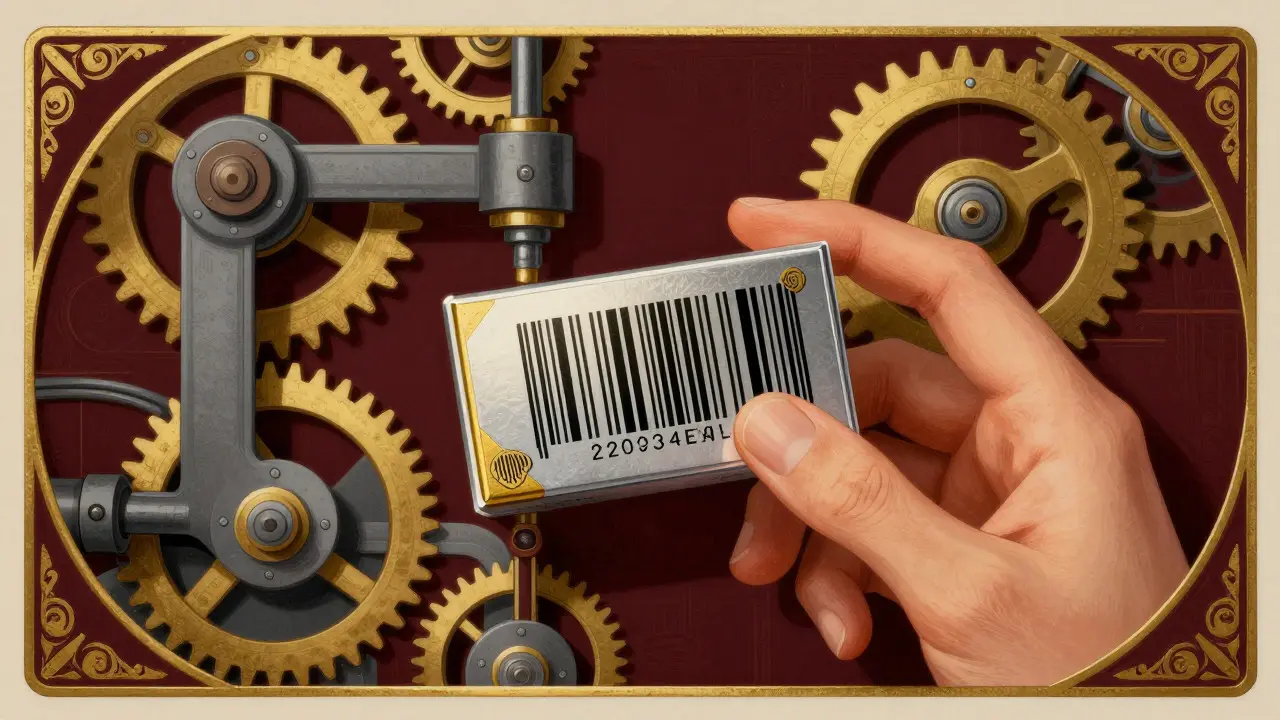
At the heart of modern drug protection is serialization. Think of it as giving every box of medication a unique fingerprint. Under the Drug Supply Chain Security Act (DSCSA), signed into U.S. law in 2013, every prescription drug package must carry a Unique Product Identifier (UPI). This isn't just a number; it’s a 2D Data Matrix barcode containing four critical pieces of data: the National Drug Code, a serial number, the lot number, and the expiration date.
This system creates roughly 1.2 million unique identifiers per day across the U.S. supply chain. Why does this matter? Because if a batch of cough syrup turns out to be contaminated, regulators don't have to guess where it went. They can trace exactly which pharmacies received it and pull it from shelves within hours. In 2022, during the infant formula crisis, implicated batches were traced and removed within 72 hours-a massive improvement over the previous average of 14 days.
How Data Flows: The Role of EPCIS
Having a unique ID on the box is useless if no one knows who owns it or where it is. That’s where data interoperability comes in. All trading partners-manufacturers, wholesalers, and pharmacies-are required to exchange transaction data using Electronic Product Code Information Services (EPCIS), a GS1-standardized system that processes over 15 million daily transactions with 99.95% accuracy.
When a wholesaler ships a pallet to a hospital, they send an electronic "handshake" confirming the transfer. When the hospital receives it, they verify the serial numbers against the manufacturer’s database. If there’s a mismatch, the system flags it immediately. This real-time visibility means that by November 2027, all major stakeholders will be exchanging this data electronically in a secure, interoperable format, eliminating paper-based errors that currently account for 14% of supply chain documentation issues.
Verifying Authenticity: The ATP Requirement
It’s not enough to know where a drug is; you also need to know if the supplier is legit. This is handled through Authorized Trading Partner (ATP) verification. Before doing business, companies must confirm their partners are approved by the FDA. The FDA’s DSCSA ATP Verification Router Service processes over 50,000 daily requests with a 99.8% success rate.
If a pharmacy gets an offer from a supplier they’ve never heard of, the ATP system checks their status instantly. This protocol has caught hundreds of illegitimate product offers from unauthorized suppliers. While some independent pharmacists note that false positives can cause minor workflow interruptions, the system remains a critical barrier against black-market goods entering the legal supply chain.
Global Differences: U.S. vs. Europe
Not every country plays by the same rules. The U.S. approach under DSCSA focuses heavily on electronic data exchange between private entities. In contrast, the European Union uses the Falsified Medicines Directive (FMD), which relies on a centralized repository model through the European Medicines Verification System (EMVS).
| Feature | U.S. (DSCSA) | EU (FMD) |
|---|---|---|
| Data Model | Decentralized electronic exchange | Centralized national repositories |
| Serialization Format | 20-character alphanumeric | 20-digit numeric code |
| Verification Trigger | Risk-based investigation | Mandatory decommissioning at dispensing |
| Daily Transaction Volume | ~15 million (via EPCIS) | ~1.8 million (via EMVS) |
These differences create challenges for multinational companies. A pharmaceutical firm operating in both regions must maintain two distinct compliance systems, leading to 22% higher compliance costs compared to domestic-only firms. However, international harmonization efforts, such as those led by the International Council for Harmonisation (ICH), aim to align these standards by 2026.
Implementation Challenges and Costs
Building this infrastructure isn’t cheap or easy. For mid-sized manufacturers, implementing serialization systems typically costs between $500,000 and $2 million. Smaller players feel the pinch more acutely. Independent pharmacies often spend around $18,500 annually on software and hardware, which can represent over 3% of their net profit.
The biggest hurdle isn't just cost; it's integration. Many legacy systems struggle to talk to new serialization platforms. According to a 2023 survey, 61% of logistics professionals cite "integration complexity" as their primary challenge. It takes an average of 14 months to fully implement these systems, requiring over 200 hours of staff training per facility. Despite these hurdles, 92% of manufacturers and 87% of wholesalers achieved full compliance by late 2023, proving that while difficult, the transition is manageable.
The Future: AI and Blockchain
The technology isn't standing still. As we move toward 2030, the focus is shifting from simple tracking to predictive analytics. Major pharmaceutical companies are testing blockchain integration to create immutable records of ownership, while artificial intelligence is being used to detect anomalies in shipping patterns. For example, if a shipment of insulin arrives in a region where demand is low, AI algorithms can flag it as suspicious before it even reaches the warehouse.
Cybersecurity is also becoming a top priority. The 2023 Change Healthcare cyberattack disrupted verification services for 72 hours, reminding everyone that digital security is as important as physical security. By 2027, when full interoperability is mandated, the goal is a seamless, secure network that reduces counterfeit incidents by another 95%, making the journey from pill bottle to patient safer than ever before.
What is a Unique Product Identifier (UPI) in pharmaceuticals?
A UPI is a set of human-readable and machine-readable codes printed on a prescription drug package. It includes the National Drug Code, serial number, lot number, and expiration date, allowing each package to be tracked individually throughout the supply chain.
How does the DSCSA protect patients from counterfeit drugs?
The DSCSA protects patients by requiring serialization and traceability of all prescription drugs. This allows regulators and healthcare providers to verify the authenticity of products quickly and remove suspect items from the market rapidly, reducing the risk of counterfeits reaching patients.
What is EPCIS and why is it important for drug supply chains?
EPCIS (Electronic Product Code Information Services) is a standardized system for exchanging product event data. It is crucial because it ensures that all trading partners share consistent, accurate information about where drugs are moving, enabling real-time visibility and rapid response to issues like recalls or diversions.
Is the U.S. drug supply chain system different from Europe's?
Yes. The U.S. uses a decentralized model based on the DSCSA, focusing on electronic data exchange between partners. Europe uses the FMD, which relies on centralized national repositories where product codes are decommissioned upon dispensing. These differences require multinational companies to manage separate compliance workflows.
How much does it cost to comply with drug supply chain security regulations?
Costs vary significantly by company size. Mid-sized manufacturers may spend $500,000 to $2 million on initial implementation. Independent pharmacies might pay around $18,500 annually for ongoing software and hardware maintenance. Larger enterprises invest in integrated platforms that combine serialization, tracking, and analytics.