
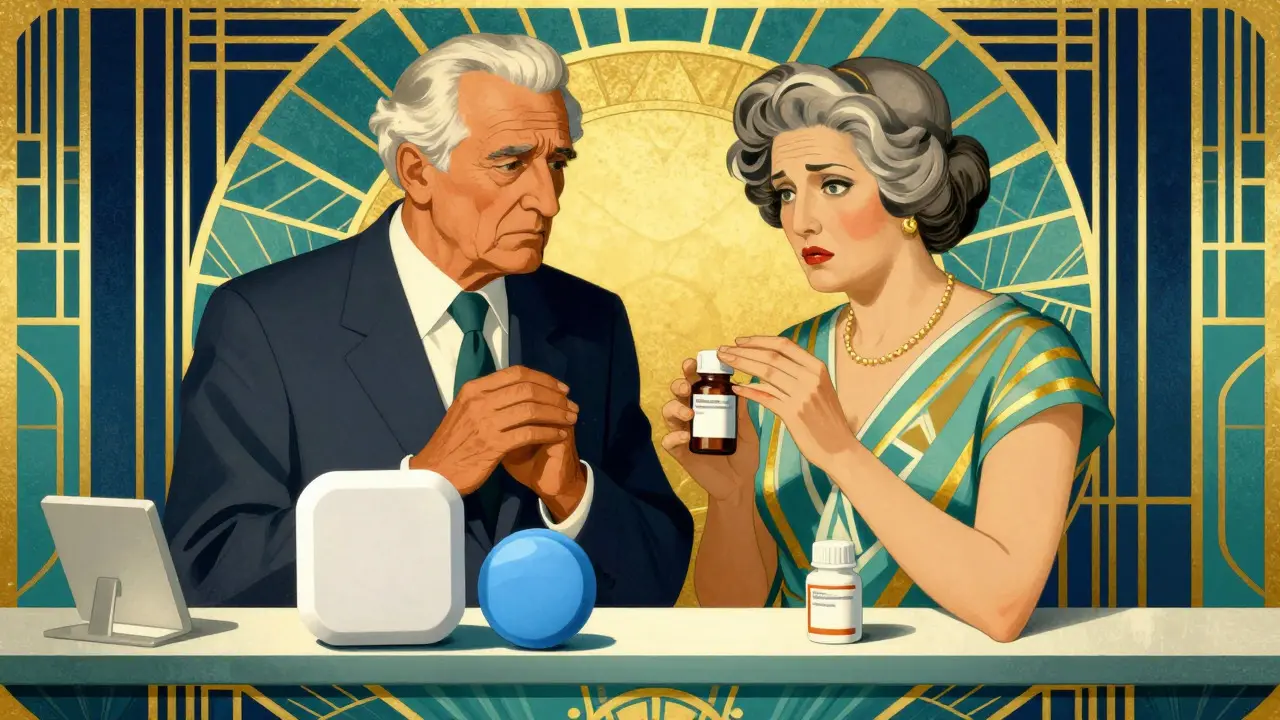
Imagine your parent or grandparent has been on the same blood thinner for years. Suddenly, the pharmacy hands them a pill that looks different-maybe it’s white instead of blue, or shaped like a square instead of a circle. They get nervous. They stop taking it. Or worse, they take both the old and new pills because they aren’t sure if the switch happened. This is a real scenario for many families dealing with generic medications in older adults. While generics are scientifically proven to be equivalent to brand-name drugs, the human factor in aging creates unique hurdles that doctors and caregivers often overlook.
The core issue isn't usually the chemistry; it's the perception and the physiology. Older bodies process drugs differently than younger ones, and older minds might struggle with the subtle changes in routine that come with a prescription swap. Understanding these age-related considerations can mean the difference between safe, cost-effective care and a preventable hospital visit.
Why Perception Matters More Than Chemistry in Aging Bodies
You might think, "But the FDA says they're the same." And you’re right. By law, generic drugs must contain the same active ingredient, strength, dosage form, and route of administration as their brand-name counterparts. The regulatory standard requires bioequivalence margins of 80-125%, meaning the drug reaches the bloodstream at a similar rate and extent. However, science doesn't account for anxiety.
A 2023 study published in the *Journal of the American Medical Directors Association* surveyed 315 non-demented Medicare-enrolled patients over 65. Fewer than 50% believed generic drugs were as effective or safe as the originals. Why this gap? It comes down to familiarity. For decades, patients have associated specific colors and shapes with specific feelings of relief. When that visual cue changes, trust wavers. In a population where health literacy is already a challenge-affecting roughly 36% of adults aged 65+ according to National Assessment of Adult Literacy data-this doubt can lead to non-adherence. If an elderly patient skips doses because they don't trust the new pill, the generic is no longer just a cost-saving measure; it becomes a clinical risk.
The Physiology of Aging: Why Small Differences Matter
Beyond psychology, there are biological reasons to pay extra attention when switching medications in seniors. As we age, our organs don't work exactly the way they did at 30. Kidney function naturally declines. For patients over 85, estimated creatinine clearance often drops below 50 mL per minute. This means the body clears drugs more slowly. If a generic formulation releases its active ingredient even slightly faster or slower than the brand version, a healthy 40-year-old might not notice. An 85-year-old with compromised kidneys might experience side effects or reduced efficacy.
This is particularly critical for what pharmacists call "narrow therapeutic index" (NTI) drugs. These are medications where the difference between a helpful dose and a toxic dose is very small. Warfarin (a blood thinner) and levothyroxine (for thyroid issues) are classic examples. A 2021 study in the *Canadian Medical Association Journal* involving over 134,000 patients found an 18.3% higher risk of emergency department visits within 30 days of switching warfarin formulations. The American Geriatrics Society explicitly recommends against automatic substitution of brand warfarin without close monitoring of INR levels in elderly patients. If you or a loved one is on these types of drugs, the switch needs to be monitored, not just assumed.

Polypharmacy: The Multiplier Effect
Most elderly patients don't just take one medication. They take five, ten, or more. This is known as polypharmacy. According to 2022 CMS data, nearly 46% of Medicare beneficiaries aged 65+ use at least five medications daily. When you mix multiple drugs, the interactions become complex. Switching one component of that cocktail can shift the balance.
Consider the potential for adverse drug events (ADEs). A 2024 systematic review in *JAMA Network Open* highlighted that older adults account for a significant portion of ED visits related to medication issues. The risk escalates when potentially inappropriate medications (PIMs) are involved. Studies show PIM use increases the risk of ADE-related hospitalization by 91%. If a generic substitution leads to a slight change in how a drug interacts with another, or if the patient gets confused and double-doses due to confusion about the switch, the cumulative effect can be dangerous. This is why medication reconciliation-a thorough review of all current meds-is essential before and after any switch.
Navigating the Confusion: Practical Steps for Caregivers
So, how do you manage this safely? You don't need to be a pharmacist, but you do need to be proactive. Here is a practical approach to ensure the transition is smooth:
- Ask the Pharmacist for a Visual Comparison: Don't just accept the box. Ask the pharmacist to show you the old and new pills side-by-side. Explain the color or shape difference clearly. If the patient uses a pill organizer, label the new slot distinctly so they know what to expect.
- Use the "Teach-Back" Method: This is a technique recommended by the Agency for Healthcare Research and Quality (AHRQ). After explaining the switch, ask the patient to explain it back to you. "Can you tell me which pill you'll take in the morning now?" This confirms understanding and boosts confidence. Studies show this method improves adherence by 42% in low-literacy populations.
- Monitor for Changes, Not Just Symptoms: Keep a simple log for two weeks after the switch. Note any new headaches, dizziness, or changes in energy. For NTI drugs like warfarin, schedule the blood test immediately after the switch, not waiting for the next regular appointment.
- Check Over-the-Counter Interactions: Many elderly patients self-medicate with OTC drugs like ibuprofen or aspirin for pain. A 2017 NIH study found that over 50% of major ADEs in older adults involve OTC medications. Ensure the new generic doesn't interact with these hidden additions.

Cost vs. Confidence: The Economic Reality
Why switch at all? The financial incentive is massive. In 2022, Medicare Part D beneficiaries filled 527.3 million generic prescriptions, representing 89.2% of all prescriptions. The average savings are around $602 per beneficiary annually. For many seniors on fixed incomes, this money pays for groceries or utilities. However, if the cost savings lead to non-adherence due to fear, the economic benefit is lost. A missed dose of blood pressure medication can lead to a stroke, costing thousands in hospital care. The goal is to find the balance where the financial relief supports, rather than undermines, consistent treatment.
| Feature | Brand-Name Drug | Generic Drug |
|---|---|---|
| Active Ingredient | Original formulation | Identical chemical structure |
| Bioequivalence Standard | Reference standard | 80-125% margin of equivalence |
| Patient Perception | High familiarity/trust | Variable; often lower trust due to appearance changes |
| Cost Impact | Higher out-of-pocket costs | Avg. $602/year savings for Medicare users |
| Risk for NTI Drugs | Stable baseline | Requires closer monitoring (e.g., INR checks) |
When to Be Extra Cautious
Not all switches are created equal. You should exercise heightened caution if the patient falls into any of these categories:
- Taking Narrow Therapeutic Index Drugs: Warfarin, digoxin, phenytoin, lithium, or levothyroxine. These require precise blood levels.
- Has Cognitive Impairment: Even mild memory issues can make tracking a new pill regimen difficult. Use automated dispensers if possible.
- Experiences Significant Side Effects: If the brand drug caused minor nausea, the generic might trigger a stronger reaction due to slight differences in inactive ingredients (excipients).
- Is on Polypharmacy (5+ Meds): The interaction web is too complex for guesswork. Involve a clinical pharmacist for a full review.
Remember, the switch to generics is a tool for sustainability, not a gamble. With the right monitoring and communication, elderly patients can enjoy the benefits of lower costs without sacrificing safety. The key is treating the switch as a managed event, not an automatic background process.
Are generic drugs really the same as brand-name drugs for elderly patients?
Chemically, yes. They must meet FDA bioequivalence standards (80-125%). However, for elderly patients, physiological changes like reduced kidney function can make them more sensitive to slight variations in absorption rates, especially for narrow therapeutic index drugs like warfarin. Therefore, while they are legally equivalent, clinical monitoring is crucial during the transition.
What should I do if my parent refuses to take their new generic pill?
Don't force it immediately. First, validate their concern. Show them the physical difference between the old and new pill. Use the "teach-back" method to ensure they understand why the change happened. If anxiety persists, ask the doctor if a different generic manufacturer can be tried, as some brands may look closer to the original. In extreme cases, staying on the brand name may be worth the cost to ensure adherence.
How long should I monitor my elderly relative after switching to a generic?
For most common medications, watch for the first 2-4 weeks. For narrow therapeutic index drugs like warfarin or levothyroxine, schedule a blood test within 1-2 weeks of the switch. Keep a symptom diary noting any new or worsening side effects. If symptoms return that had previously subsided, contact the healthcare provider immediately.
Does polypharmacy increase the risk of switching to generics?
Yes. Taking five or more medications increases the complexity of drug interactions. A change in one drug's absorption profile can alter how it interacts with others. This makes medication reconciliation and pharmacist consultation more important for polypharmacy patients than for those taking only one or two drugs.
Are there specific drugs where generic switching is risky for seniors?
The highest risk involves Narrow Therapeutic Index (NTI) drugs. These include anticoagulants (warfarin), anti-seizure meds (phenytoin), thyroid hormones (levothyroxine), and heart failure meds (digoxin). For these, the American Geriatrics Society recommends avoiding automatic substitution without close lab monitoring to ensure blood levels remain in the safe zone.