

When your pharmacist hands you a pill that looks completely different from what you’ve been taking, it’s normal to feel uneasy. Maybe it’s a smaller tablet, a different color, or even a weird shape. You might wonder: Is this really the same thing? The short answer is yes - if it’s an FDA-approved generic. But there’s more to it than just active ingredients. Switching from a brand-name drug to its generic version isn’t just about saving money. It’s about understanding what stays the same, what might change, and when you should speak up.
Generics Aren’t Cheap Copies - They’re Required to Be the Same
Generic drugs aren’t knockoffs. They’re legally required to contain the exact same active ingredient, in the same strength, and work the same way in your body as the brand-name version. The FDA doesn’t allow a generic to hit shelves unless it proves it delivers the same amount of medicine into your bloodstream at the same rate. This is called bioequivalence, and it’s not a suggestion - it’s a strict rule. For most drugs, the amount of medicine your body absorbs from a generic must fall within 80% to 125% of the brand-name drug’s absorption rate. In practice, most generics are within 4% of the brand. That’s tighter than many people realize.
Think of it like two identical cars with different paint jobs. One is a red Honda Civic from 2023, the other is a blue one from the same model year. They have the same engine, same transmission, same fuel efficiency. You just see a different color. That’s what generics are. The active ingredient - the part that treats your condition - is identical. The rest? That’s just packaging.
What Actually Changes? Appearance and Inactive Ingredients
The biggest difference you’ll notice is how the pill looks. Generics have to look different from the brand-name version. Why? Because trademark laws say you can’t copy the exact shape, color, or marking of a branded drug. So your blue 10mg Lisinopril tablet from the brand might become a white oval pill with a different imprint. It’s not a trick. It’s the law.
Beyond looks, the inactive ingredients can change. These are the fillers, dyes, binders, and preservatives that hold the pill together or help it dissolve. They don’t treat your condition, but they can cause problems for a small number of people. If you’re allergic to red dye #40, for example, you might react to one generic version but not another. The same goes for lactose, gluten, or certain preservatives. That’s why you should always check the Patient Package Insert (PPI) that comes with your prescription. It lists every inactive ingredient. If you’ve had reactions to medications before, this is your checklist.
Cost Savings Are Real - and Massive
Switching to a generic isn’t just a small discount. It’s often an 80% to 85% price drop. A brand-name cholesterol pill might cost $350 a month. The generic? Around $15. That’s not a typo. According to CMS data from 2022, patients save an average of $378 per prescription annually by switching. For people on multiple medications - like those with diabetes, high blood pressure, or depression - that adds up to thousands of dollars a year.
And the savings aren’t just personal. Medicare Part D beneficiaries saved an average of $1,268 per year in 2022 by using generics instead of brand-name drugs. Kaiser Permanente found that diabetic patients on generic metformin were 78% more likely to stick with their medication than those on the brand-name version, Glucophage. Why? Because they could actually afford it. Skipping doses because of cost is one of the biggest reasons treatments fail. Generics fix that.

When You Should Be Cautious
Most of the time, generics work just as well. But there are exceptions. The FDA calls them “narrow therapeutic index” (NTI) drugs. These are medications where even a tiny change in blood levels can cause serious problems. Think: warfarin (blood thinner), levothyroxine (thyroid hormone), phenytoin, and carbamazepine (both used for seizures).
For these drugs, small differences in how your body absorbs the medicine can mean the difference between control and crisis. A 2021 study from the American Epilepsy Society found that 12.7% of patients switching between different generic versions of antiseizure drugs had breakthrough seizures. That’s three times higher than patients who stayed on one formulation. It’s not that generics are unsafe - it’s that consistency matters more here. If you’re on one of these drugs, your doctor might recommend sticking with the same manufacturer’s generic - or even the brand - if switching causes issues.
Some complex delivery systems also pose challenges. Generic inhalers, topical creams, and eye drops don’t always behave the same way as the brand. In 2020, the FDA warned that some generic versions of Advair Diskus didn’t disperse the powder the same way, potentially reducing effectiveness. These aren’t common, but they exist. If you notice your inhaler feels different, or your skin rash isn’t improving after switching, tell your provider.
What to Do When You Switch
Don’t just take the new pill and hope for the best. Here’s what to do:
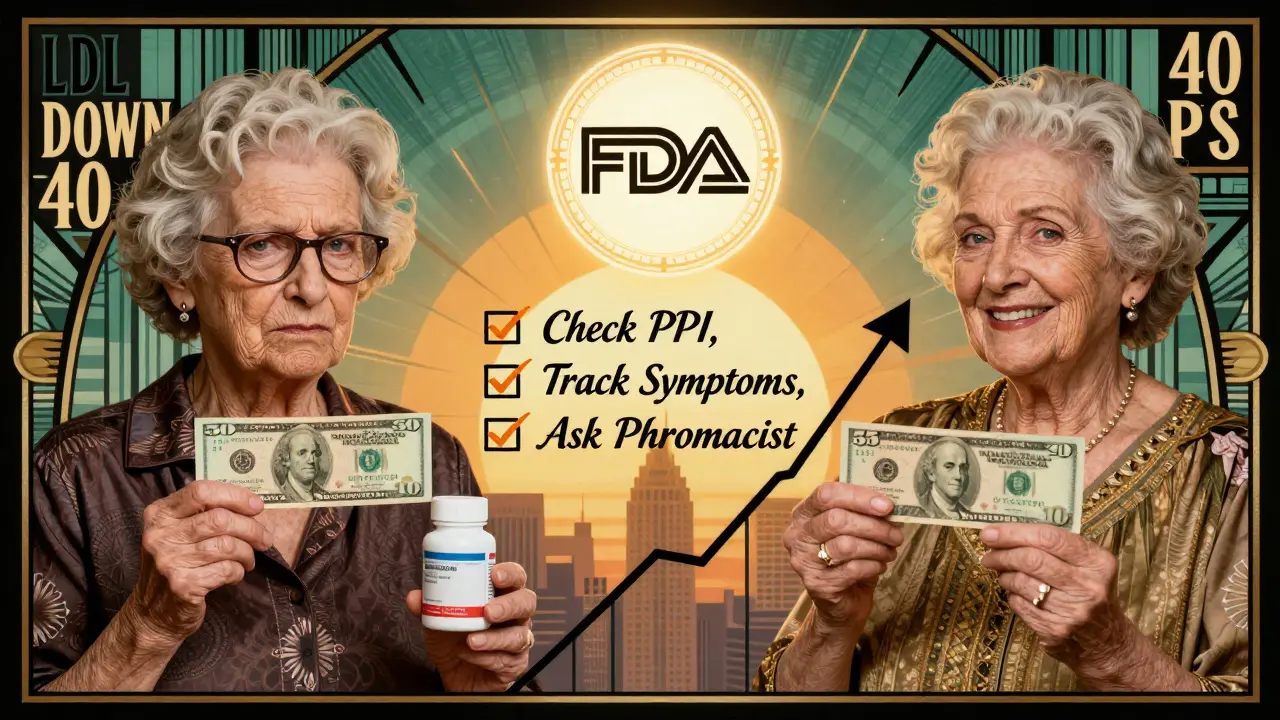
- Ask your pharmacist to explain the differences. They’re required to give you a 5-7 minute counseling session when switching generics in most states. Use it.
- Check the PPI. Look for dyes, lactose, gluten, or other allergens you know you react to.
- Track your symptoms for the first two weeks. Keep a simple log: energy levels, side effects, pain, mood, blood sugar, blood pressure. Write it down.
- Know your warning signs. For blood thinners like warfarin, an INR change of more than 0.5 units matters. For diabetes, a fasting glucose jump of 20 mg/dL or more is a red flag. For depression or anxiety, if your PHQ-9 or GAD-7 scores get worse, it’s time to talk.
- Don’t assume all generics are the same. One generic version of your drug might work perfectly. Another from a different manufacturer might not. If you feel worse after switching, ask your pharmacist if you can go back to the previous version - even if it’s the brand.
Real Stories: Most People Are Fine - But Some Aren’t
On Reddit’s r/Pharmacy, over 300 people shared their experiences switching to generics. 83% said they noticed no difference. But 17% did. Some reported new side effects - dizziness, nausea, fatigue. Others said the medication just didn’t work as well. One 82-year-old woman in Ohio accidentally took double her dose because the new generic looked nothing like her old pill. She ended up in the ER with dangerously low blood pressure.
On the flip side, Maria Rodriguez from Phoenix told ABC15 she was skipping her cholesterol meds because the brand cost $350 a month. After switching to the generic at $15, she started taking it every day. Her LDL dropped 40 points in three months. She didn’t need a new doctor. She didn’t need a new plan. She just needed a cheaper pill that worked the same.
Patients give generics an average rating of 4.2 out of 5 stars. Brands? 4.3. The biggest complaint? Confusion over appearance. Not effectiveness.
What’s Changing Soon
The FDA is pushing for better labeling. By 2025, all generic drug packaging must clearly list potential allergens in plain language - not buried in fine print. The Inflation Reduction Act of 2022 also means Medicare will cover all approved generics without prior authorization starting in 2024. That’s a big win for seniors.
More complex generics are coming too - like orally disintegrating tablets, transdermal patches, and biosimilars for biologic drugs like Humira. These aren’t simple pills. They’re advanced formulations, and their generics will be harder to make. But they’re coming. And they’ll be cheaper.
Bottom Line: Switch With Confidence - But Stay Aware
For 9 out of 10 people, switching to a generic is a smart, safe, and cost-saving move. Your medicine will work the same. You’ll save hundreds - maybe thousands - a year. You won’t lose effectiveness.
But if you’re on a narrow therapeutic index drug, have allergies, or notice something feels off after switching, don’t brush it off. Talk to your pharmacist. Call your doctor. Keep a log. You know your body best. Generics are a tool, not a gamble. Use them wisely, and they’ll work for you - not against you.
Matt Beck
January 5, 2026 AT 20:05So let me get this straight... we're talking about a blue pill vs. a white pill, and somehow that's a crisis? 🤯 I mean, if your body can't tell the difference between a red Honda and a blue one... maybe it's not the pill, it's the existential dread? 😅💊
Kelly Beck
January 6, 2026 AT 22:20I just want to say how amazing it is that we’re having this conversation - so many people are scared to switch because they don’t understand, but the science is actually so reassuring! 💖 I’ve seen friends go from skipping meds because of cost to taking them daily, and their lives changed. It’s not just about money - it’s about dignity, consistency, and hope. You’re not just saving cash, you’re saving *lives*. And that? That’s beautiful. 🌈✨
Molly McLane
January 7, 2026 AT 17:39For anyone new to this: don’t panic when the pill looks weird. It’s not a scam. It’s just the law making sure Big Pharma can’t copyright a shape. 😅 I’ve switched generics for blood pressure, thyroid, and antidepressants - and honestly? The only difference was the price. My pharmacist even showed me the FDA bioequivalence chart - it’s wild how tight the range is. If you’re not on a narrow therapeutic index drug, you’re probably fine. And if you’re not sure? Ask. Always ask. No shame in being cautious.
Katie Schoen
January 8, 2026 AT 18:58Y’all are acting like switching generics is like swapping your spouse for a lookalike. 🤦♀️ I’ve taken the same generic for 8 years. My anxiety? Gone. My wallet? Happy. My pill? Looks like a tiny chalky rock now. Still works. The real drama is paying $300 for a pill that’s chemically identical to one that costs $12. That’s not medicine - that’s corporate theater.
Beth Templeton
January 10, 2026 AT 11:02NTI drugs matter. Everything else is noise.
Ryan Barr
January 10, 2026 AT 19:22It’s fascinating how the masses equate visual similarity with therapeutic equivalence. Aesthetics are not pharmacokinetics. The FDA’s 80-125% window is a statistical abstraction - real human physiology doesn’t care about confidence intervals. You’re essentially gambling with bioavailability. And yet, you trust it? How quaint.
Dana Termini
January 12, 2026 AT 06:20I used to be terrified of generics until I switched my blood pressure med. I was skeptical, but I tracked my numbers for two weeks. No change. No dizziness. No weird side effects. Just a $330 monthly savings. I wish I’d done it sooner. If you’re nervous, log your symptoms. You might be surprised how little changes.
Wesley Pereira
January 13, 2026 AT 18:58Bro. I switched my levothyroxine to a generic and my TSH went from 2.1 to 5.8. Like... what? I didn’t even change my dose. The brand was $40, generic was $8. But my brain felt like wet cardboard for 3 weeks. So yeah - I went back. Not because I’m a hypochondriac - because my body said NO. And guess what? My doc didn’t even bat an eye. They said: ‘Stick with what works.’ Sometimes, consistency > cost. Just saying.
Ashley S
January 14, 2026 AT 04:23So you’re telling me I’m supposed to trust some random Chinese factory’s pill that looks like a crushed aspirin? No thanks. I’d rather pay $300 and sleep at night. This is my HEALTH we’re talking about, not my grocery budget. 🙄
Rachel Wermager
January 15, 2026 AT 19:16Actually, the 80-125% bioequivalence range is a regulatory loophole - not a scientific guarantee. The FDA allows up to 25% variability in AUC and Cmax, which for NTI drugs like warfarin can be clinically significant. Multiple studies show increased hospitalizations with generic switches in anticoagulant therapy. The real issue? The FDA doesn’t require bioequivalence testing for every batch - only one per manufacturer. That’s not safety. That’s convenience.
Leonard Shit
January 16, 2026 AT 08:21my pharmacist gave me the generic for my antidepressant and i felt like a zombie for 10 days. i thought i was going crazy. turned out the new one had a different filler - lactose. i’m lactose intolerant. didn’t even think to check the PPI. now i always do. don’t be me. check the tiny print. your gut (and brain) will thank you.