
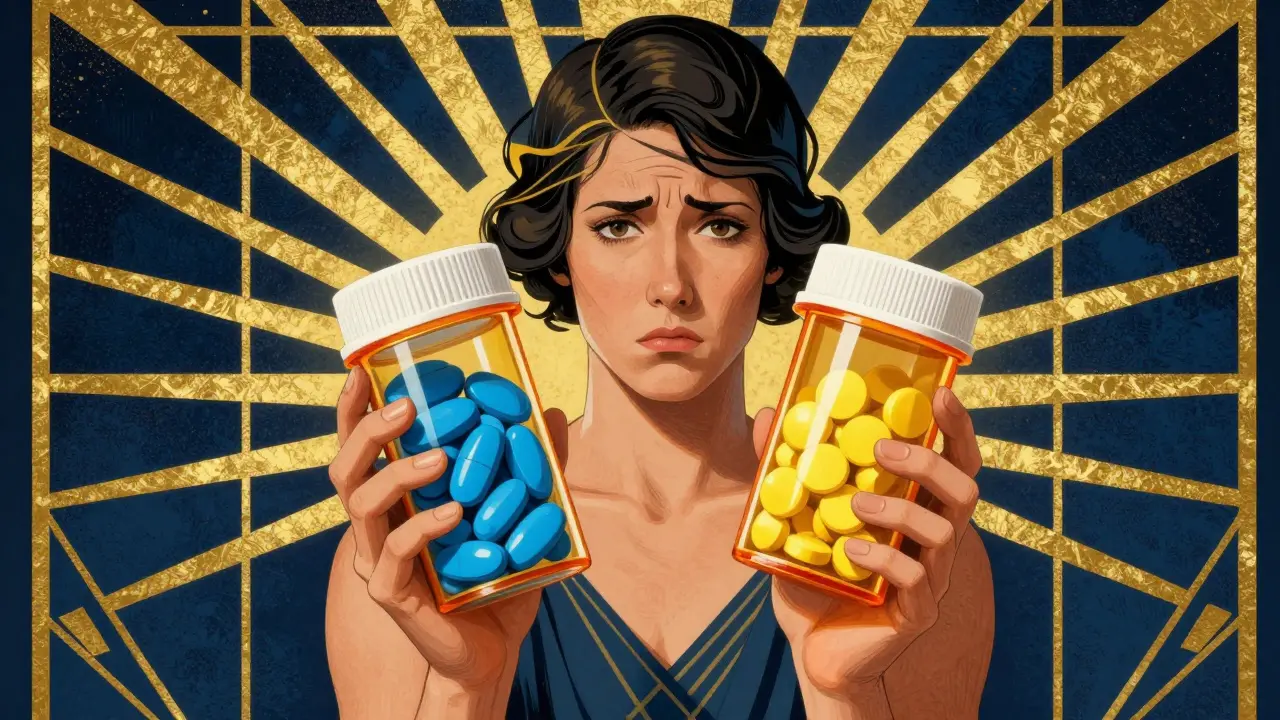
You reach for your daily blood pressure medication, but the pill in your hand looks wrong. It’s a different color. Maybe it’s round instead of oval. Or perhaps the text stamped on it is completely unfamiliar. Panic sets in. Did the pharmacy make a mistake? Is this actually a different drug?
This scenario plays out in households across the United Kingdom and beyond every single day. If you take chronic medications, you have likely noticed that your pills change appearance from one refill to the next. It is unsettling, but it is also completely normal. The short answer is that your medication is almost certainly safe, even if it looks like a stranger.
Understanding why these generic drug appearance differences exist can help you stop worrying about every new prescription bottle. Let’s break down what is happening behind the scenes at the pharmacy and how you can manage these changes without compromising your health.
Why Do Generic Pills Look So Different?
To understand the visual chaos of generic medications, we need to look at how drugs are approved. When a company creates a new drug, they hold a patent. Once that patent expires, other companies can manufacture the same medication as a generic version. These generics must be bioequivalent to the original brand-name drug. This means they contain the exact same active ingredient, in the same strength, and work the same way in your body.
However, trademark laws step in here. Brand-name manufacturers own the rights to the specific look of their pills-their unique shape, color, and markings. Generic manufacturers cannot copy this look exactly, or they would be infringing on trademarks. Imagine if every coffee shop served coffee in the exact same cup with the same logo; you wouldn’t know who you were buying from. Similarly, pharmaceutical companies must differentiate their products visually.
This legal requirement forces generic makers to choose their own colors and shapes. One manufacturer might make a white, round tablet for a specific antibiotic. Another manufacturer might produce a pale yellow, oblong version of the exact same drug. Both are correct. Both are effective. They just look different because the law requires them to.
The Science Behind the Shape and Color
It is not just about avoiding lawsuits. The physical characteristics of a pill-its size, shape, and coating-are part of its manufacturing process. Regulatory bodies like the FDA (Food and Drug Administration) and the EMA (European Medicines Agency) require rigorous testing to ensure these variations do not affect how the medicine works.
Generic drugs undergo dissolution testing. This measures how quickly the pill breaks down and releases the active ingredient into your system. The results must fall within a strict range, typically between 80% and 125% of the reference brand-name drug’s performance. As long as the drug dissolves correctly, the external appearance is considered secondary.
Inactive ingredients also play a role. While the active ingredient is the same, fillers, binders, and dyes can vary between manufacturers. These inactive components give the pill its final texture and color. For example, one manufacturer might use a different type of sugar filler than another, which can slightly alter the weight or feel of the tablet, though not its potency.
| Attribute | Brand-Name Drug | Generic Drug |
|---|---|---|
| Active Ingredient | Identical | Identical |
| Dosage Strength | Identical | Identical |
| Pill Color | Fixed (Trademarked) | Varies by Manufacturer |
| Pill Shape | Fixed (Trademarked) | Varies by Manufacturer |
| Price | Higher | Lower (Often 80% less) |

When Appearance Changes Matter
While most patients adapt easily to new pill appearances, some groups face higher risks. Research from Harvard Medical School found that when the appearance of cardiovascular medications changed, patients were 34% more likely to discontinue their treatment compared to those with consistent-looking pills. This is a significant safety concern.
Elderly patients are particularly vulnerable. A survey by the American Association of Retired Persons (AARP) reported that 37% of adults aged 65 and older expressed difficulty recognizing their medications when the appearance changed. Visual impairment or cognitive decline can make it harder to distinguish between a new generic pill and a different medication entirely.
Patients taking multiple medications are also at risk. If you take five or six different pills daily, relying on memory or visual cues becomes dangerous. A study published in the American Journal of Managed Care documented that 32.7% of patients refilling chronic condition medications experienced appearance variations when the generic manufacturer changed. This "visual disconnect" creates unnecessary cognitive load, leading to potential errors.
Confusion can lead to skipped doses or accidental double-dosing. For instance, a patient might mistake a newly colored metformin pill for their levothyroxine because both are small and white, but one has recently turned pink due to a manufacturer switch. These errors are preventable but require awareness.
How to Manage Pill Appearance Changes
You do not have to accept confusion as part of your healthcare routine. There are practical steps you can take to ensure safety and peace of mind.
- Talk to your pharmacist: Pharmacists are your first line of defense. If your pill looks different, ask them immediately. They can verify the manufacturer and confirm it is the correct medication. Most pharmacies have access to digital images of all current generic versions.
- Request consistency: Some insurance plans and pharmacies allow you to request a specific manufacturer. While not always guaranteed, asking for the same brand of generic can reduce changes. Note that this may sometimes affect cost coverage.
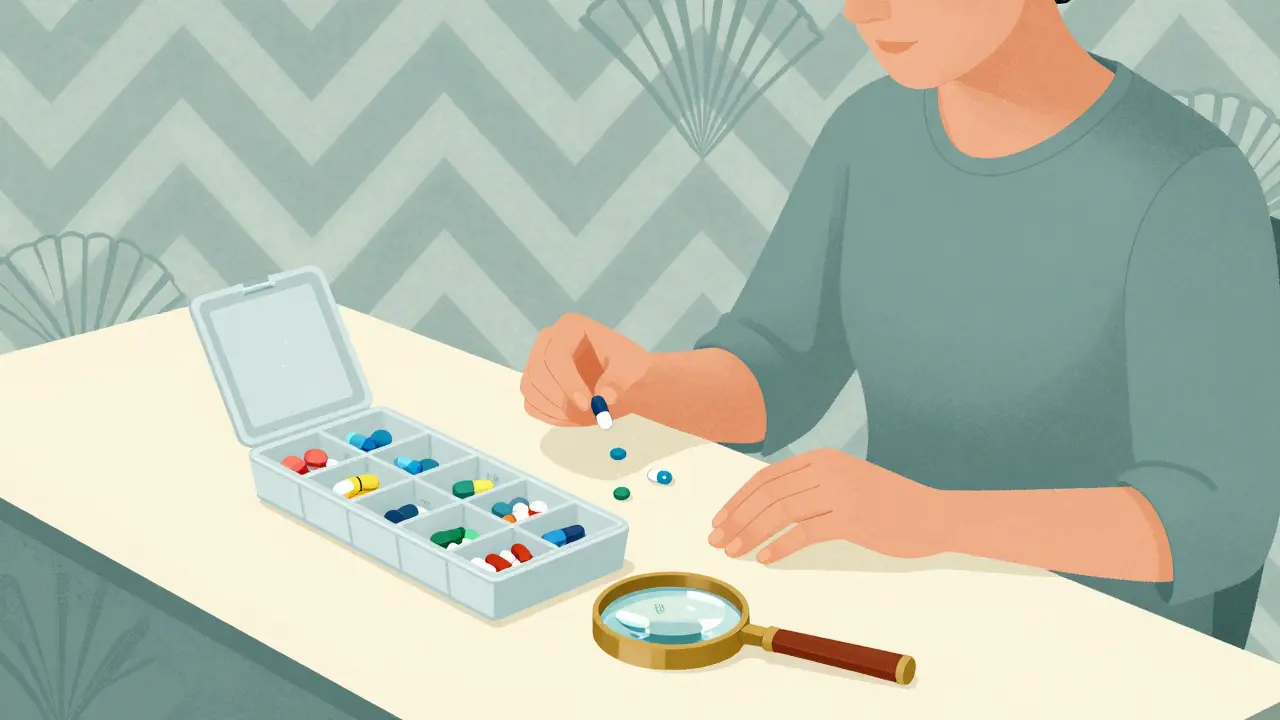
- Use a pill organizer: Pre-sorting your medications into a weekly box removes the need to identify pills by sight every day. You simply open the compartment labeled "Tuesday Morning" and take what is inside.
- Take photos: Keep a personal record. Take a clear photo of each new medication when you pick it up. Label the photo with the drug name and dosage. If a new pill arrives that doesn’t match the photo, you have immediate proof to show your pharmacist.
- Check the imprint code: Every prescription pill has letters or numbers stamped on it. This is the unique identifier for the drug, strength, and manufacturer. You can look up this code online using free databases like the FDA’s National Drug Code directory or local equivalent resources.
The Future of Medication Appearance
Regulatory agencies are aware of the issues caused by frequent appearance changes. In recent years, there has been increased scrutiny on generic manufacturers to consider patient compliance when designing pills. The FDA has issued guidance recommending that manufacturers think about physical attributes during product development.
Some countries, including members of the European Union, have moved toward stricter standards. The European Medicines Agency encourages generic versions of chronic medications to maintain similar appearances to the reference product when feasible. Studies suggest this approach reduces medication errors significantly.
In the US, initiatives like the Generic Drug User Fee Amendments (GDUFA) aim to improve the quality and consistency of generic approvals. By 2028, industry analysts predict that 75% of new generic approvals for high-risk medications will include voluntary appearance standardization. This trend suggests that while total uniformity is unlikely due to trademark laws, stability for critical medications will improve.
Until then, vigilance is key. The difference in appearance does not mean a difference in quality, but it does require a moment of attention. By understanding the reasons behind the changes and adopting simple verification habits, you can stay safe and confident in your treatment plan.
Is it safe if my generic pill looks different?
Yes, it is generally safe. Generic drugs must meet strict bioequivalence standards, meaning they contain the same active ingredient and work the same way as the brand-name version. Differences in color, shape, or markings are allowed due to trademark laws and do not affect the drug's efficacy.
Why do pharmacies switch generic manufacturers?
Pharmacies often switch manufacturers based on supply availability, cost contracts with insurance providers, or inventory management. Since multiple companies can produce the same generic drug, pharmacies may source from whichever supplier offers the best price or reliability at that time.
Can I ask my doctor to prescribe the brand-name drug instead?
You can request a brand-name prescription, but it may not be covered by your insurance, leading to significantly higher out-of-pocket costs. Doctors usually prefer generics unless there is a specific medical reason why a patient cannot tolerate the generic formulation.
What should I do if I suspect I got the wrong medication?
Do not take the medication until you have verified it. Contact your pharmacist immediately. Bring the bottle and the pill with you. They can check the imprint code and compare it against their records to confirm if it is the correct drug or a dispensing error.
Do all generic pills have imprints?
Most prescription tablets and capsules have imprints (letters, numbers, or symbols) required by regulatory agencies for identification. However, some compounded medications or certain specialty formulations may not have standard imprints. Always rely on the label on the bottle as the primary source of truth.