

Pharmacokinetic studies are the primary method used to prove generic drugs work like brand-name versions. But they're not perfect. Learn how Cmax and AUC measurements work, why regulators are moving beyond them, and what this means for your medication safety.
Details
Generic combination products simplify treatment by merging drugs and delivery devices into one system, improving adherence by 15-25%. They cut costs by 30-80% and work just as well as brand-name versions-when patients get proper training.
Details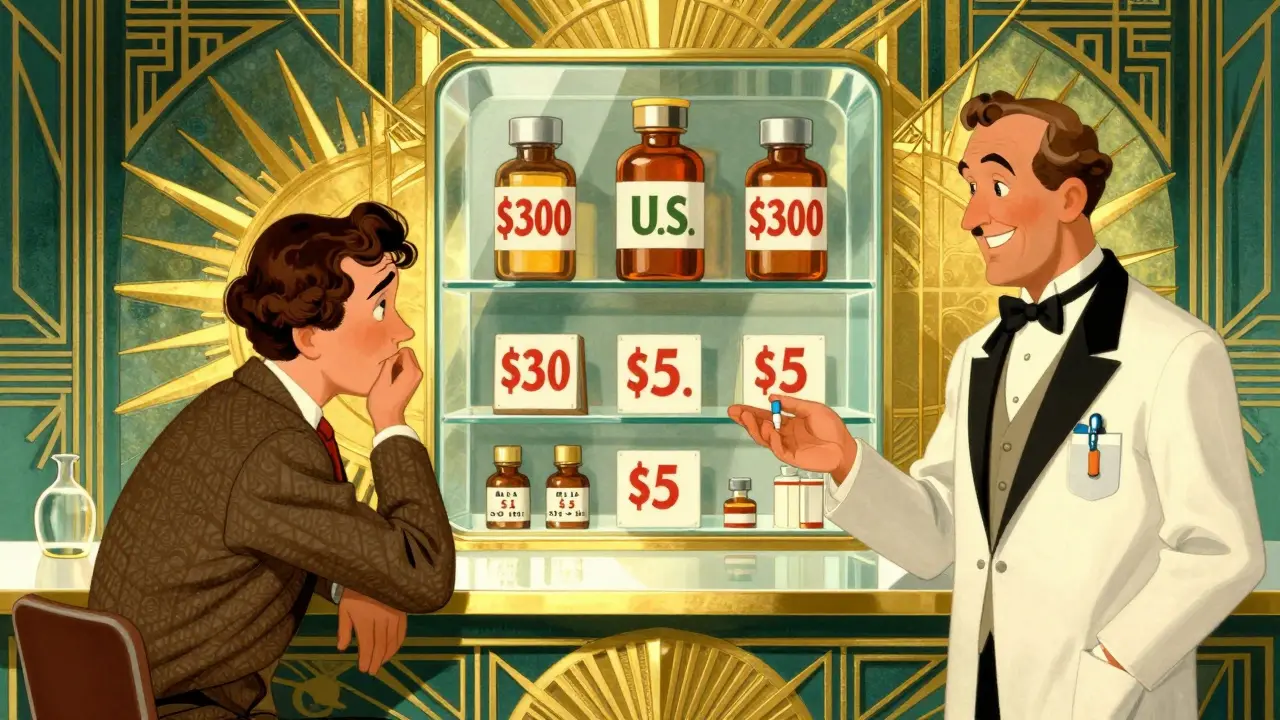
Drug prices vary wildly across countries due to policy, not cost. The U.S. pays the most for brand-name drugs but leads in cheap generics. Medicare’s new negotiations are changing the game.
Details
Despite identical regulations, serious adverse events from generic drugs are underreported compared to brand-name drugs. Learn why this gap exists, how it affects patient safety, and what’s being done to fix it.
Details
Switching from brand-name to generic medication saves money without sacrificing effectiveness for most people. Learn what changes, what stays the same, and when to speak up if something feels off.
Details
Combination products like multi-drug pills, inhalers, and topical creams face unique bioequivalence challenges that delay generic access. Learn why testing them is harder, costlier, and more complex than single-drug generics.
Details
Bioavailability studies ensure generic drugs work like brand-name versions by measuring how much and how fast the active ingredient enters the bloodstream. The FDA uses AUC and Cmax data to confirm equivalence within an 80-125% range.
Details
Batch variability can make or break bioequivalence for generic drugs. Learn why the 80-125% rule isn't enough, how new methods are fixing the system, and what it means for your health.
Details
Generic drugs look different from brand-name versions not because they're less effective, but because U.S. trademark laws require them to have a unique appearance. Learn why this rule exists and how it affects patients.
Details
Antitrust laws shape the battle for affordable generic drugs. From pay-for-delay deals to patent manipulation, these legal tactics delay competition and keep prices high - costing patients billions. Here's how the system works, who abuses it, and what's being done.
Details